
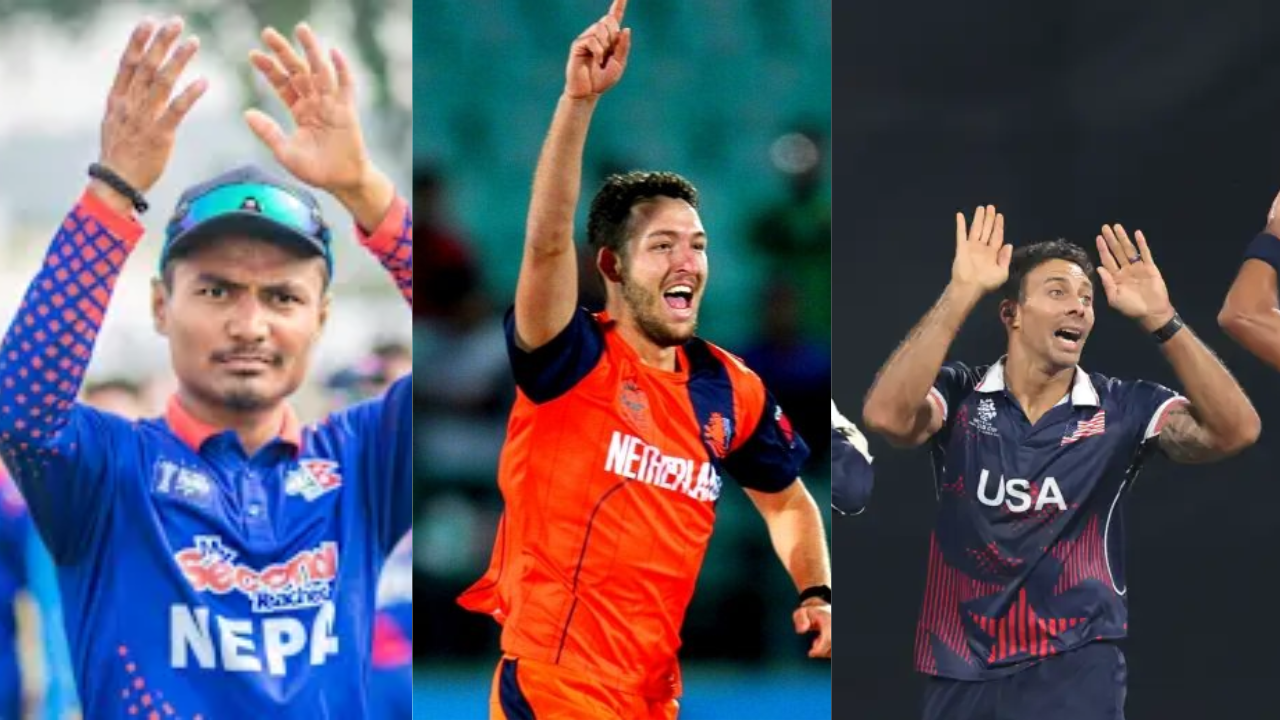
The ICC T20 World Cup 2026 is underway in full swing, and the spotlight has of late been on the associate teams that are currently featuring in this marquee tournament. The opening day of the T20 World Cup involved three associate teams. What seemed to be a routine day of cricket turned out to be a day full of endless twists and turns.
Pakistan were on the brink of an inevitable defeat had Faheem Ashraf not stood tall. Scotland looked well set to complete a historic run chase before Romario Shepherd derailed them with a hat-trick. India perhaps seemed to be staring down their biggest ever World Cup upset, before Suryakumar Yadav safely dragged them out of the woods. And Nepal managed to keep England on the edge throughout the entirety of their run chase. It was a game that could have tilted either way. So what makes these associate teams so lethal, and why are they causing headaches for the more prominent teams?
Read on as we decode 5 main reasons behind the recent success of the associate teams and highlight their unprecedented resurgence in this T20 World Cup.
Franchise T20 Cricket Experience Breaks The Barrier

Back in the day, smaller teams had a very limited scope of competing with top teams. Fixtures between associate members and full-member nations were few and far between. Smaller teams barely had the chance to even come head-to-head against each other in a global event, let alone in a bilateral series. This inevitably opened up a gap between players from top teams and players from the associate member nations.
This gap was finally bridged when T20 franchise cricket became a central pillar of the game. Players from the associate teams got a rare opportunity to run shoulder with some of the best in the business. For the USA, it’s Major League Cricket (MLC), which has helped its local players to adapt to the evolving requirements of modern-day T20 cricket. Nepal has the Nepal Premier League (NPL), which has played an instrumental role in uplifting the standards of domestic cricket withtin it’s boundaries.
These leagues, despite being miniature in stature, have featured some big names from T20 cricket, featuring the likes of Andre Russell, Shikhar Dhawan, and Faf du Plessis. These renowned figures not only play against the associate players but also impart useful guidance that helps them uplift their game in the long run.
Demonstrated First-Class Record in Their Country of Origin
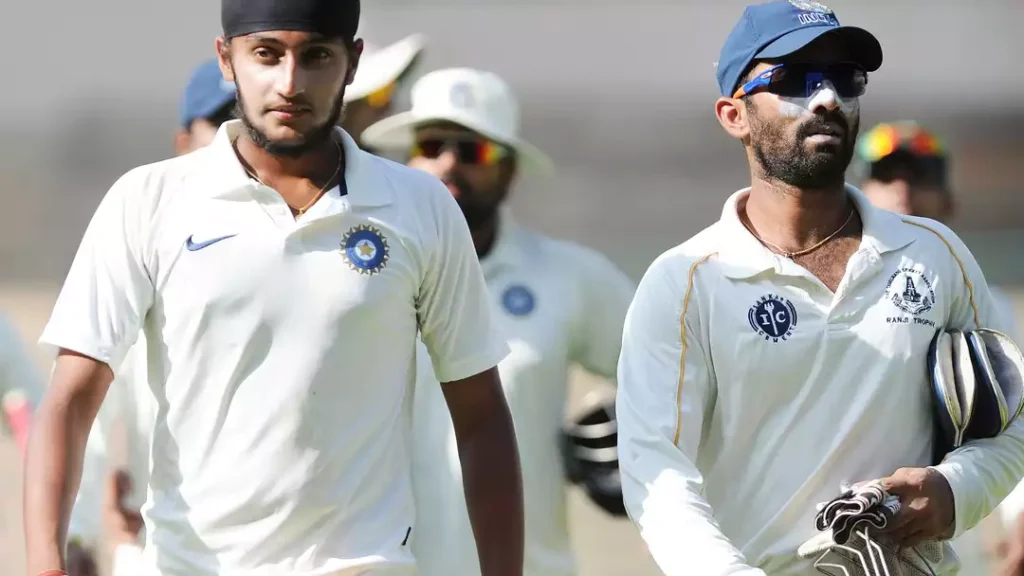
Prior to relocating to another country in search of a better cricketing fortune, these associate cricketers once belonged to their home country’s own first-class setup. The likes of Harmeet Singh, Andries Gous, Shadley van Schalkwyk, and Ali Khan underwent intense grind and hard work in the formative years of their career before moving to the country of their choice. Former South African Andries Gous is known to have a stellar first-class record, averaging 40 with the highest score of 256. Saurabh Netravalkar of the USA spearheaded the bowling attack of India U-19 in the 2010 World Cup.
Harmeet Singh represented two teams, Mumbai and Tripura, in the Ranji Trophy. During his fruitful domestic years in India, Harmeet bagged 28 wickets in 11 FC games, which also included his career-best 7-wicket haul on his first-class debut against Himachal Pradesh. Van Schalkwyk picked up nearly 200 FC wickets and notched up more than fifty-plus scores in South Africa before moving to the US for a better cricketing future. Thanks to their prominent first-class record, these players tend to have a strong foundational core, which further bolsters their competitive edge on the big stage.
Familiarity With Big Names

First-class cricket not only serves as a platform for these associate cricketers to hone their skills but also offers them a chance to interact with some of the world’s best T20 players. USA’s Shubham Ranjane has reportedly played alongside Suryakumar Yadav during his stint with the NCC in Mumbai. Similarly, players like Roelef van der Merwe and Andries Gous might have also crossed paths with Faf du Plessis and AB de Villiers during their playing days in South Africa.
Such level of exposure makes them a complete cricketer, leading to an all-round development. Knowing dressing room traits of such players well in advance gives these associate players a definitive edge to sink the big teams on the biggest of the stages.
Learning The Hard Way in World Cup Qualifiers
Unlike full member nations, who directly gain qualification without breaking a sweat, it’s a tale of endless struggle and perseverance for the associate nations. Smaller teams are often mindful of the fact that success is short-lived. Progress is hard-fought, and results don’t really go their way unless they put in the hard yards.
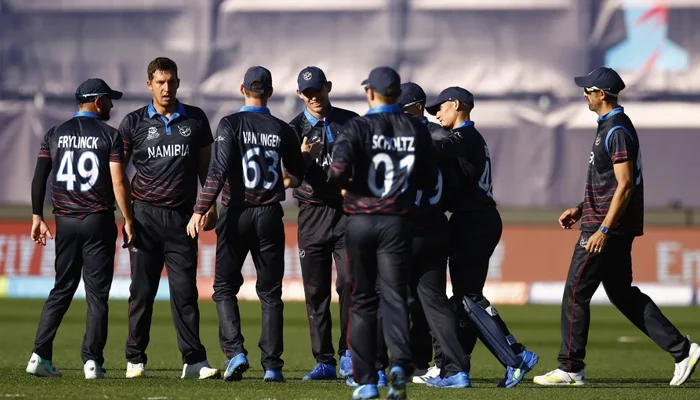
Close encounters and heated rivalries from the World Cup Qualifiers make these teams extremely battle-hardened. As a result, when such teams stand face-to-face against the top teams in the World Cup, they are able to demonstrate resilience and strength in their character, even though the results may not go their way. Namibia was one such team that qualified for every single T20 World Cup since 2021. Consistent performances in the Qualifiers paid dividends for the South West African nation, and as fate would have it, they were able to successfully take down Sri Lanka in the 2022 World Cup opener in a shocking fashion.
Ability To Outplay in Pressure Games

Smaller associate nations do not usually carry the weight of outperforming their rivals. This baggage is often carried by the big teams as they are the ones chasing glory. Hence, the pressure is felt more by the big teams as smaller associate nations have nothing to lose. For them, it’s all about expressing themselves on the big stage and making the most of the opportunity.
As a consequence, when such associate nations face off against the strong contenders, they often exhibit a fearless instinct that catches the top teams off guard. As such teams are not always accustomed to facing the associate member nations, the pressure eventually gets the better of them when things go downhill. And that pressure subsequently manifests into historic upsets.