
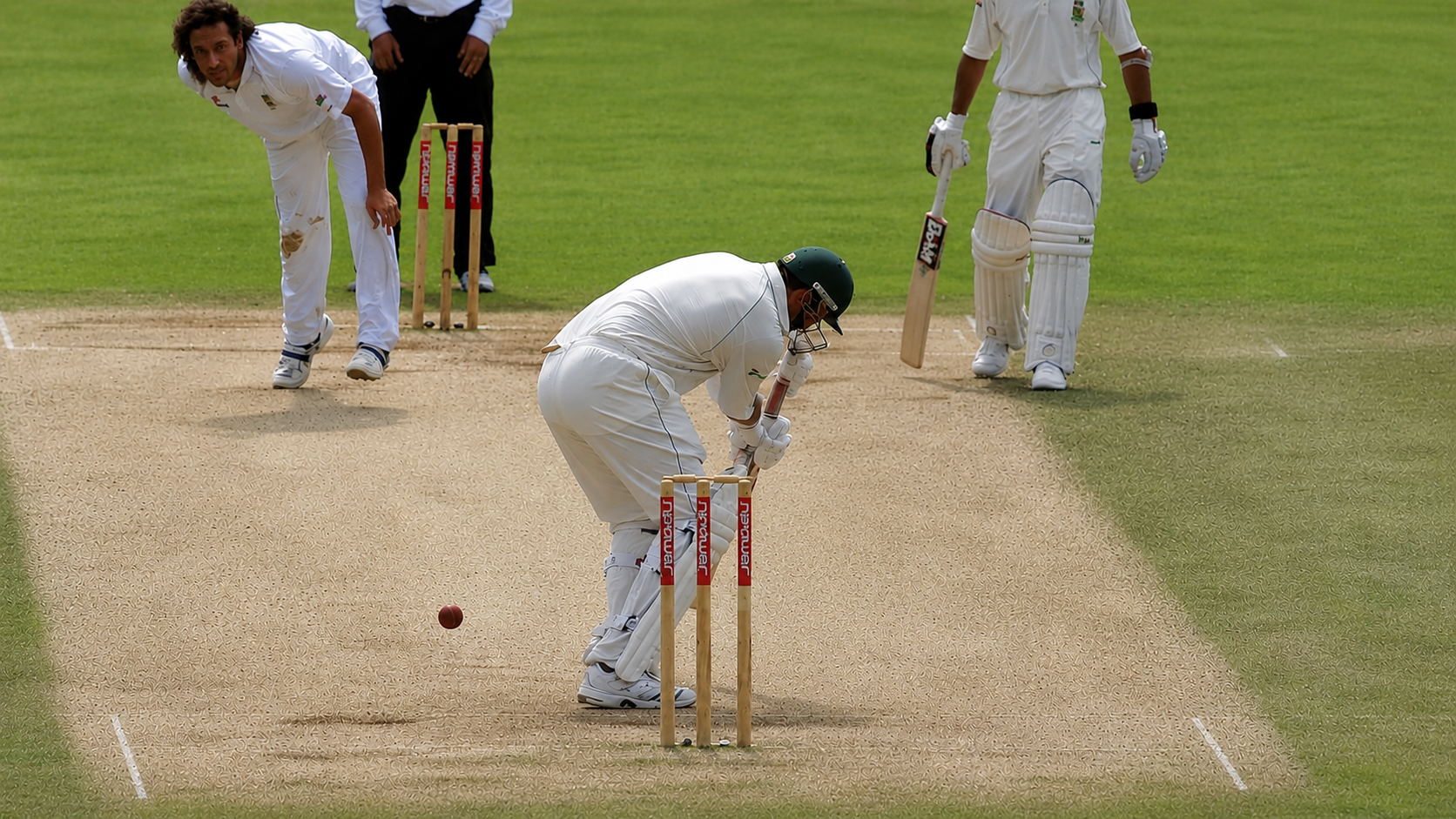
A yorker pitches on or near the batter’s toes, giving very little time to react. To defend it, jam the bat down straight in front of the stumps with soft hands so the ball drops at your feet. To attack it, meet it just before it lands with the full face of the bat and swing straight down the ground for six. Playing across the line to a yorker is the mistake that gets batters bowled or LBW.
A yorker ball is one of the most effective deliveries in cricket and is designed to target the batter’s toes. Whether you’re facing a fast yorker in cricket or learning how to play yorker ball for the first time, recognizing the length early is the key to survival. If bowled perfectly, the yorker ball could well decide the fate of a batter, who might find themselves at huge risk of either getting bowled or LBW if they fail to cover the line of the cricket ball. So how to play yorker ball in cricket? And what’s the ideal strategy to convert a yorker length ball into a lucrative scoring opportunity?
Whether you want to defend a yorker, learn how to hit a yorker ball for boundaries, or discover how to play a wide yorker, mastering your footwork and bat swing is the key to success. To answer your query on how to play yorker ball in cricket, we have compiled a detailed, user-friendly guide armed with practical tips and insights that would help you overcome your fear of how to play a yorker ball.
Table of Contents
Why Don’t Bowlers Bowl Yorkers All The Time?
Before we begin outlining a robust strategy on how to play yorker ball in cricket, we first need to understand why bowlers don’t bowl yorkers all the time. The reason is very simple. Since the margin of error is minimal, the very notion of bowling a yorker can stoke an element of fear in any fast bowler’s mind. As a result, this mind block faced by the bowlers alone puts the modern-day batters at ease, allowing them to unleash themselves with utter ruthlessness.
So how do the batters cash in? Here are two broad reasons why bowlers refrain from bowling yorkers all the time:
Lack of consistency: One of the biggest reasons why bowlers don’t bowl yorkers all the time is consistency. Yorker bowling demands pinpoint accuracy, as even a slight error in length can turn the delivery into a low full toss or an easy half-volley. That’s why mastering how to bowl yorker in cricket requires countless hours of practice, making it difficult to execute repeatedly, especially under pressure.
Risk of Bowling a Full Toss: A missed yorker often ends up as a full toss, giving the batter a golden opportunity to score boundaries. Worse still, if the cricket ball is above waist height, it can be called a no ball in cricket, resulting in an extra run and a free hit in limited-overs cricket. This high-risk factor is another major reason why don’t bowlers bowl yorkers all the time, despite it being one of the most effective deliveries in cricket.
Why Is a Yorker So Difficult to Play?
A yorker ball is regarded as one of the most difficult deliveries to face because it gives the batter almost no time to react. One reason the yorker is difficult to play is that the batter has almost no time to adjust after identifying the length. Unlike fuller deliveries that can still be driven, a perfect yorker attacks the base of the stumps, forcing the bat down in a perfectly straight line. Even experienced batters struggle when the yorker is executed accurately. A slight delay can result in the batter being bowled or trapped LBW.
Another reason a cricket yorker is so effective is that it limits the batter’s scoring options. Since the ball stays low and arrives so close to the popping crease, it becomes extremely difficult to generate enough power for attacking shots. Batters must rely on precise footwork, excellent hand-eye coordination, and perfect timing simply to defend the yorker ball successfully.
A well-executed yorker delivery in cricket also leaves very little margin for error. Whether you’re learning how to defend yorker ball or looking to improve your technique against fast bowlers, recognizing the release early and moving your feet quickly are essential skills that can help you neutralize one of cricket’s most dangerous weapons.
How to Defend Yorker Ball in Cricket: Basic Survival Hacks
If you’re wondering how to defend yorker ball deliveries consistently, the secret lies in staying compact and reacting early rather than trying to force an attacking shot. A perfectly executed yorker gives the batter very little time to adjust, so your first priority should always be protecting the stumps instead of scoring runs. Since a yorker lands right at the batter’s feet, you have very little time to adjust after the cricket ball is released.
Here are some basic survival hacks:
Watch the bowler’s hand closely
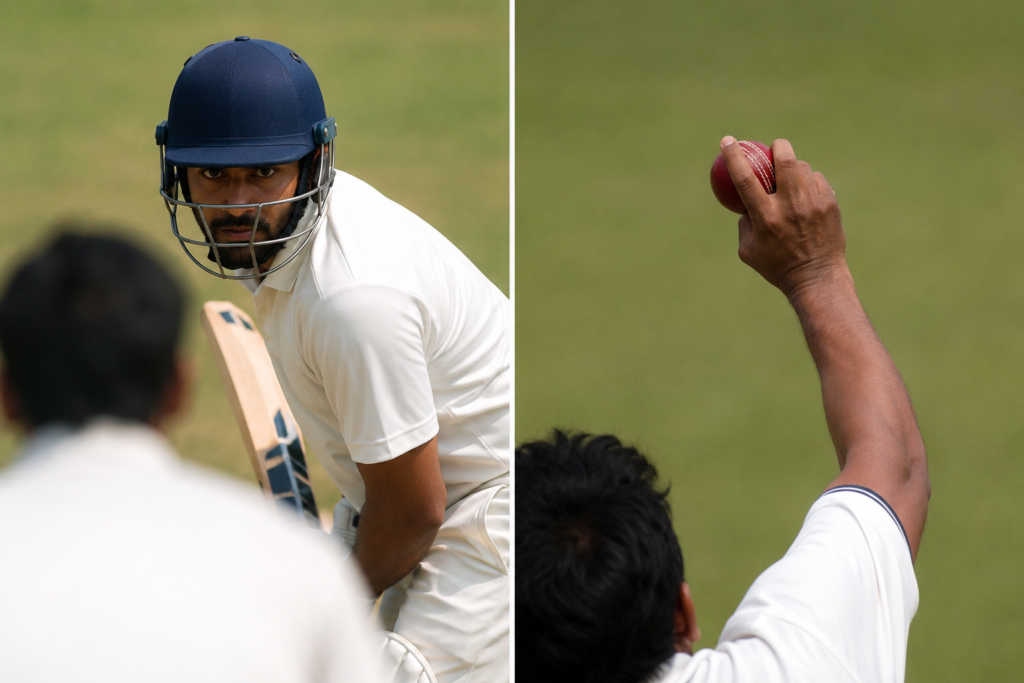
To defend a yorker ball, keep your eyes fixed on the ball from the moment it leaves the bowler’s hand. As soon as you recognize the fuller length, move your front foot quickly towards the pitch of the ball and bring the bat down in a straight line with the full face presented. This creates a solid defensive barrier and greatly reduces the chances of being bowled or trapped LBW. Spotting the yorker release point early gives you valuable milliseconds to prepare your feet and bat.
Move your front foot quickly
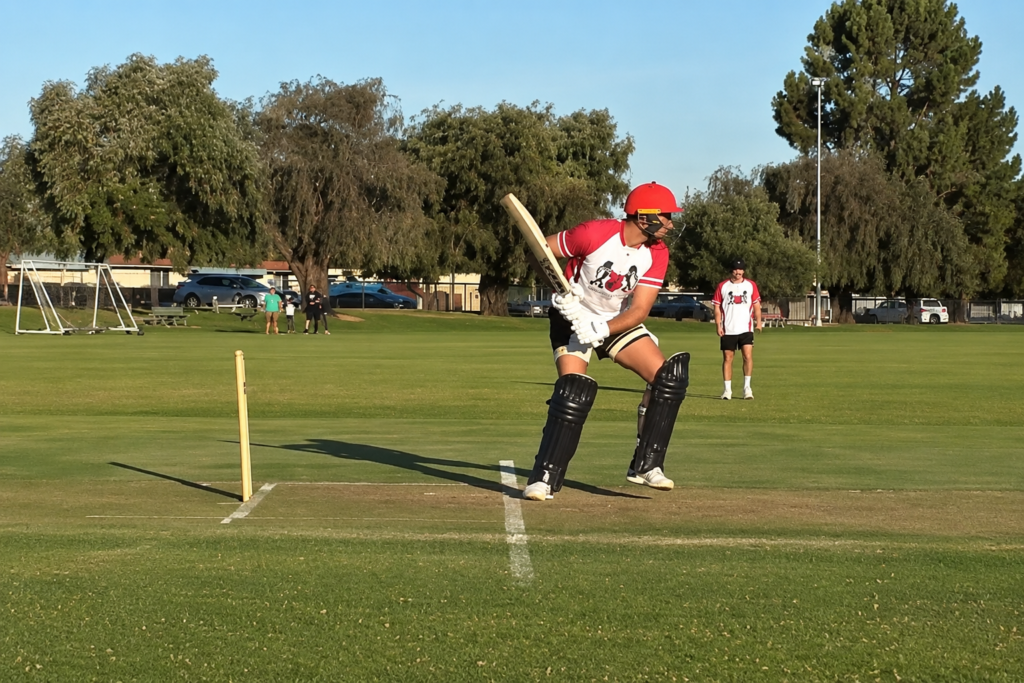
Get your foot close to the pitch of the cricket ball to avoid getting trapped on the crease. The fundamental concept to defending a yorker is to smother the ball by not allowing it to land into the blockhole. This allows you to meet the ball on the full, thereby eliminating the yorker ball’s ability to sneak under the cricket bat.
Bring the bat down straight against the yorker ball
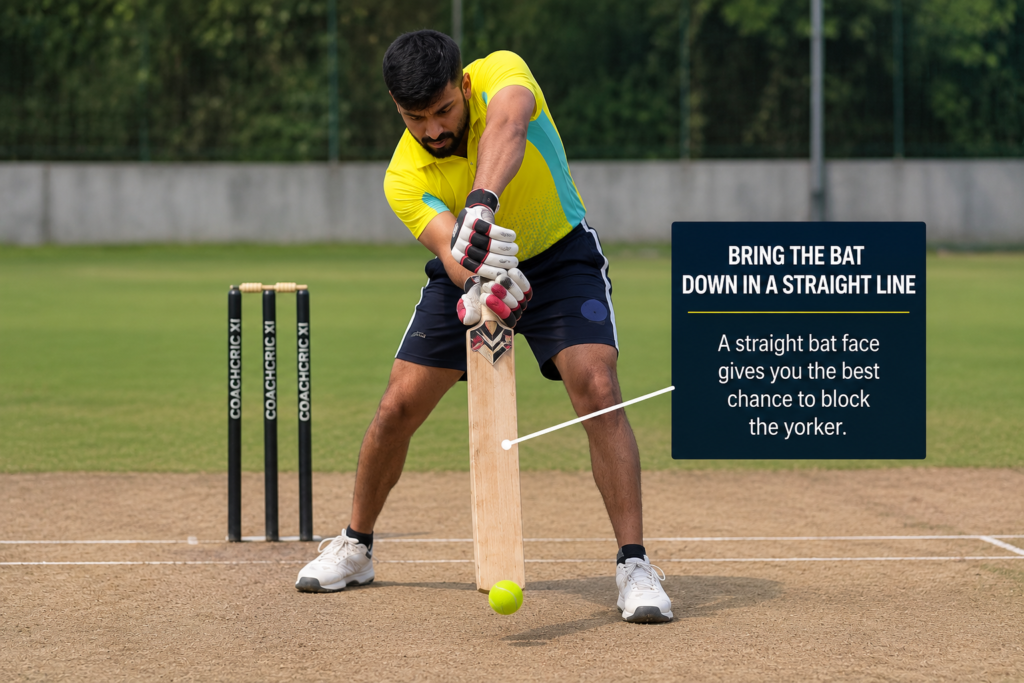
Present the full face of the bat instead of swinging across the line, as this gives you the best chance of blocking the delivery.
Keep your head over the ball
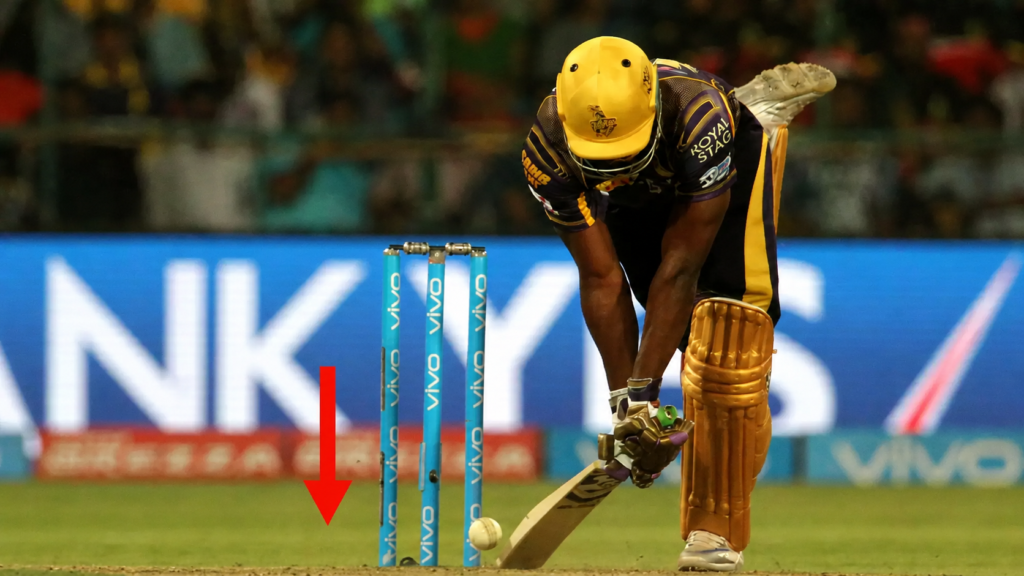
Good balance allows you to defend with soft hands and prevents the ball from ricocheting onto the stumps.
Don’t premeditate fancy shots
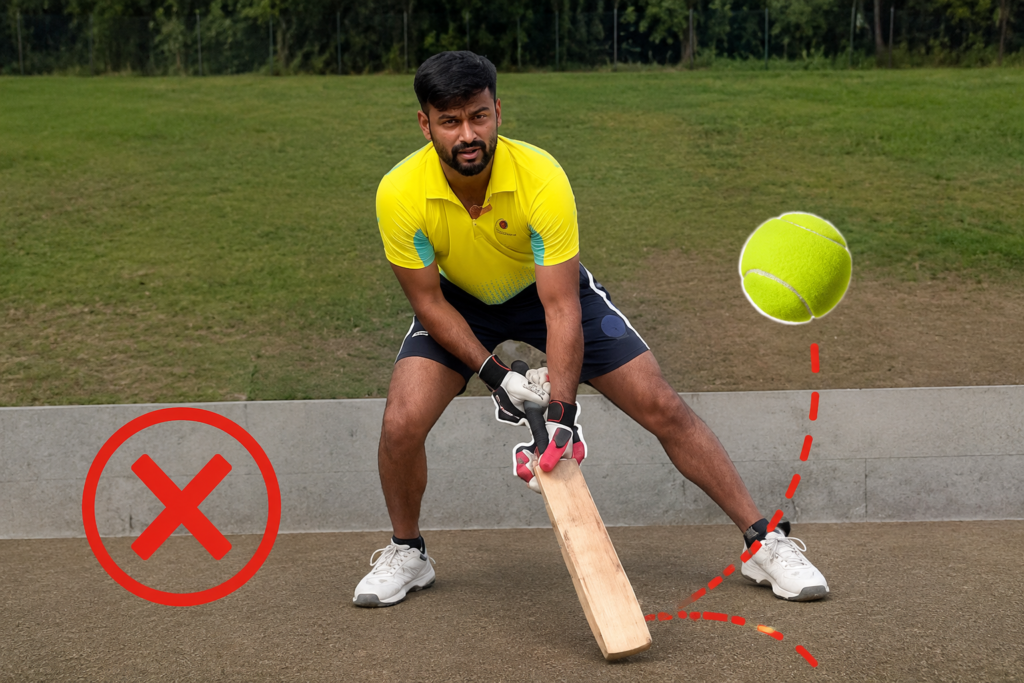
Another important tip to consider while learning how to defend yorker ball in cricket is to avoid swinging across the line. Instead, play with soft hands and maintain good balance over the ball. Even if you don’t score, successfully defending a yorker forces the bowler to keep searching for the perfect length, increasing the likelihood of them eventually missing their mark and offering a scoring opportunity. Unless you’ve picked the length early, defending the yorker is usually the safest option.
💡 Remember, even the world’s best batters don’t always attack yorkers. A well-executed yorker is designed to limit scoring opportunities, which is exactly why don’t bowlers bowl yorkers all the time—it’s an extremely difficult delivery to execute consistently.
How to Hit a Six on a Yorker Ball: Going On The Offensive
Although a perfect yorker is designed to prevent boundaries, experienced batters know how to hit six on yorker deliveries that are even slightly overpitched. The key isn’t brute strength—it’s recognizing the length early and getting into position before the ball reaches your toes.
Here are a few attacking options:
Convert the yorker into a full toss
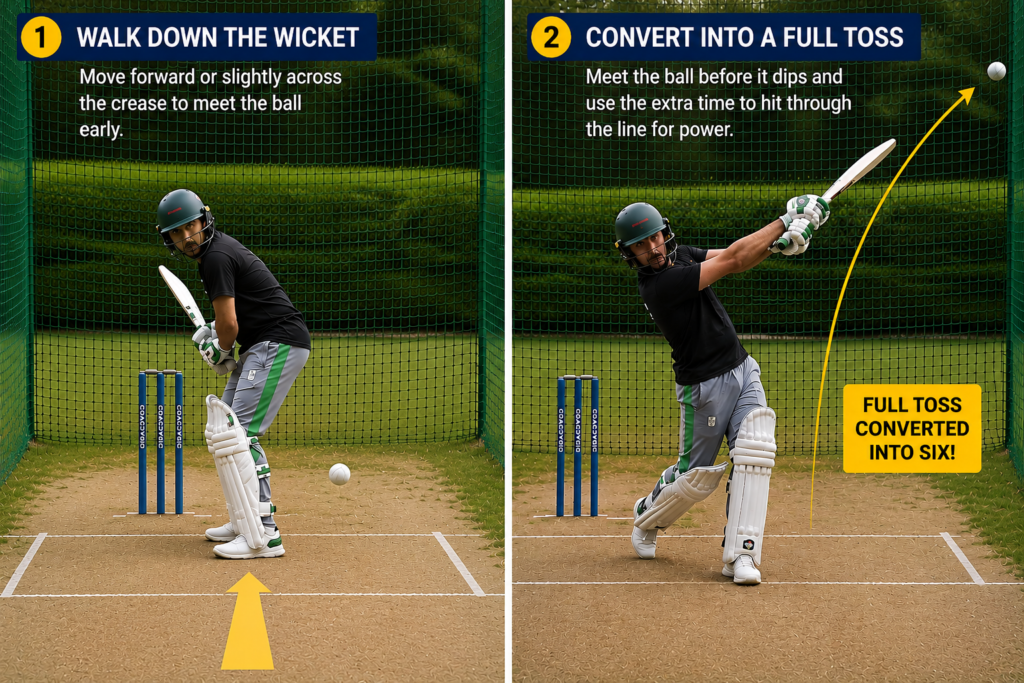
If you’re wondering how to hit a yorker ball, look to meet the ball just before it becomes a true yorker. By moving slightly forward, you can sometimes convert the delivery into a low full toss, making it much easier to generate power. Keep your head still, maintain a strong base, and swing through the line of the ball instead of trying to scoop or slog every delivery.
By moving forward or slightly across the crease, you can meet the ball before it dips, making it easier to hit a six on yorker ball.
Use Paddle Scoop
Converting the yorker ball on the full has its own advantages. Another method to hit the yorker for a six is by deploying a paddle scoop, also known as the Dil Scoop, which we now know of today. New Zealand’s Brendan McCullum was one of the earlier pioneers of this paddle scoop sweep shot, and he deployed it with great ease to hit the yorker into the orbits for a six. The key is to get inside the line of the ball, and get just low enough to get under the ball and scoop it over the ropes for a maximum.
Open the bat face (Tips for facing a wide yorker)
A slight angle allows you to squeeze the ball through gaps behind square on the off side. The key here is to watch the yorker ball very late and then steer it gently at the last split second, tweaking your wrists. This batting technique is highly useful in tackling wide yorkers. The only difference here is that you will need to extend your reach with the bat. So if you’re concerned about how to play a wide yorker, then this batting hack is surely for you. However, while playing a wide yorker ball, avoid reaching out too early.
Use the bowler’s pace (Another useful tip for facing a wide yorker)
It’s important to understand that not every yorker should be attacked. The best batters carefully judge whether the delivery is a genuine yorker or one that has missed its length by a few inches. Knowing how to hit a six on a yorker is therefore less about raw power and more about timing, footwork, and smart shot selection.
In order to play a wide yorker, a batter must utilize soft hands and use the pace of the yorker ball to find gaps and deflect it to the boundary. Instead of trying to muscle the shot, time the ball and let its pace do most of the work. This is similar to the earlier tip shared on how to play wide yorker.
Target straight boundaries
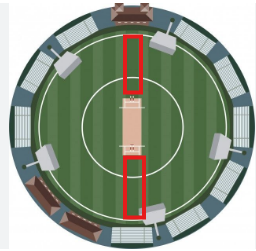
If the yorker misses by just a few inches, you can drive it straight back over the bowler’s head. If you ever wonder how to play yorker ball in cricket, then it’s all about timing and placement.
Stay balanced throughout the shot
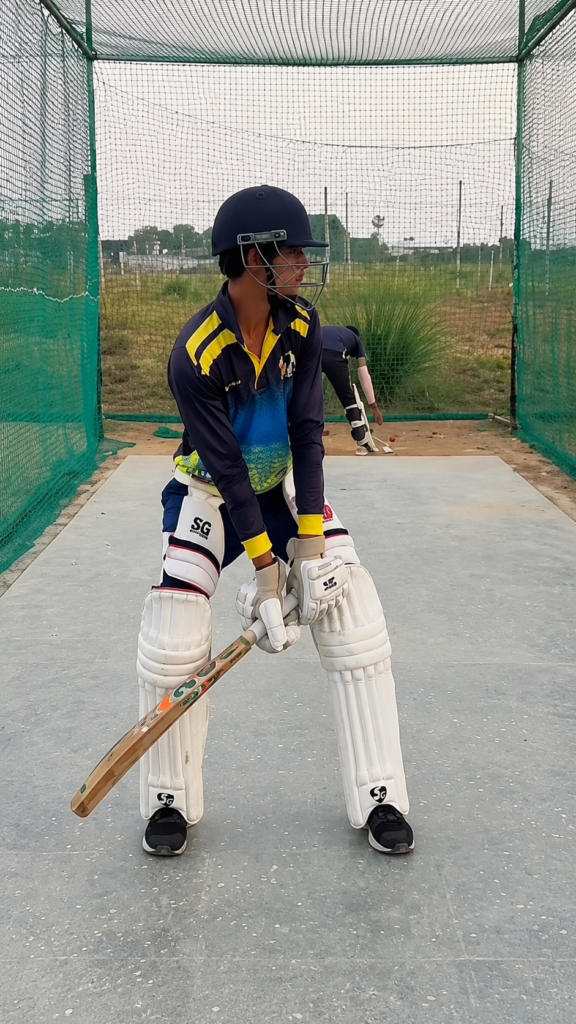
Overcommitting often results in mistimed shots or getting bowled. The key to playing the yorker ball wth success is to ensure that you remain balanced at the crease with shoulder width apart. As usual, your head must remain still at the time the yorker ball is bowled to give yourself the best possible chance of playing the yorker in cricket with ease. Essential tips covering batting stance and grip fundamentals can be found here in our batting guidebook.
💡Knowing how to play a yorker ball is about minimizing risk, while learning to attack it requires confidence, quick footwork, and excellent hand-eye coordination.
How to Hit a Yorker Ball: Key Batting Drills To Follow
Improving against yorker bowling comes down to repetition. These simple batting drills can help you hit a six or a four off a yorker ball with ridiculous ease.
Cone Target Drill
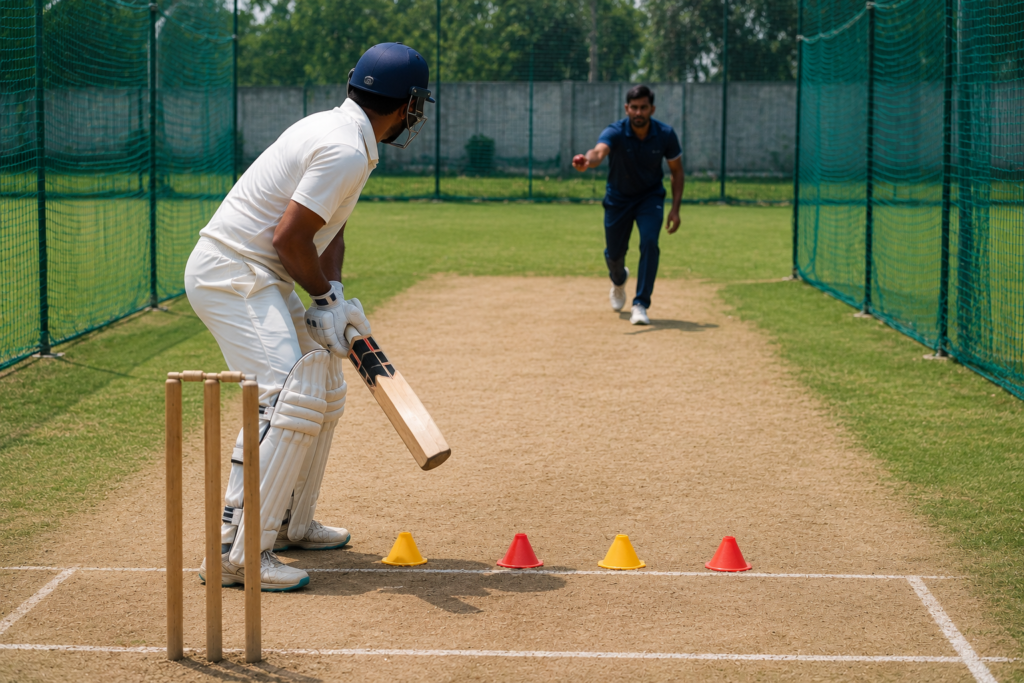
Place cones on the popping crease to simulate yorker lengths. Have a partner or bowling machine aim for those targets while you focus on getting your bat down quickly. You can alter the length of the yorker length ball to recreate different hitting angles.
Tennis Ball Reaction Drill
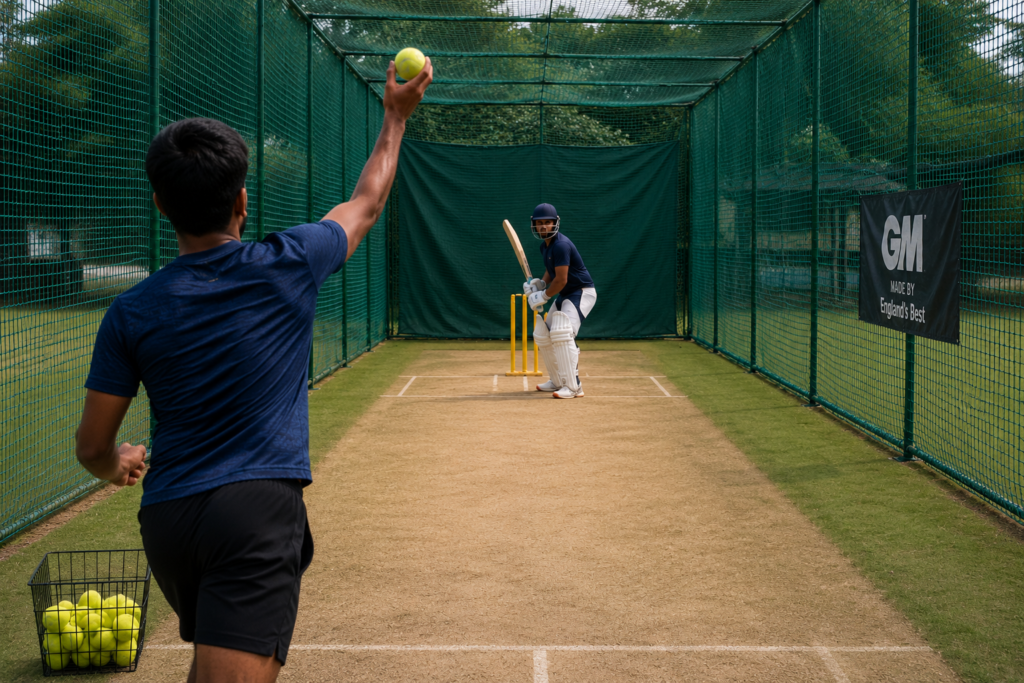
Use tennis balls thrown from a shorter distance to improve reflexes. This helps you recognize the yorker release point sooner and react faster.
Shadow Batting
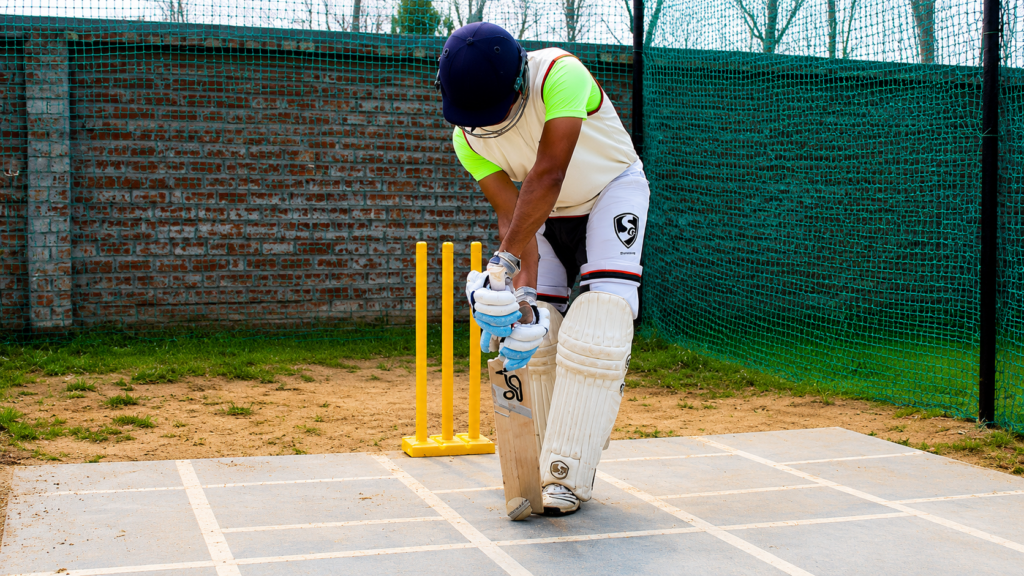
Practice your foot movement without a ball. Rehearse stepping forward and bringing the bat down in a straight line until it becomes second nature.
Bowling Machine Practice

Set the machine to deliver yorkers at different speeds and angles. Mix in full tosses and good-length deliveries so you learn to identify yorkers instead of anticipating them.
💡 The more often you practice these drills, the easier it becomes to recognize yorkers, react quickly, and decide whether to defend or attack. Consistent training is the best way to master how to play yorker ball in cricket and improve your confidence against one of the toughest deliveries in the game.
More Resources on Batting Tips & Guides
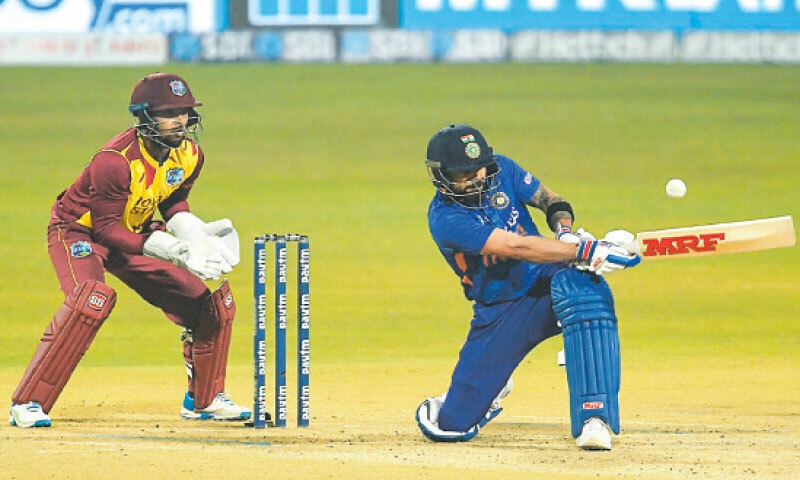
How To Play a Sweep Shot in Cricket: Key Drills & Technique Decoded
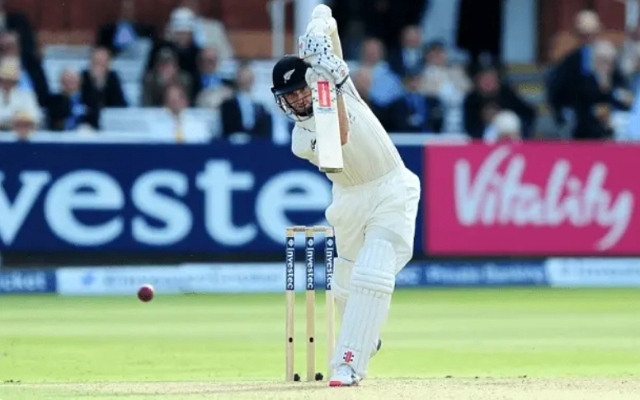
How to Play the Front Foot Drive in Cricket (Step-by-Step Guide for Beginners)
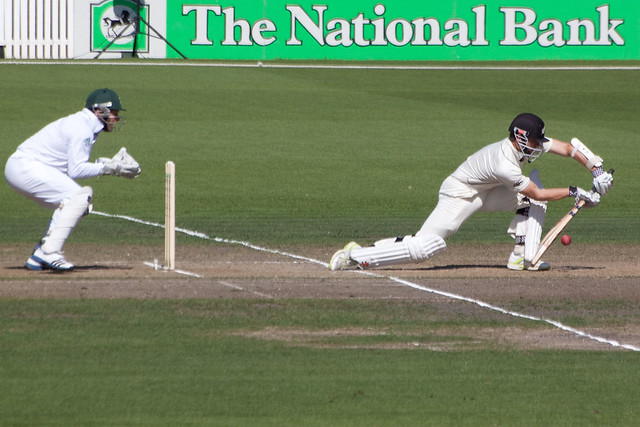
Front Foot Defence in Cricket (Forward Defence): Step-by-Step Technical Guide
Found Our Cricket Coaching Guide Insightful?
With the right equipment, access to top experts, and the resources to grow, Cricvision can go the extra mile! If you’d like to be part of this journey, visit our donation page. Every contribution counts and directly fuels our growth.
Donate Now