
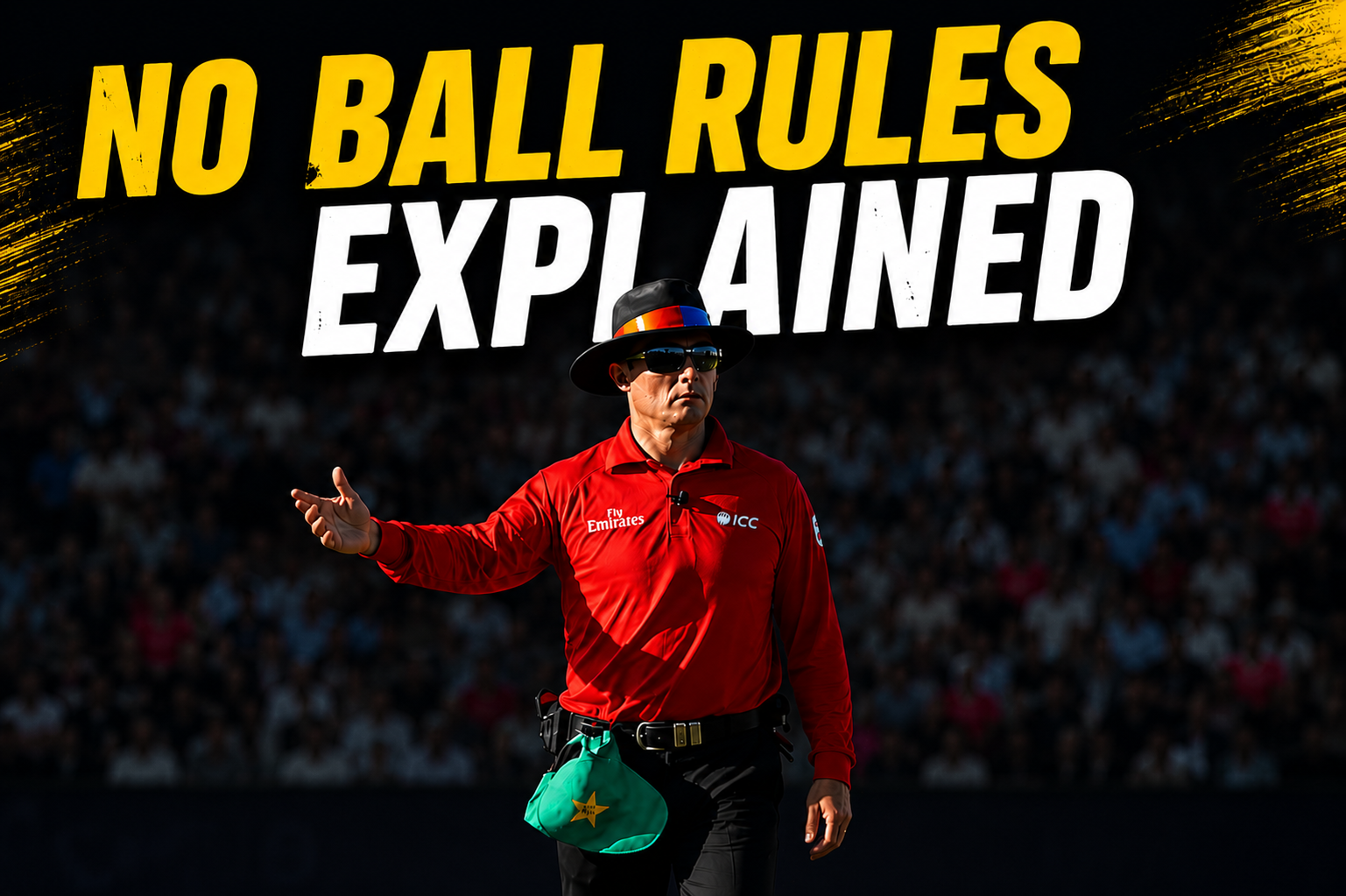
Before we begin our exploration of the no ball rules, we first need to understand what is no ball in cricket. The no ball rules in cricket can be viewed as a very frustrating setback for the bowler. Widely viewed as a criminal act from the bowling side, a no ball is often the last thing you want to experience, especially in a tightly poised contest. Not only do u allow the opposition to sneak an extra run and an extra delivery to score off, but these days under the no ball rules in cricket, most limited-overs matches award the batting side a free hit following a no ball. Batters unleash their fury with utmost impunity while not having to worry about their wicket. Hence, it is a no-brainer that a no ball in cricket can severely hinder the bowling team’s ability to effectively restrict a batting side in a limited-overs game. Unfortunately, it is the bowler who typically has to bear the brunt of bowling a no ball in cricket.
In this article, we will explore the no ball rules in cricket, understand why a no ball is awarded, and examine the most common situations in which the law applies.
What is a No Ball in Cricket? (Brief Definition)
The no ball rule in cricket was first introduced sometime in the 1780s. In a nutshell, bowling a no ball in cricket constitutes an illegal delivery bowled by the bowler that violates rules regarding foot placement, bowling action, or safety, resulting in a 1-run penalty and an extra ball. An umpire applies the no ball rules in cricket by extending one arm horizontally to the side. Following this, for a free hit, they raise one hand and rotate it in a circular motion above their head. This signal indicates that the batter can play his/her shots with utmost freedom in the following ball, without having to worry about getting dismissed.
Although most fans associate a no ball with overstepping the popping crease, the no ball rules in cricket also cover dangerous deliveries, waist-high full tosses, illegal field placements, wicket-keeper infringements and several other situations. Regardless of the cause, the batting side is awarded one extra run, the delivery does not count as one of the six legal balls in the over, and in most limited-overs matches the next delivery becomes a free hit. Understanding why a no ball is given in cricket makes it much easier to interpret the different no ball laws explained throughout this guide.
All Types of Cricket No Ball Rules
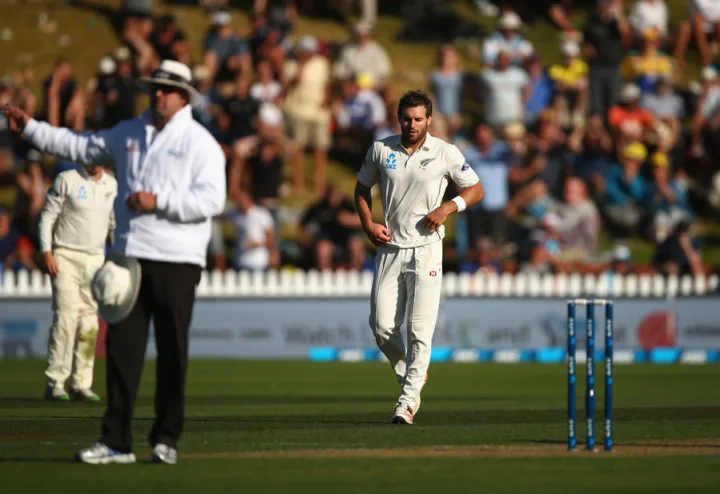
There are over 20 types of cricket no ball in cricket according to MCC Cricket Law 21.7. Apparently, these cricket no ball rules are consistent with test cricket no ball rules with the exception of a free hit. These no ball rules are generally categorized into bowler infringements, dangerous deliveries, and fielding restrictions. The no ball rules in cricket cover a variety of illegal deliveries and fielding infringements. While front-foot overstepping remains the most common cricket no ball offence, the Laws of Cricket also deal with dangerous deliveries, illegal field placements, wicket-keeper infringements, and several other situations.
- Foot placement infringement (a.k.a front/back foot no ball)
- Waist-height full toss no ball rules (a.k.a full toss no ball rules)
- Excessive short-pitched delivery no ball rules
- Double bounce no ball rules (Ball bouncing more than once before reaching the batter)
- Wicket keeper no ball rules (Keeper collecting the ball in front of the stumps)
- Fielding restriction violation (Powerplay no ball rules)
- Ball pitching outside the pitch no ball rule
Other rare no ball offences include illegal bowling actions, fielders encroaching on the pitch, breaking the wicket during delivery, underarm bowling, and deliveries pitching outside the pitch.
Below we cover some of the most common forms of cricket no ball rules in cricket, backed by detailed explanations and examples.
Front Foot Overstepping (The Most Common No Ball Rule)
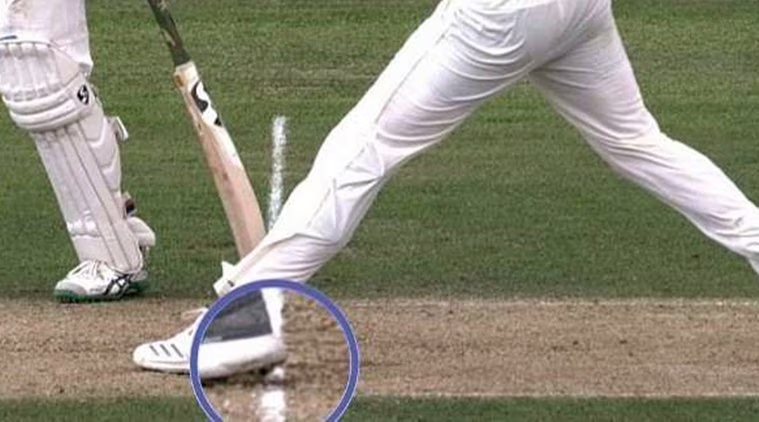
The most common reason an umpire signals a no ball in cricket is because the bowler oversteps the popping crease with the front foot. Although there are many no ball rules in cricket, front-foot overstepping remains by far the most frequent offence at every level of the game, from junior cricket to international matches. According to MCC Law 21.5 of the no ball rules in cricket, a bowler is not allowed to place his or her front foot beyond the popping crease. Some part of the front foot, whether grounded or raised, should be behind the crease.
21.5 Fair delivery – the feet
Law 21 (No Ball in cricket)
For a delivery to be fair in respect of the feet, in the delivery stride
21.5.1 the bowler’s back foot must land within and not touching the return crease appertaining to his/her stated mode of delivery.
21.5.2 the bowler’s front foot must land with some part of the foot, whether grounded or raised
Failure to comply with this fundamental no ball regulation results in a one-run penalty, which is awarded to the opposite side, followed by a free hit in case of a limited-overs fixture. The front foot no ball rules in cricket account for roughly 70% of the overall no ball offences.
Common Waist Height No Ball Situations
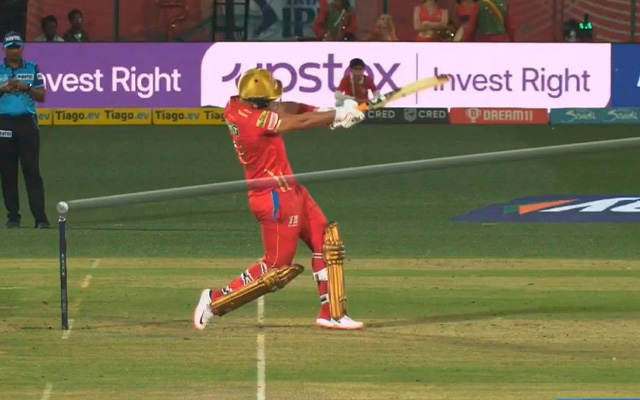
The waist height no ball rules are one of the most contentious rules of the game. The no ball waist height rules are also one of the hardest decisions for an umpire to adjudicate, fueling endless controversies, both on and off the field. The game can witness a dramatic shift if the no ball waist height rule is not called correctly without the help of technology. One of the biggest misconceptions surrounding the waist height no ball rules in cricket is that the batter’s movement determines the decision.
In reality, umpires judge the delivery based on where the ball would have passed the batter standing upright at the popping crease. Whether the batter steps forward, backs away, or charges down the wicket does not change the original reference point used under the waist height no ball rule. This is why many controversial decisions arise despite slow-motion replays.
While it may not always be easy to correctly assess waist height no balls all the time, the fundamental principle behind this ruling is based on a rather simple concept, which can be understood by any ardent cricket lover.
The waist height no ball rules in cricket are covered under Law 41.1 of the MCC Laws of Cricket. A no ball above waist bowled simply implies any delivery which passes or would have presumably passed over the waist height of a batter standing upright at the popping crease.
41.7 Bowling of dangerous and unfair non-pitching deliveries
Law 41 (Unfair Play)
41.7.1 Any delivery, which passes or would have passed, without pitching, above waist height of the striker standing upright at the popping crease, is unfair. Whenever such a delivery is bowled, the umpire shall call and signal No ball.
Height no ball rules in cricket (When it is NOT A NO BALL)
Let’s explore another instance of when a delivery is not deemed a waist-high no ball in cricket. A batter can’t just merely skip down the track and meet the cricket ball on the full and then expect the no ball rule to come to his/her benefit.
In such a scenario, ONLY the batter’s original position will be considered while adjudicating the waist height no ball rules in cricket. Take a look at the illustration video above to understand how the bowler, T Natarajan, got a massive reprieve under the waist height no ball rule as Ben Stokes had advanced a long way down the wicket to meet the ball.
Height No Ball Rules in Cricket
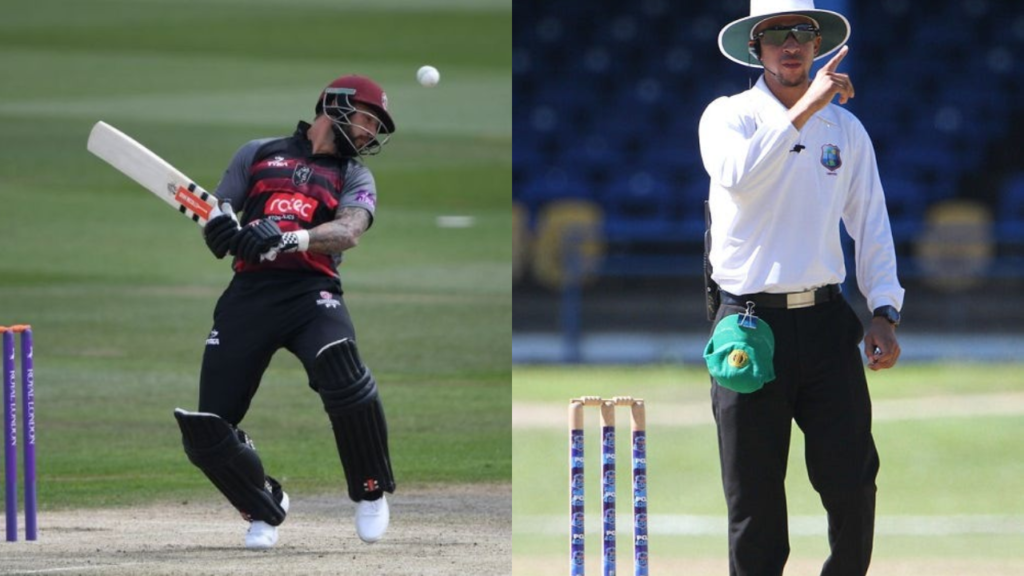
Did you know that, as a bowler, you can also get called for a no-ball due to height? This is where the height no ball rule in cricket comes into the picture. Another important application of the no ball rules in cricket concerns excessive short-pitched bowling. When a bowler exceeds their quota of bowling bouncers in an over, then this no ball rule comes into play. According to the new cricket no ball rules imposed by the ICC under the second bounce ruling, a bowler is only allowed to bowl a maximum of 2 bouncers each in an ODI or a Test match, while only one bouncer is allowed in T20 cricket. As soon as the cricket ball is delivered above shoulder height, the concerned umpire signals one bouncer for the over by tapping his or her opposite shoulder with their hand.
For a complete explanation of this rule with detailed illustrations and examples, check out the Height No Ball Rule in Cricket.
Bowler Breaking Wicket No Ball Rules in Cricket
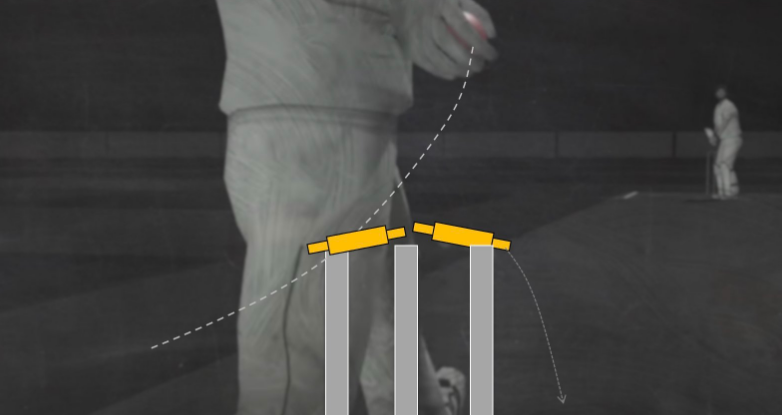
A bowler can now be penalized for a no ball in cricket if he or she, while delivering the cricket ball, makes contact with the bowler’s end stumps and subsequently breaks them in the process. This rare application of the no ball rules in cricket applies even if the wickets are broken with the help of a bowler’s clothing.
Cricket law 21.7, which specifically covers all possible scenarios of no ball rules in cricket, describes the exact circumstances that might lead to a bowler being called for a no-ball for breaking the wicket.
21.7 Bowler breaking wicket in delivering ball
Law 21 (No Ball Law)
If the ball is delivered and if the non-striker is not dismissed under Law 41.16 (Non-striker leaving his/her ground early), either umpire shall call and signal No ball if the bowler breaks the wicket at any time after the ball comes into play and before completion of the stride after the delivery stride. This shall include any clothing or other object that falls from his/her person and breaks the wicket. See Appendix A.12. Laws 20.4.2.8, 20.4.2.10 (Umpire calling and signalling Dead ball) and 21.12 will apply.
Instances of this type of no ball rule in cricket is generally not seen on a widespread scale. While it might be a rarity in modern-day cricket, players at the amateur level or from junior cricket are generally more susceptible to bowling such a type of no ball in cricket. Additionally, bowlers who get too close to the stumps while in their delivery stride risk flicking the stumps with their bowling arm. You might be interested in checking out how New Zealand’s Zak Foulkes wicket-breaking no ball in cricket proved costly for his side.
Wicket Keeper Encroachment No Ball Rules in Cricket
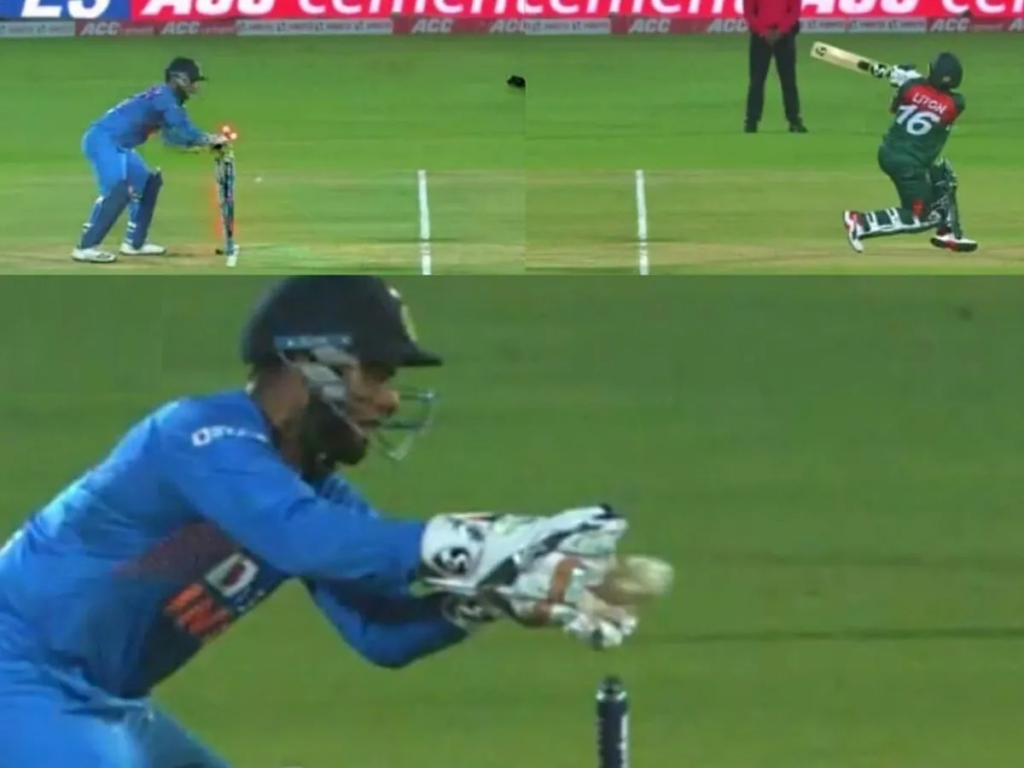
Under the No ball rules in cricket, a wicket-keeper’s encroachment is a specific type of no ball in cricket that occurs when the keeper does not remain in the correct position at the time the ball is delivered.
Wondering how this unfolds in a real-life scenario?
Well, according to Law 27.3, the entire body of the wicket-keeper must fully remain behind the wickets till the cricket ball has either made contact with the bat or the batter’s body, or gone past the striker’s wicket. Failure to meet either of those conditions can lead to a call of no ball in cricket.
27.3 Position of wicket-keeper
Law 27 (Wicket-keeper)
27.3.1 The wicket-keeper shall remain wholly behind the wicket at the striker’s end from the moment the ball comes into play until a ball delivered by the bowler
touches the bat or person of the striker or
passes the wicket at the striker’s end or
the striker attempts a run.
27.3.2 In the event of the wicket-keeper contravening this Law, the striker’s end umpire shall call and signal No ball as soon as applicable after the delivery of the ball.
Such types of no ball rules in cricket can only be applied effectively with the use of technology. But for the naked eye to judge, this could be a tall order to fill. And as always, all types of no ball in cricket come with an added punishment which needs to be faced by the bowler.
Fielder Encroachment No Ball Rules in Cricket

The no ball rules in cricket hardly spare anyone from the fielding side, though it is the bowler alone who has to suffer all the consequences. In this type of no ball rule in cricket, the sin originates from a close-in fielder rather than the bowler.
According to clause 28.5 of the Fielder Law, from the moment the bowler starts his/her run up to the point the ball makes contact with the bat, no fielder reserves the right to extend his/her body or clothing over the pitch. If any of the possibilities were to occur, the concerned umpire would call and signal no ball.
28.5 Fielders not to encroach on pitch
Law 28 (Fielder law)
While the ball is in play and until the ball has made contact with the striker’s bat or person, or has passed the striker’s bat, no fielder, other than the bowler, may have any part of his/her person grounded on or extended over the pitch.
The occurrence of such types of no ball in cricket is usually rare. But encroachment from fielders and the wicket-keeper has occurred in the history of the game. You’d normally get close to seeing these no ball rules in cricket take effect during a Test match, where more players can be seen surrounding the batter when spin is in operation.
No Ball Rules in Cricket Dictated By Fielding Restrictions
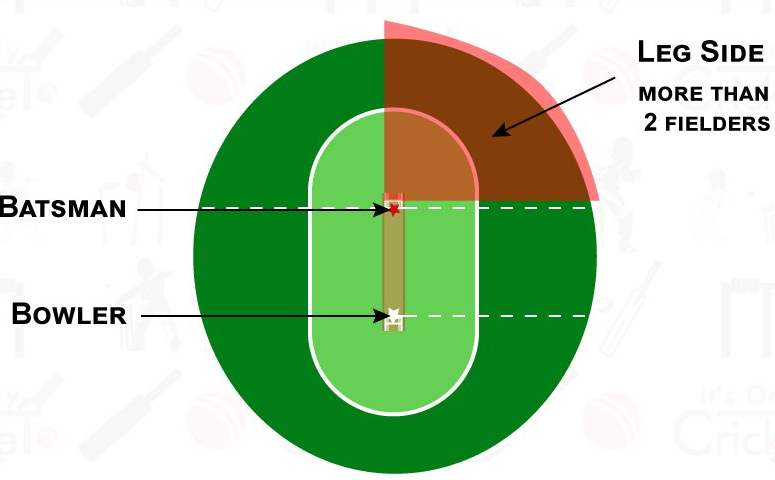
Much to the ire of the bowlers, fielders fuel more agony when they find themselves wrongly positioned in the field while the ball is in play. It’s primarily caused when the fielding team has more than the required number of players outside the 30-yard circle. This type of cricket no ball rule originally stems from a fielding infringement, and the punishment for it is one extra run to the opposition followed by a free-hit.
So, how do the fielding violation no ball rules in cricket apply in real-time? The regulations set by the International Cricket Council (ICC) dictate how many fielders can be placed outside the 30-yard circle depending on the match format. The no ball rules in T20 cricket allow a fielding side to have a maximum of five fielders outside the ring after the completion of the first 6 overs. However, the no ball rules differ considerably in the ODI format, where fielding restrictions are divided across three main types of powerplay as highlighted in the table below.
| Cricket No Ball Rules (Fielding Restriction) | Test (Max fielders allowed) | ODI (Max fielders allowed) | T20I (Max fielders allowed) |
| Fielders Behind Square | Not more than 2 fielders can be placed behind the square leg umpire | Stays same | Stays same |
| Fielders inside 30-yard circle | Does not apply | P1 – 2 fielders outside P2- 4 fielders to be outside P3- 5 fielders can be out | Over 1-6: Max 2 fielders outside After 6 overs: Max 5 fielders outside |
No Ball Out Rules in Cricket: When Can a Batter Be Dismissed?
While the no ball rules in cricket invalidate a majority of the dismissals, the batter can still find ways of being dismissed. Under the no ball out rules in cricket, a batter can be dismissed in three different ways. They are as follows:
- Run out: Either batter can be dismissed in the event of a no ball if he/she wanders outside their crease while the wickets are broken by the fielder at their end.
- Hit the ball twice: This mode of dismissal falls under rare cricket no ball out rules in cricket. Although very uncommon in this day and age, a batter can be out hit the ball twice if he/she is deemed to have hit the ball twice even in the case of no ball.
- Obstructing the field: This is a very controversial mode of dismissal under no ball out rules in cricket. But if any batter is unfortunate enough to block the catch of a throw of a fielding side in the event of a no ball, then regardless of the consequences, the batter will be dismissed.
Interestingly, these no ball out rules in cricket stay the same even when a batter is awarded a free hit. (Applicable only in limited-overs cricket)
FAQ on No Ball Rules In Cricket
How many types of no ball rules exist in cricket?
Currently, there are over 20 types of cricket no ball rules, primarily resulting from bowler lapses and fielding infringements.
What’s the core concept behind waist height no ball rules in cricket?
The best way to judge a waist height no ball in cricket is by considering a batter’s original upright batting stance at the popping crease. If, according to the umpire’s opinion, the ball would have gone above the waist height of a batter, who originally would have stood upright at the popping crease, then a no ball must be signalled.
Do all no ball rules in cricket have a free-hit?
All types of no ball rules in cricket not only cost 1 run but are also accompanied by a free-hit, thereby adding to the plight of the bowling team.
Can a batter be dismissed under no ball out rules?
Yes, under the cricket no ball out rules, a batter can be dismissed in three ways, primarily in the form of run out, hit the ball twice, and obstructing the field.
How many no balls are allowed in an over?
At the moment, there is no limit. But fielding teams put enough effort into minimizing the occurrence of a no ball in an over.
Is runout allowed on no ball?
Yes. According to the existing rules of the game, a batter is liable to be runout of a no ball delivery.
Departing Thoughts on No Ball Rules in Cricket
A no ball in cricket carries costly repercussions for the bowling side. A bowler can get it entirely wrong in so many different ways. The no ball rules in cricket exist to ensure fairness and player safety. While front-foot overstepping remains the most common offence, the Laws of Cricket also cover dangerous deliveries, illegal field placements and several other situations. Understanding the no ball rules not only helps players avoid costly mistakes but also enables fans to better appreciate some of cricket’s most controversial umpiring decisions.
By now, you must have understood that the cricket no ball rules are very extensive and are not merely confined to front-foot no-balls alone. But in most cases, apart from fielding infringement and keeper encroaching, it’s within the bowler’s control to curtail the no balls. However, game pressure and intense match situations can often dent the mental composure of a bowler, leading him or her to deliver a dreadful no ball in cricket.
If you found our guide on no ball rules in cricket helpful, then you might be interested in knowing what our rulebook has to say about the pitching outside off LBW rule in cricket.
Looking to Share Your Cricket Coaching Expertise?
We’d love to work with passionate cricket experts like you. Whether you’re a coach or part of an academy, collaborate with us to create high-quality content and help make cricket coaching free and accessible to everyone.
Collaborate With Us


2 responses to “No Ball in Cricket: All Types & Rules Explained”
whoah this weblog is excellent i really like reading your posts.
Keep up the great work! You realize, lots of people are hunting round for this info, you can help
them greatly.
Thanks for regularly visiting my website. Your comments mean a lot to us and we will aim to do better and keep providing you with detailed yet simplified explanations of the laws of the game to make learning cricket simple. We have more ambitious plans around the corner which will help cricket lovers like you purchase cricket products online irrespective of geolocation. So stick around with us for that and keep following CricVision 🙂