
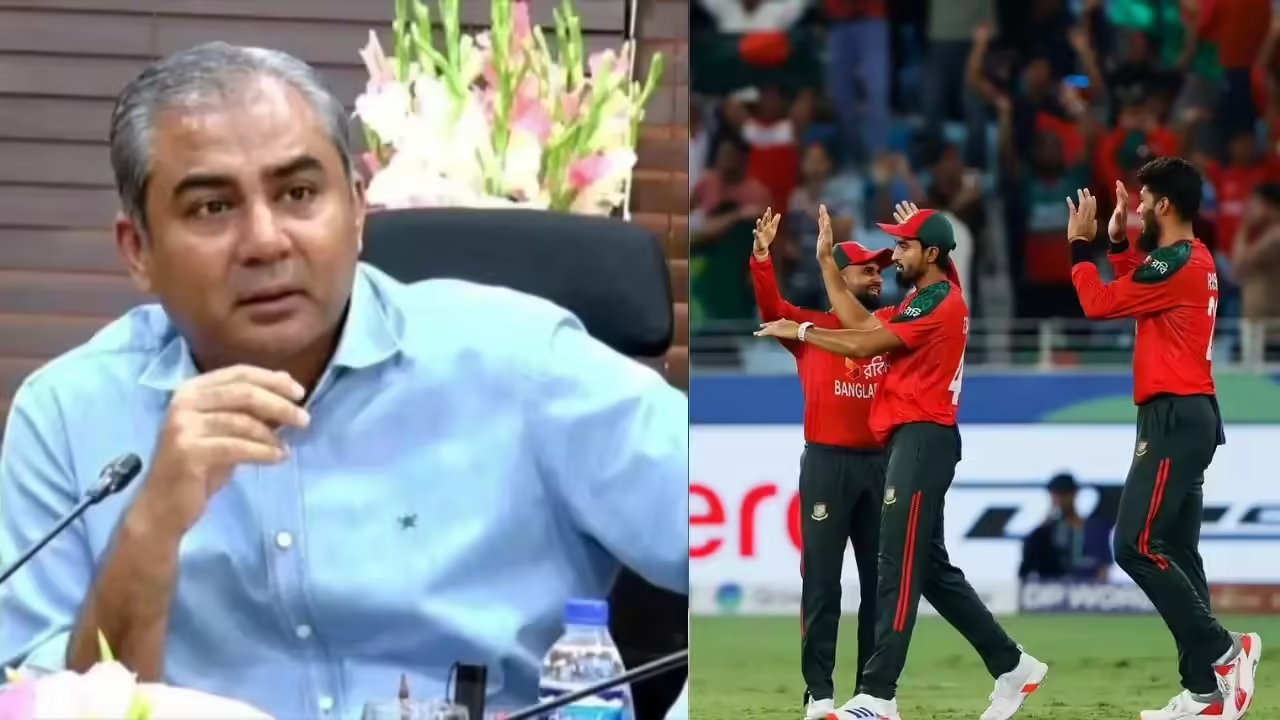
Trouble mounts on the International Cricket Council (ICC) as the countdown to the T20 World Cup draws to a close. With barely a few days to go, the ICC T20 World Cup 2026 boycott has rocked the multi-nation tournament. The Pakistan Cricket Board (PCB), headed by Mohsin Naqvi, has come out in support of Bangladesh, following its exclusion from the Men’s T20 World Cup.
Previously, the ICC decided to leave Bangladesh out and replace them with Scotland, after the former refused to tour India for its World Cup games. Under the pretext of what it described as a security threat, the BCB, in line with its government, requested the apex body to shift its fixtures to Sri Lanka. But their plea was dismissed instantly. As a result, negotiations stalled, and no agreement could have been reached, which left the ICC with no option but to replace Bangladesh with another team.
Meanwhile, the PCB has announced its 15-member squad for the World Cup. However, the participation of its national side still hangs in uncertainty. Ever since it was announced that Bangladesh would not take any part in the T20 World Cup 2026, rumors of a possible boycott from Pakistan have been spreading like wildfire. PCB’s involvement in this matter has further deepened the ICC T20 World Cup 2026 boycott crisis. PCB chairman and Pakistan’s interior minister, Mohsin Naqvi, openly vowed to extend its support for the BCB and called out the ICC for maintaining double standards.
He is now expected to meet Pakistan’s Prime Minister, Shahbaz Sharif, to best determine Pakistan’s future in the upcoming marquee tournament. The final decision is expected to arrive no later than February 2. Should Pakistan opt out of the World Cup, it could not only risk losing billions in revenue but also face unforgiving sanctions from the ICC.
Is Pakistan Making a Justifiable Move by Favoring Bangladesh Amid ICC T20 World Cup 2026 Boycott?

Pakistan’s involvement in the ICC T20 World Cup 2026 boycott has added another layer of complexity. The power struggle between the BCB and the ICC is purely bilateral in nature. Pakistan is needlessly getting itself involved in a matter that has nothing to do with it. But in light of growing political cooperation between Islamabad and Dhaka, such a move was expected by the PCB.
Although the PCB firmly insists that their involvement is solely on the grounds of mediation, this claim could potentially be far from the truth. PCB have of late been at odds with the ICC on several matters. By aiming to shield the BCB, the PCB, under the influence of Mohsin Naqvi, attempts to join hands with the BCB to counter India’s growing influence over the ICC. This dangerous adventurism from the PCB could have dire consequences for its national side, which could severely dent its international credibility and it’s ability to participate in future global tournaments.