
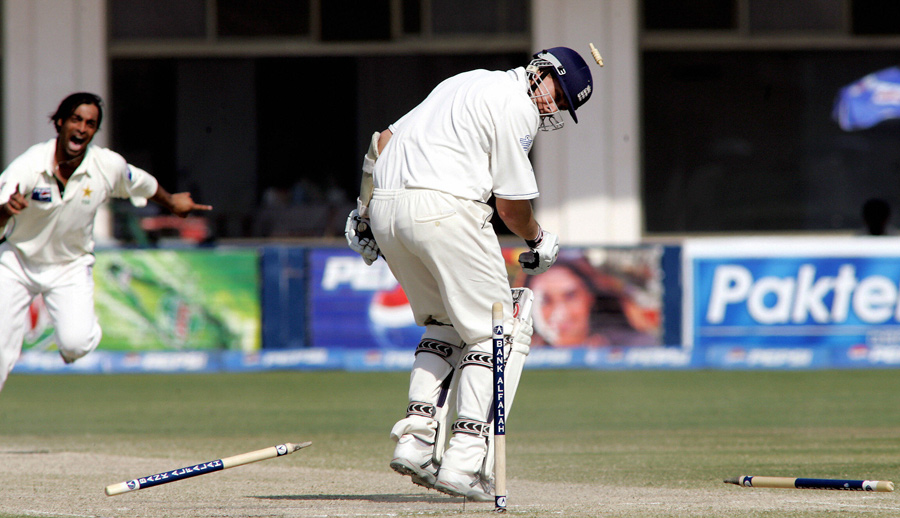
Fast bowling is considered one of the most exhilarating sights in the game of cricket. There is nothing more satisfying for a bowler than to uproot the poles of a well-set batter or trouble them with fast, pacy short-pitched deliveries. To achieve this consistently, it is crucial that you follow the right fast bowling tips and understand the core fast bowling technique required at every stage of your action.
Pace bowling is a very physically demanding skill and exposes players to the risk of long-term injuries. Without access to reliable fast bowling tips for beginners, many aspiring pacers can unknowingly put both their fitness and performance at risk. This is why following structured cricket bowling tips and proven fast bowling techniques becomes essential for long-term success.
In this complete coaching guide, you’ll learn the most effective fast bowling tips, practical fast bowling drills, and proven fast bowling techniques used by developing cricketers. We’ll break down every phase of the bowling action, recommend bowling drills for fast bowlers, and explain how beginners can build a stronger, faster, and more repeatable bowling action through structured fast bowling training.
Table of Contents
Understanding the Fast Bowling Action Step-by-Step
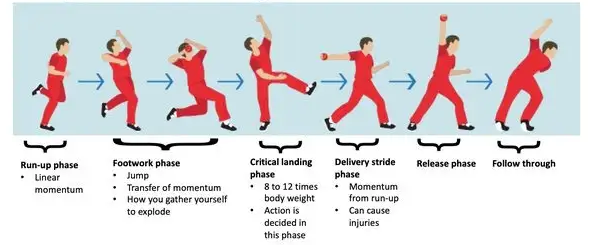
Learning how to do fast bowling in cricket for beginners is much easier when you break the bowling action into individual phases instead of trying to master everything at once. A complete fast bowling action consists of six connected stages: the run-up, gather (or bound), back foot contact, front foot contact, release, and follow-through. Each phase builds momentum for the next, allowing bowlers to generate pace without sacrificing balance or accuracy.
Many aspiring pacers focus only on bowling faster, but experienced coaches first teach a repeatable bowling action through structured fast bowling training. Learning the correct cricket bowling techniques for each phase helps beginners improve rhythm, consistency, and efficiency before trying to increase pace.
If you’re wondering how to do fast bowling, remember that speed is only one part of the equation. Good fast bowling techniques also help you bowl consistent lengths, maintain your line, reduce injury risk, and develop a repeatable action that performs under pressure.
Fast Bowling Tips And Drills: Run-Up (Approach Phase)
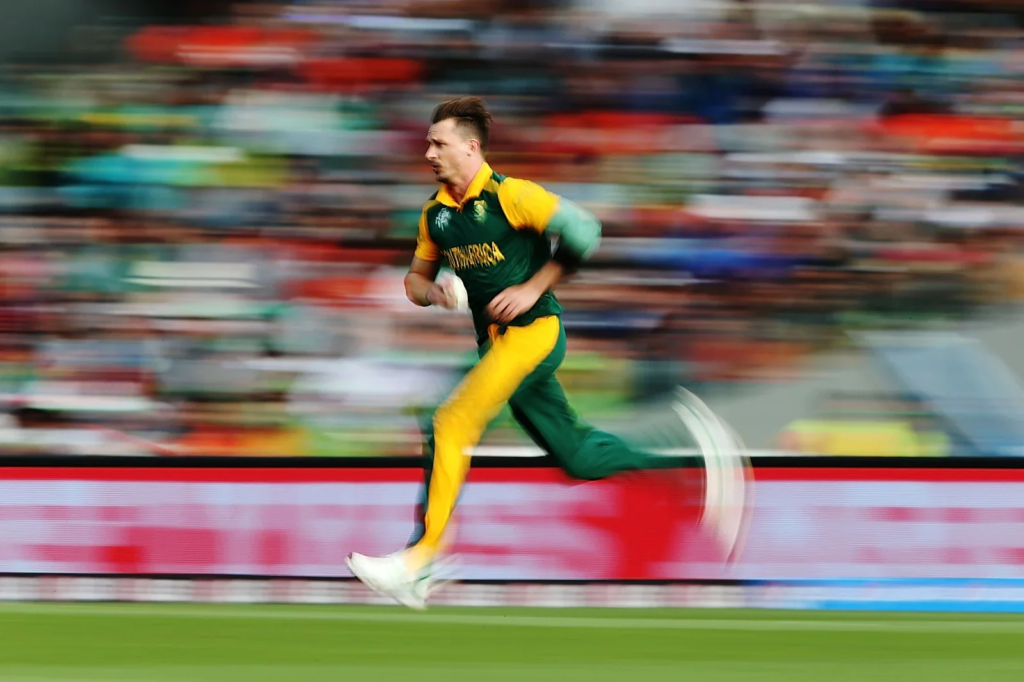
The fast bowling run-up steps are the foundation of every successful bowling action. A well-measured run-up allows you to build momentum gradually before transferring that energy into the delivery stride. Beginners often make the mistake of sprinting too early, causing them to lose balance before releasing the ball.
Many aspiring pacers focus only on bowling faster, but experienced coaches first teach a repeatable bowling action through structured fast bowling training. Learning the correct cricket bowling techniques for each phase helps beginners improve rhythm, consistency, and efficiency before trying to increase pace.
Instead, your fast bowling run-up steps for beginners should begin with a relaxed jog that gradually builds into controlled acceleration. Every stride should feel natural and repeatable so that you arrive at the crease in the same position every delivery. Marking your starting point with cones or tape can help develop consistency during practice.
Recommended Cricket Fast Bowling Drills
Mark Your Run-Up Drill: This is one of the most effective bowling drills for fast bowlers because it develops a repeatable run-up and improves rhythm before every delivery. Practice hitting the same spot each time. The fast bowling tips and drills tutorial from Brett Lee below offers the perfect illustration of how a budding fast bowler can form his/her fast bowling run up steps in a seamless manner.
Rhythm Drill: This is one of the most effective bowling drills for fast bowlers because it develops a repeatable run-up and improves rhythm before every delivery. Another valuable fast bowling drill to improve your fast bowling run up steps is the rhythm drill. Walk/run the run-up slowly, focusing on a consistent cadence. As Bhuvanashwar Kumar can be heard saying in this tutorial below, a bowler should ideally keep their eyes closed and count the steps from the moment they begin their run-up from the bowler’s end. Repeating this exercise regularly makes it one of the most valuable fast bowling drills for beginners, especially for bowlers struggling with inconsistent timing during their approach.
Cricket Bowling Tips: What To Focus
- Smooth acceleration (not a sprint from ball one)
- Rhythm and consistency are key (same steps every time)
- Eyes fixed on target (batter or intended line)
- Balanced posture—no leaning or stuttering
Objective: The core essence of these fast bowling tips and drills is to build consistent rhythm and momentum. Remember that your run-up should complement your bowling action rather than create unnecessary speed. Whether you’re practicing at the nets or at home, repeating the same bowling steps in cricket helps improve rhythm, timing, and accuracy over time.
Fast Bowling Tips and Drills: Pre-Delivery Stride (Gather / Bound)
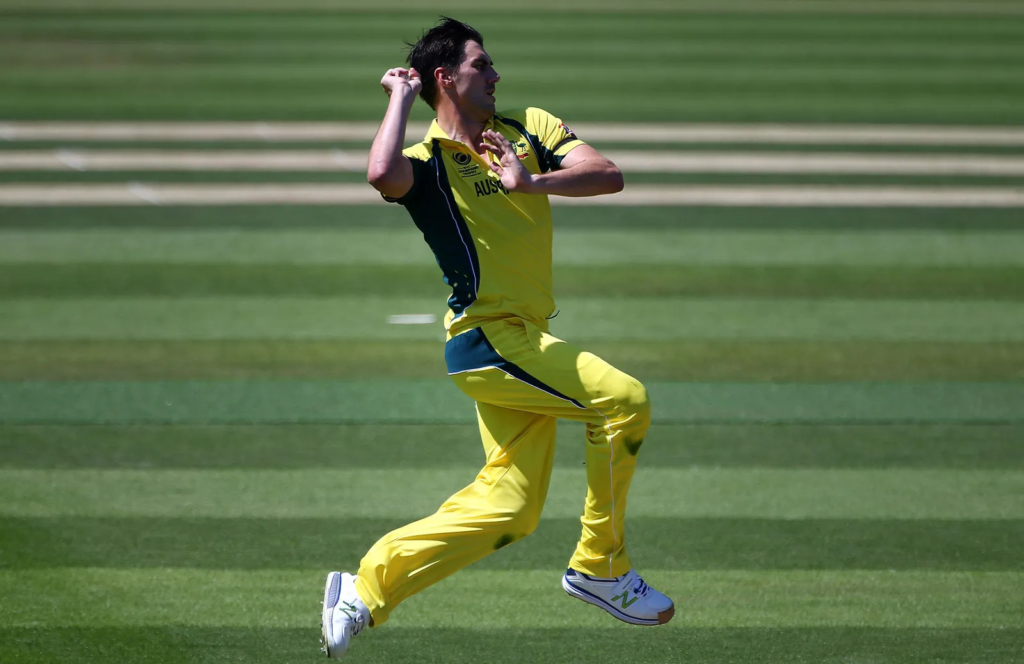
We now transition to the next phase of fast bowling tips and drills for beginners. The gather (a.k.a loading) of a fast bowler’s action allows the bowler to get into an ideal position to release the ball just before hitting the delivery stride. This fast bowling technique requires the bowler to transfer all the momentum built up during the run-up onto the cricket ball, ensuring a smooth and effective release.
This stage also forms a vital part of modern fast bowling techniques, as an efficient gather allows bowlers to transition smoothly into the delivery stride while preserving rhythm and momentum.
Recommended Cricket Fast Bowling Drills
Bounding Drill: Run 5–10 steps and jump into your front foot landing. Focus on balance and a spring-like movement. Refer to the tutorial below for more insights.
Knee Lift Drill: Practice high knee lifts while moving forward. This fast bowling drill improves leg drive and core engagement and forms yet another crucial aspect of your fast bowling action. The tutorial below serves as a perfect demonstration of how you can go about practising the knee lift fast bowling drill.
Shadow Bowling: From a stationary position and without a cricket ball, mimic the gather, bound, and pre-delivery arm movement. This fast bowling drill separates the run-up from your bowling action and allows you to focus strongly on your gather.
Cricket Bowling Tips: What to Focus
- Small jump or “bound” into the delivery stride
- Non-bowling knee lifts (helps generate power)
- Arms begin to load (non-bowling arm comes up)
Objective: The objective of this fast bowling drill is to assist bowlers in transitioning from horizontal movement (running) to vertical + rotational movement. This is where momentum is “stored” before release, just like compressing a spring.
Fast Bowling Tips and Drills: Back Foot Contact (BFC)
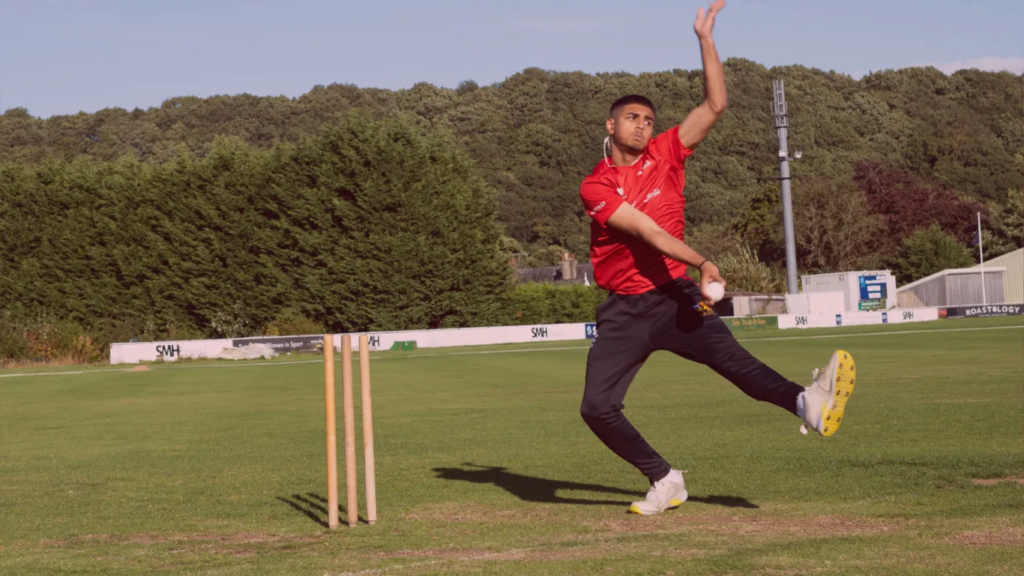
In this phase of your fast bowling action, you’re required to land on your back foot (right foot for a right-arm quick and vice versa) and then transfer your body weight forward. At Back Foot Contact (BFC), the aim is to preserve as much momentum as possible and transfer it smoothly into the final phases of your action. Efficiency at this point is essential—spending minimal time at BFC helps conserve energy and reduces any loss of momentum.
Recommended Cricket Fast Bowling Drills
Step & Pause Drill: Step into your back foot and pause briefly to feel balance before going forward. The tutorial below offers an insightful explanation of how you can perform this drill.
Hip Rotation Drill: Stand in delivery position and rotate hips side-to-side to feel proper torque.
Cone Alingment Drill: Place cones for back foot placement and practice landing it consistently between them. Watch this tutorial below to closely mimic these fast bowling tips and drills.
Cricket Bowling Tips: What to Focus
- Back foot lands parallel or slightly angled
- Avoid excessive knee bending during this phase. A normal braced front knee will just about do the trick
- Hips begin to rotate toward the batter
- Avoid twisting the torso too early. Rotation should come after the front foot lands
Objective: The goal of this fast bowling drill is to align your body correctly and facilitate ideal rotation and body weight transfer.
Fast Bowling Tips and Drills: Front Foot Contact (FFC)
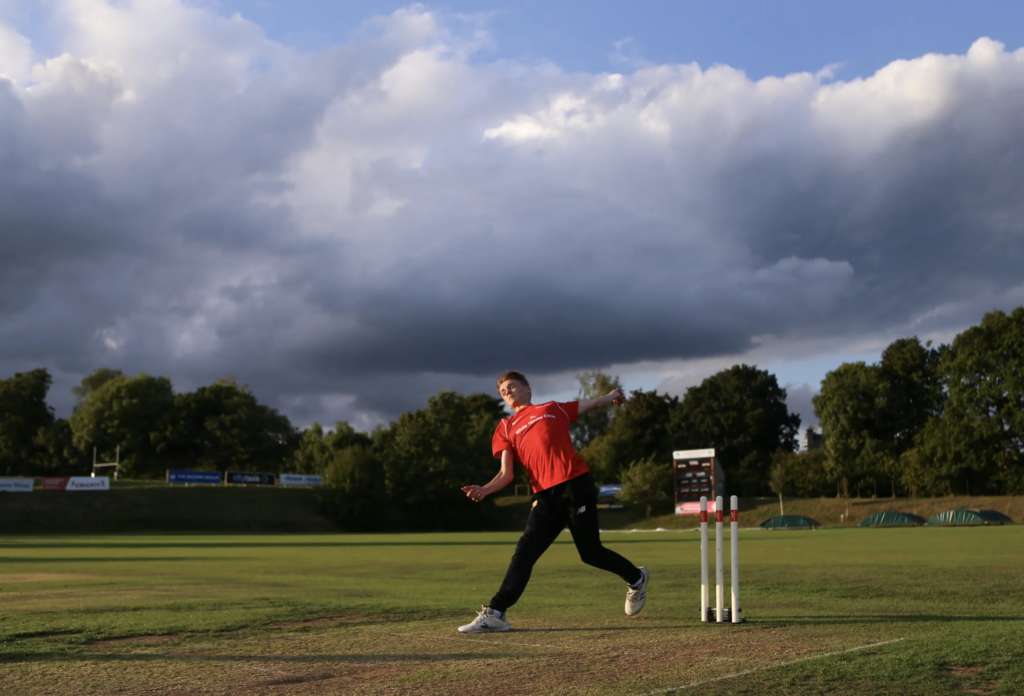
Front Foot Contact (FFC) is the moment when a fast bowler’s front foot lands on the ground just before releasing the cricket ball. It’s the key point where momentum from the run-up is transferred through the body.
Recommended Cricket Fast Bowling Drills
Braced Front Foot Drill: Step onto the front foot with a slight bend, and explode torso rotation without the cricket ball. The tutorial below offers an insightful explanation of how you can perform this drill.
Non-Bowling Arm Drill: Focus on pulling down the non-bowling arm to aid shoulder rotation the moment your front foot lands. You can try this fast bowling drill from a stationary position, just the way it has been demonstrated in the tutorial video below.
Cricket Bowling Tips: What to Focus
- Front foot lands firmly, so make sure you maintain a strong “braced” front leg
- Hips and shoulders rotate explosively
- Non-bowling arm pulls down hard to aid rotation
Objective: A strong, braced front leg helps generate pace and stability. Maintaining a repeatable FFC is a key element of your fast bowling technique and also allows efficient hip and shoulder rotation for a powerful delivery.
Fast Bowling Tips and Drills: The Release
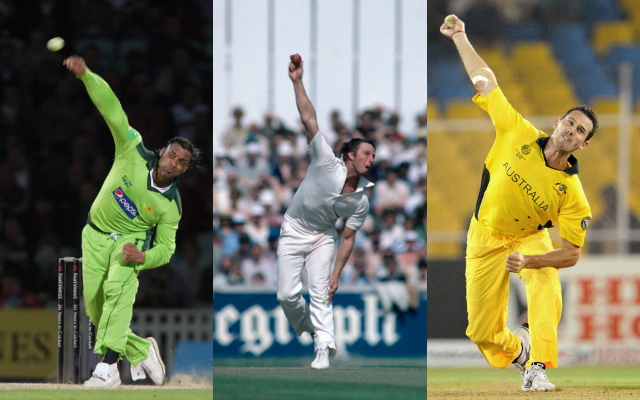
After acing all the fundamental basics of fast bowling techniques, it’s time to land the ball in the preferred spot of your choice. Delivering the cricket ball with speed, seam position, and accuracy is key to getting your fast bowling release spot on. This stage also forms a vital part of modern fast bowling techniques, as an efficient gather allows bowlers to transition smoothly into the delivery stride while preserving rhythm and momentum.
Recommended Cricket Fast Bowling Drills
Target Drill: Arrange various cones or targets at various lengths on the turf. Focus on consistently landing the cricket ball in those areas. Below is a perfect demonstration of the target bowling drill.
Wrist Position Drill: Practice releasing the ball with different seam/wrist angles for swing control. Legendary fast bowling legend Wasim Akram elaborates exactly how minor differences in wrist/seam position can cause the ball to deviate viciously through the air.
Cricket Bowling Tips: What to Focus
- The bowling arm comes over in a fast, whipping motion.
- Head and eyes are fixated on your target
- Wrist position plays a pivotal role in determining how the cricket ball would react in the air and off the surface. (A cocked wrist position is preferred)
Objective: The objective of this fast bowling drill is to help you work on your speed, length, and direction all in one go. For further tips on improving line and length, follow our detailed fast bowling guide by clicking on the link below.
Fast Bowling Tips and Drills: Follow-Through
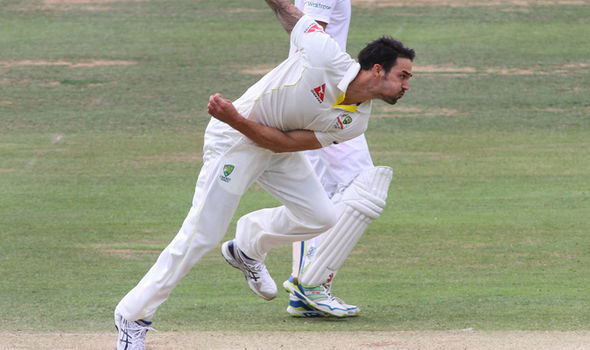
The follow-through comprises the final step in your fast bowling action. Follow-through is the phase after the ball is released, where the bowler’s body continues moving forward. It helps safely release all the built-up momentum from the delivery. A smooth follow-through in your fast bowling action reduces injury risk and improves consistency.
The tutorial below contains some useful fast bowling tips and drills any young or amateur-level cricketer can emulate to achieve long-term success.
Recommended Cricket Fast Bowling Drills
Step-Through Drill: Practice full follow-through without a cricket ball, letting the back leg swing naturally.
Balance Drill: Hold the finish position for 3–5 seconds to improve stability.
Slow Motion Drill: Film your follow-through, check that your body moves forward and doesn’t collapse.
Objective: The goal is to safely dissipate energy and maintain balance while bolstering accuracy and consistency in your fast bowling.
Common Fast Bowling Action Mistakes Beginners Make
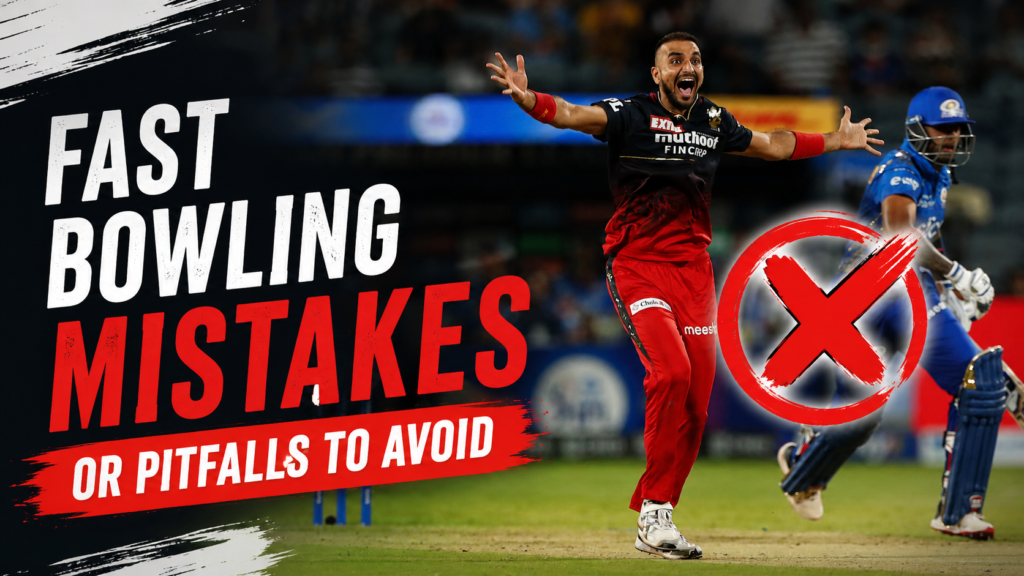
Even talented young bowlers often develop technical flaws that reduce both pace and accuracy. Many of these mistakes can be corrected through regular fast bowling practice and simple bowling drills for fast bowlers, rather than making major changes to your bowling action. One of the biggest mistakes is trying to generate speed entirely through the upper body instead of allowing the legs, hips, and shoulders to work together. A smooth fast bowling action should feel fluid from the run-up all the way through to the follow-through.
Another common mistake is rushing the gather and delivery stride. This often causes poor balance, inconsistent release points, and an inability to repeat the same action. Following a proper cricket bowling action step by step allows each movement to flow naturally into the next.
Many beginners also overstride during front foot contact. Landing too far in front of the body can reduce momentum and place additional stress on the lower back and knees. Good fast bowling action tips focus on maintaining posture, bracing the front leg, and keeping the head stable throughout the delivery.
Finally, avoid changing your bowling action too frequently. Small technical improvements made consistently are usually more effective than attempting a completely new action every few weeks.
Closing Thoughts On Fast Bowling Tips In Cricket
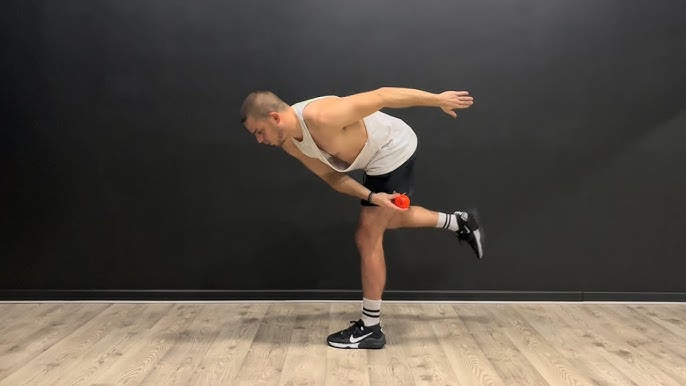
Fast bowling is a craft built through a sequence of well-connected phases—run-up, gather, back foot contact, front foot contact, release, and follow-through. Each phase plays a crucial role in generating pace, control, and consistency. These fast bowling tips outlined in this guide are aimed at gradually refining your fast bowling technique and building a strong, repeatable action.
However, mastering fast bowling basics is not just about physical skill. In today’s batter-dominated game, even the best bowlers can go for runs. Apart from fast bowling drills for beginners, it is equally imperative for a bowler to work on the mental side of the game.
These fast bowling tips for beginners are designed to help young cricketers build solid fundamentals through structured fast bowling training, practical fast bowling drills, and repeatable cricket bowling techniques. Whether your goal is improving pace, refining your bowling action, or simply becoming a more consistent fast bowler, practising these drills regularly will accelerate your development.
More Fast Bowling Tips & Resources
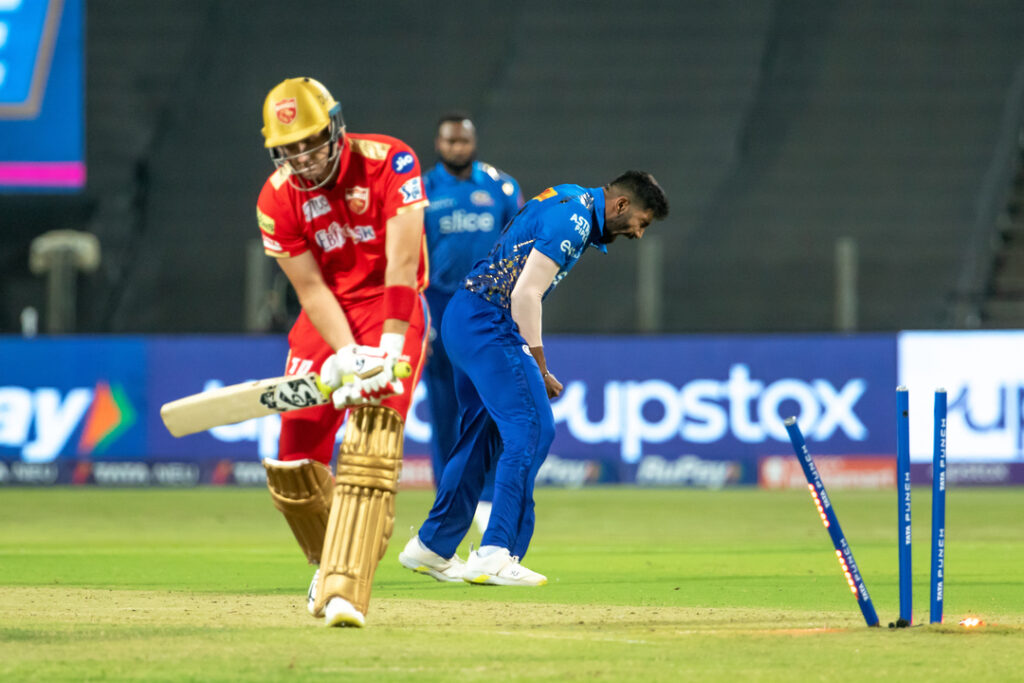
Fast Bowling Tips for Beginners: Improve Accuracy & Master Line & Length
5 Proven Steps To Bowling The Perfect Yorker In Cricket
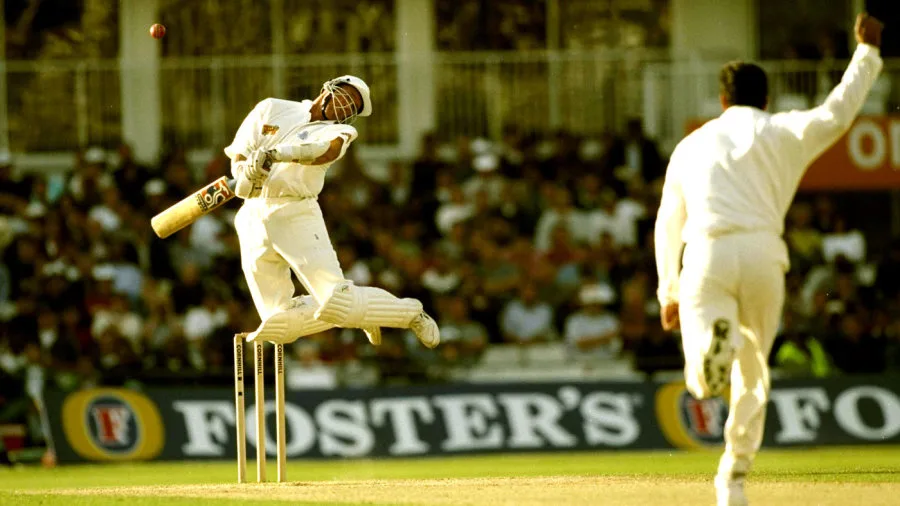
How to Bowl a Bouncer in Cricket: Fast Bowling Techniques for Beginners Decoded
How to Bowl Fast in Cricket: Proven Tips, Drills & Exercises to Increase Pace
Looking to Share Your Cricket Coaching Expertise?
We’d love to work with passionate cricket experts like you. Whether you’re a coach or part of an academy, collaborate with us to create high-quality content and help make cricket coaching free and accessible to everyone.
Collaborate With Us


2 responses to “Fast Bowling Tips & Drills for Beginners: Step-by-Step Coaching Guide”
Very very detailed and excellent analysis.
[…] As a fast bowler, there is no better feeling than shattering the stumps of an in-form batter or trapping him/her LBW (Leg Before Wicket) in cricket. No batter in the game enjoys being adjudged LBW in cricket. It exposes their vulnerabilities and highlights their weakness against facing an in-dipping delivery. But a lot of work goes into planning and preparation to trap the batter LBW. Batters these days have a lot going in their favor. From shorter boundaries to bigger-sized bats, modern-day batters have a plethora of resources at their disposal to thwart the threat of fast bowling. […]