

The LBW full form, also commonly referred to as Leg before Wicket is a mode of dismissal where a batter is liable to be given out if the cricket ball hits any part of their body (usually pads) instead of the bat, and is deemed to have been hitting the stumps. One major exception to the LBW rule is that the delivery must not be a no ball under any circumstances. The LBW law was said to have been devised sometime in the 18th century by the lawmakers to counter what they famously dubbed “foul play” from the batters during that time. The deliberate padding which we were once so accustomed to seeing has all but come to an end, thanks to the advent of LBW rules in cricket.
The LBW out rules can be quite complex to understand if you find yourself in the formative stage of your cricketing career. Even though the LBW out rules clearly make the mention of the leg being before the wicket, that does not always have to be the case. And to determine whether an appeal under LBW is out or not, the concerned umpire needs to carefully take stock of a myriad of LBW conditions. So to address this very gap, we will look beyond the fundamental LBW meaning and explore various clauses under the LBW out rules to provide you with a much broader understanding of how is LBW law decided under certain LBW conditions.
Table of Contents
LBW Conditions To Consider Under LBW Rule
The LBW meaning can’t be fully understood or deciphered without having a deep dive into the LBW conditions. This is where the LBW out rules take an interesting twist. According to Law 36 of the LBW law under the MCC, a batter can be adjudged out under the LBW rules if a combination of all circumstances applies:
36.1.1 The bowler delivers a ball, not being a No ball
36.1.2 the ball, if it is not intercepted full-pitch, pitches in line between wicket and wicket or on the off side of the striker’s wicket
36.1.3 the ball not having previously touched his/her bat, the striker intercepts the ball, either full-pitch or after pitching, with any part of his/her person
36.1.4 the point of impact, even if above the level of the bails,
either is between wicket and wicket
or if the striker has made no genuine attempt to play the ball with the bat, is between wicket and wicket or outside the line of the off stump.
36.1.5 but for the interception, the ball would have hit the wicket.
Let’s closely evaluate all the LBW out rules listed above in a methodical manner and find out what they actually imply.
Clause 36.1.1: No chance for an LBW out in cricket rule to fall in your favor if a no ball is committed. This clause does apply even if all the LBW conditions are met.
Clause 36.1.2: The ball must pitch either in line with the stumps or just outside the line of off stump, provided the ball has not been intercepted on the full. This is where the LBW leg side rule, which prevents batters from being dismissed if the ball pitches outside leg.
Clause 36.1.3: The cricket ball can strike any part of the batter’s body (apart from pads) which comes in the way of the stumps.
Clause 36.1.4: Impact of the cricket ball must be in line with the stumps when a batter is playing a shot. The batters get a reprieve when the impact is outside the line of stumps. However, under the LBW no shot offered rule, a batter can be dismissed even if the impact is outside, provided he/she does not play at the ball.
Clause 36.1.5: According to the umpire’s interpretation, the ball would have gone on to hit the stumps.
Leg Before Wicket Rules (Possible LBW Law Scenarios)
Now that we have successfully uncovered the real LBW meaning along with the clause-by-clause breakdown of the LBW law, it’s time to look at the possible LBW rule scenarios that can realistically arise at any point during a cricket match.
Scenario 1: LBW Leg Side Rule (Pitching Outside Leg LBW Rule)
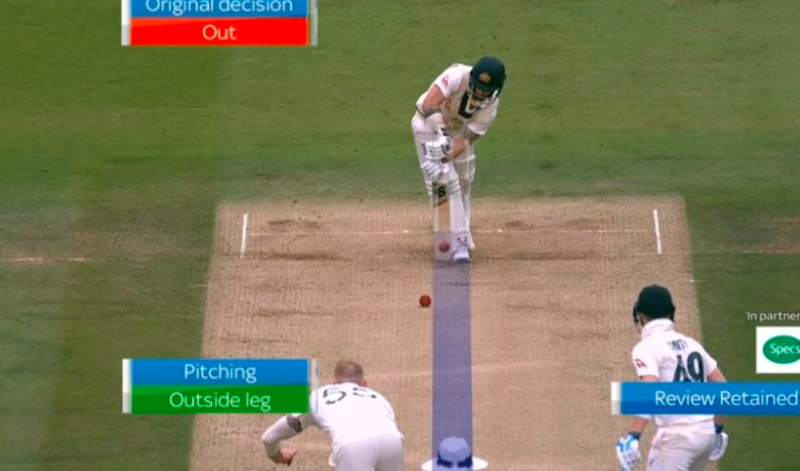
So why is pitching outside leg not LBW? Turns out, under the pitching outside leg LBW rule, any ball pitching outside the leg stump is not out Leg Before Wicket (LBW), primarily to prevent negative, highly defensive bowling tactics and to compensate for the batter’s reduced visibility on the leg side.
For detailed insights on the pitching outside leg LBW rule, click on the “Read More” button below.
Scenario 2: Pitching Outside Off LBW Rule
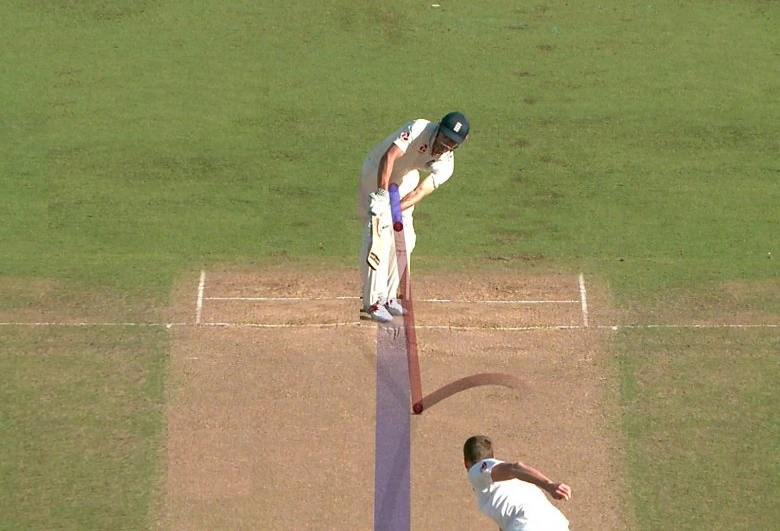
Under the pitching outside off LBW rule, a batter could be deemed out if the ball pitches outside off stump before crashing onto the pads. The height, trajectory, and the impact of the delivery are all taken into account before adjudging a batter out under the pitching outside off LBW rule.
For detailed insights on the pitching outside off LBW rule, click on the “Read More” button below.
Scenario 3: Impact Outside Off LBW Rule
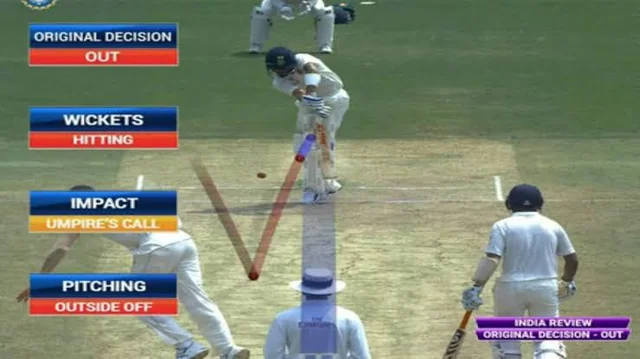
Under the impact outside off LBW rule, a batter can survive an LBW out appeal if the cricket ball strikes his/her body just outside the line of the stumps. However, things can turn upside down if no shot is offered by the batter.
Read more about the impact outside off LBW rule by clicking on the “Read More” icon.
Scenario 4: LBW No Shot Offered Rule

This is where the LBW law takes a whole new twist. Under the no shot offered rule in cricket, a batter can be dismissed LBW if he/she fails to offer a shot. The point of impact is ignored, and the batter is liable to be dismissed under this rule even if the impact would have been drastically outside the line of the stumps.
Read more about the LBW no shot offered rule by clicking on the “Read More” icon.
Edge case: LBW only applies when the ball strikes the pad or the batter’s body in line with the stumps. If the ball hits the helmet first, the ruling changes — see whether a ball hitting the helmet in play is a no ball or dead ball for the full rule.
FAQs on LBW Meaning
What is the full form of LBW in cricket?
LBW stands for Leg Before Wicket. It is a rule in cricket used by umpires to decide if the ball would have hit the stumps when it strikes the batsman’s leg.
When was the LBW rule introduced in cricket?
The LBW rules were first introduced by the lawmakers sometime in the late 1700s in England.
When is a batter out LBW in cricket?
A batter is adjudged out if all the conditions laid out in the LBW rule are met.
How does impact outside off LBW rule apply in real time?
The impact outside off LBW rule kicks in when a batter is struck outside the line of the stumps. A batter survives under this LBW rule provided he/she offers a shot before being struck on the pads.
When is a batsman not out under the LBW rule?
A batter is not out under LBW law if either the ball pitches outside leg stump or the point of impact is deemed just outside the line of the stumps.
What in the overall LBW meaning?
The LBW meaning or the LBW full form in cricket stands for Leg before Wicket. Under this dismissal, the umpire can rule a batter out if their body (usually the leg pad) stops a ball from smashing the stumps.
Quick Summary on LBW Meaning & LBW Law
The LBW full form in cricket stands for Leg Before Wicket, though this is only the tip of the iceberg. In this article, we covered the length and breadth of the LBW out rules, which also involved taking a closer look at the LBW meaning. Under the rules for LBW, a bowler needs to meet all 5 requirements in order for an LBW appeal to be successful. Perhaps the most crucial LBW condition to satisfy is that a bowler must not commit a no ball.
The LBW law can further be broken down into the pitching outside leg LBW rule, the pitching outside off LBW rule, and the LBW no shot offered rule. These rules lay down unique circumstances under which a batter can be dismissed under the LBW rule. For an appeal to be successful under the LBW law, the cricket ball does not necessarily need to make contact with a batter’s pads
Found Our Cricket Coaching Guide Insightful?
With the right equipment, access to top experts, and the resources to grow, Cricvision can go the extra mile! If you’d like to be part of this journey, visit our donation page. Every contribution counts and directly fuels our growth.
Donate Now


2 responses to “LBW Full Form in Cricket (Meaning, Rules & Easy Explanation)”
Hi! I’ve been following your web site for some time now and finally got the courage to go ahead and give you a shout out from New Caney Texas!
Just wanted to say keep up the good work!
Hello there,
Thank you so much for your compliment and your continued support. It means a lot to us and we aim to bring you quality cricket content to keep you enlightened and entertained at the same time.
Please free to drop us an email at contact@cricvision.co.in should you have further queries/suggestions. 🙂