


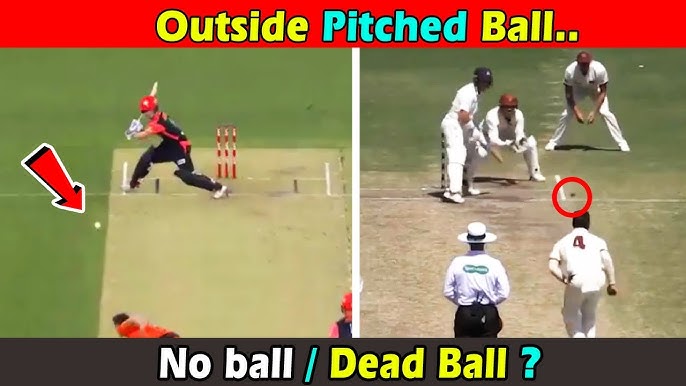
A ball that lands entirely outside the pitch (the 22-yard strip) is called a no ball under Law 21.4. The batter is not out to that delivery except by run out or obstruction, and the fielding side concedes one no-ball run plus any runs scored off it. The bowler has to re-bowl the delivery.
What if the ball pitches outside the pitch in cricket? Is it instantly called a dead ball or a no ball? If such thoughts have crossed your mind, then you are at the right place. This situation often raises questions around outside pitch no ball rules and whether the delivery should be called a dead ball. In this cricket rules & regulations guidebook, we will offer you a detailed explanation of the outside pitch no ball rules, and unravel possible scenarios that could either result in a no ball or a dead ball.
So, where to pitch the ball in cricket for it to be considered legal? For a delivery to be legal, the first bounce must land on the pitch itself. If the cricket ball lands wholly or partially outside the pitch before reaching the striker, the umpire will normally call a no ball under MCC Law 21.7. The width of the pitch is roughly 10 feet (3.05 m). Bowlers need to pitch the cricket ball on the pitch and within the wide guidelines (limited-overs cricket) for their deliveries to be legal.
So, when does no ball happen in cricket? If any bowler pitches the ball outside pitch, that’s when the outside pitch no ball rules kick in. According to MCC Law 21 (No Ball), specifically Law 21.7, states that if the cricket ball pitches outside the pitch or any part of it lands either partially or entirely outside the pitch area, then the bowler is deemed to have delivered a no ball.
Outside Pitch No Ball Rules From MCC
In short: if the ball is intentionally delivered and its first bounce lands wholly or partly outside the pitch, the umpire will almost always call a no ball. A dead ball is reserved for exceptional situations where the delivery was not considered to have been properly released.
21.7 Ball bouncing more than once, rolling along the ground or pitching off the pitch
The umpire shall call and signal No ball if a ball which he/she considers to have been delivered, without having previously touched bat or person of the striker,
- bounces more than once or rolls along the ground before it reaches the popping crease
or
- pitches wholly or partially off the pitch as defined in Law 6.1 (Area of pitch) before it reaches the line of the striker’s wicket. When a non-turf pitch is being used, this will apply to any ball that wholly or partially pitches off the artificial surface.
So this clears what happens if the cricket ball pitches outside the pitch in cricket. Will it indeed be given a no ball? Yes, technically, the short answer is a no-ball! If the ball pitches outside the pitch and the ball bowled goes beyond the reach of the batter, the umpire reserves the right to call and signal a no ball. But bear in mind that the outside pitch no ball rules are a bit complex and involve multiple scenarios. In some cases, a dead ball can also be signalled if the umpires believe that the ball wasn’t fully delivered and therefore slipped out of the bowler’s hand and landed outside the pitch as a consequence. We’ll present two real in-game scenarios under the outside pitch no ball rules which can lead to a no-ball or a dead ball, giving you a clear understanding of what happens if ball pitches outside the pitch.
Ball Pitching Outside The Pitch Rules (No-ball scenario)
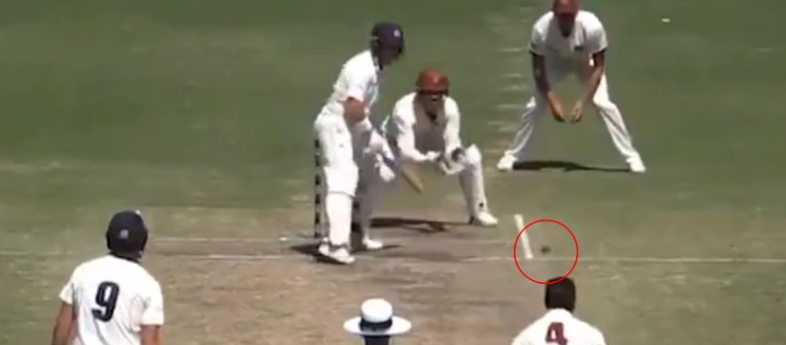
So now we are fully aware about when does no ball happen in cricket once the ball pitches outside the pitch. In situations where the bowler is deemed to have delivered the ball, this will go down as a typical case of a no-ball, though the possibility of a dead ball can’t be ruled out either. Not to mention, the laws make no mention of a wide ball. Yes, the ball bowled is beyond the reach of the batter, but the wide rule becomes invalid once the ball pitches outside pitch. Now that we’ve established the fact that any ball that lands outside the pitch is generally a no-ball, it’s time to delve a little deeper into the nuances of the cricket ball pitching outside the pitch rules.
The visual above demonstrates when the umpire should call and signal a no-ball. For it to be called a no-ball, the ball has to land beyond the pitch before it passes the striker’s wicket. In other words, before the ball passes the crease at the other end, it must pitch outside the pitch. The magnitude of the distance WILL NOT be taken into account. The ball may land considerably outside the pitch zone or have half of its part pitched within the pitch, while the remaining part pitches outside the pitch. Either way, the umpire concerned will signal no-ball.
Ball Pitching Outside The Pitch Rules (Dead-ball scenario)
What if the ball pitches outside the pitch in cricket, but according to the umpire’s opinion, it wasn’t delivered? This adds a new twist to the existing ruling, which cricket lovers from all walks of life need to bear in mind. While it’s true that any ball that pitches miles outside the cut strip is deemed to be a no ball, the umpire might need to make a judgment call on whether the ball was intentionally released or accidentally slipped out of the bowler’s hand.
In the above footage from the West Indian fast bowling legend Courtney Walsh, one can see how wide the ball went. Walsh got it absolutely wrong, sending the ball completely sideways to the batter’s offside. The delivery was so wide that it wasn’t even captured in the frame. It even forced the batter to leave the pitch, which caused the umpire to step in and signal dead ball. In an ideal scenario, this would have been a clear case of a no-ball. But the dead ball law does make provisions for such comical occurrences on the cricket field. From the given video, there are signs to suggest that the ball had indeed slipped and was not intentionally delivered by Walsh in his follow-through.
FAQs On Ball Pitching Outside The Pitch
What happens if the ball pitches outside the pitch?
If the ball pitches outside the pitch, it is considered a no ball as long as the umpires feel that the ball was delivered. The case of a deal ball arises only in exceptional cases.
Outside pitch no ball rules in a nutshell?
If any ball pitches outside the pitch, it’s either a no ball or a dead ball. A dead ball call is only called in rare circumstances when the umpire believes that the cricket ball had accidentally slipped out of the bowler’s hand, causing it to massively drift sideways.
What if the ball pitches outside the pitch in cricket? Does it count as one for the over?
Irrespective of the fact that the ball is a dead ball or a no ball, the ball does not count as one for the over.
Is the outside pitch no ball rule the same in all formats of cricket?
Yes, the rule applies in Test, ODI, and T20 matches.
Is dead ball a no ball in cricket?
No, a deal ball is not a no ball in cricket. They are two different rules applied in totally different circumstances. However, in the event of a dead ball or no ball, the ball does not count as one for the over.
Where to pitch the ball in cricket for it to be legal?
For a delivery to be called legal, it must land within 10 feet width of the pitch and well inside the wide guideline (limited-overs cricket).
Is over pitch ball in cricket the same as ball pitching outside the pitch in cricket?
Not entirely. Overpitch ball in cricket might mean that the ball might have passed completely over the pitch without pitching, but might have stayed within the reasonable limits defined by the cricket pitch. Whereas, ball pitching outside the pitch implies that the ball landed completely outside the pitch on the first bounce.
What is the difference between no ball and dead ball?
The major difference between no ball and dead ball is that no ball is issued when a fielding team commits an offence on the field, primarily in the form of front foot or waist height no balls. However, a dead ball is not always related to an offence and can be issued at any point of the game due to a possible interruption or injury.
Does over pitch ball in cricket count under no ball rules in cricket?
Over pitch ball in cricket will only be considered a no ball if the cricket ball completely lands sideways beyond the pitch. But if over pitch ball lands on the full but within the return crease of the pitch then it could either be considered a legal ball or a wide.
Ball Pitching Outside The Pitch: Understanding Why Bowlers Get It Wrong
Many people confuse an over pitch ball with a ball pitching outside the pitch. An over pitch ball generally refers to a very full delivery that lands close to the batter’s feet or even reaches on the full. It does not automatically become a no ball unless it satisfies the relevant MCC Laws, such as pitching outside the pitch or breaching the waist-height full toss rule.
It would be naive to assume that bowlers intentionally try to pitch the ball outside the pitch in cricket. We are all well and truly aware of the negative consequences of conceding a no ball, especially when it’s a limited-overs cricket match. No bowler will be foolish enough to give it to the opposition on a plate. So, why do we see such bizarre instances of ball pitching outside the pitch?
There are ideally two main reasons that result in ball pitching outside the pitch.
Wide Yorker: Firstly, in their quest to execute a wide yorker, the bowlers tend to occasionally lose their line and end up bowling deliveries that land too far beyond the wide guideline and eventually outside the pitch, subsequently causing the umpire to signal a no-ball.
Slippery Conditions: The slippery conditions or a wet outfield can make it very hard for the bowlers to grip the ball. Without a proper grip on the cricket ball, bowlers risk spraying it in all directions.
Did you find this guide helpful? For more interesting insights on cricket rules and regulations, visit our website regularly, and don’t forget to check out our pitching outside leg LBW rule in cricket.
More Cricket Insights You Might Love

No Ball Rules in Cricket: A Complete Guide to All Types of No Balls

Googly Ball in Cricket – Grip, Wrist Position & Step-by-Step Guide

Pitching Outside Off LBW Rule Explained: When Is It Out?
Found Our Cricket Coaching Guide Insightful?
With the right equipment, access to top experts, and the resources to grow, Cricvision can go the extra mile! If you’d like to be part of this journey, visit our donation page. Every contribution counts and directly fuels our growth.
Donate Now