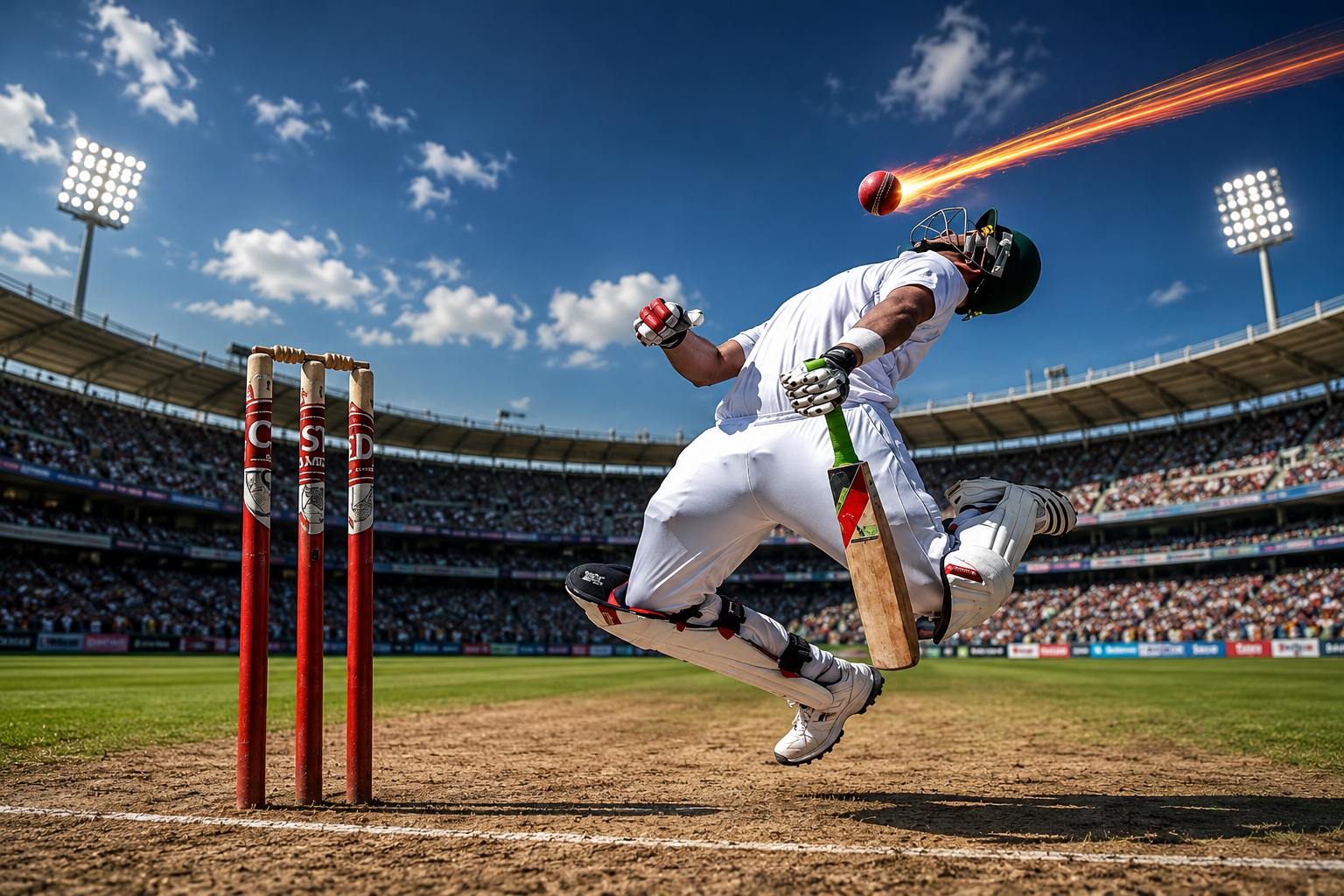
In T20 international cricket the ICC’s second bouncer per over is now legal, and the third bouncer in an over is called a no ball. In Test cricket and ODIs the rule stays at one bouncer per over, so the second bouncer is a no ball. Domestic leagues follow the format they play under, so check the local playing conditions before applying the rule.
As an avid cricket fan, you must have had a hard time figuring out the 2nd bouncer rule in cricket at some point, right? The 2nd bouncer rule in cricket depends on the format. In T20 cricket, a second bouncer above the permitted height is generally called a no ball, while the limits differ in other formats. So, is the 2nd bouncer a no ball? The answer depends on which format you’re watching. You can’t help but wonder whether a bouncer above head height is either a no ball or a dead ball. You then go a step further, out of curiosity, to ask yourself how many bouncers are allowed in cricket. Two bouncers in an over? Three..? And is the 2nd bouncer a no ball? There is chaos all around! But don’t worry. You don’t have to delve into the 2nd bouncer rule in cricket alone. The 2nd bouncer rule in cricket, also known as the 2 no ball rule informally, is applied differently across several formats of the game, which keeps the fans guessing. At the start of every over, every bowler has his/her bouncer limit fixed. Once the bouncer warning limit is breached, the fielding side gets penalized by a no ball call. So, is the 2nd bouncer a no ball in every format? The answer depends on whether the match is a Test, ODI or T20. To get a much deeper understanding of the second bouncer rule in cricket, we must begin by understanding what a bouncer ball is.
A bouncer is a typical short-pitched delivery designed to push the batters on the back foot and keep them inside their crease. Any delivery which passes above the shoulder height of a batter standing upright at the popping crease is deemed to be a bouncer. According to the latest regulations of the game, a bowler’s ability to bowl bouncers in an over is dictated by the bouncer no ball rules in cricket.
As a matter of fact, the 2 bouncers per over rule varies across formats, and the failure to comply with this 2nd bouncer rule in cricket will most certainly attract a no ball penalty. So this indeed begs the question. What is the bouncer rule in cricket? And how does the 2nd bounce rule in cricket apply uniformly across all formats? In this cricket rules and regulations guide, we will explore how many bouncers are allowed in cricket and understand when a second bouncer becomes a no ball for a typical fast bowler.
Table of Contents
2nd Bouncer Rule in Cricket: Difference Between Bouncer and Short Pitched Delivery
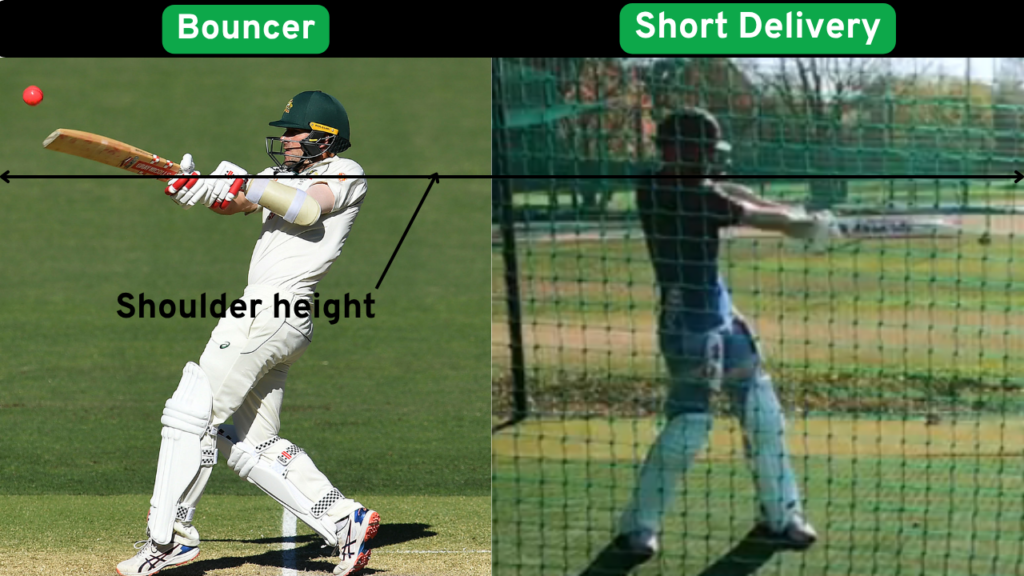
Wondering what the major difference is between a bouncer and a short ball? What makes the two deliveries so distinct? Any delivery that causes the batter to play the cricket ball on the back foot is deemed a short-pitched delivery, regardless of how high the cricket ball might have passed. Whereas a bouncer is typically bowled above the shoulder height of a batter standing upright at the popping crease. It is imperative to note that for any short-pitched delivery to be considered a bouncer, the cricket ball must have passed above the shoulder height of a batter. This further takes into account any possible deliveries that might have gone above a batter’s head, which is traditionally accompanied by the call of a wide. In other words, all bouncers are technically short-pitched deliveries, but not all short-pitched deliveries are considered bouncers.
Difference between bouncer and short ball (Key Pointers)
| Feature | Bouncer | Short-Pitched Delivery |
| Height at Batter | Above shoulder to head height (or higher). | Knee, waist, or chest height. |
| Pitch Position | Usually halfway or less down the wicket. | Generally back of a good length to halfway down. |
| Restrictions (If any) | 2nd bouncer no ball rule applies | No restrictions |
2nd Bouncer Rule in Cricket: All Formats Covered
| Format | Bouncers Allowed (In an Over) | Second Bouncer No Ball Rule Valid? | What Follows After The Second Bouncer No Ball Rule? |
| Test | 2 | No | No ball |
| ODI | 2 | No | No ball + Free-hit |
| T20I | 1 | Yes | No ball + Free-hit |
A common question among cricket fans is “ek over mein kitni bouncer dal sakte hain?” The answer depends on the format and its playing conditions. There are presently three main types of bouncer no ball rules in cricket, split across three main formats – Test, ODI, and T20I.
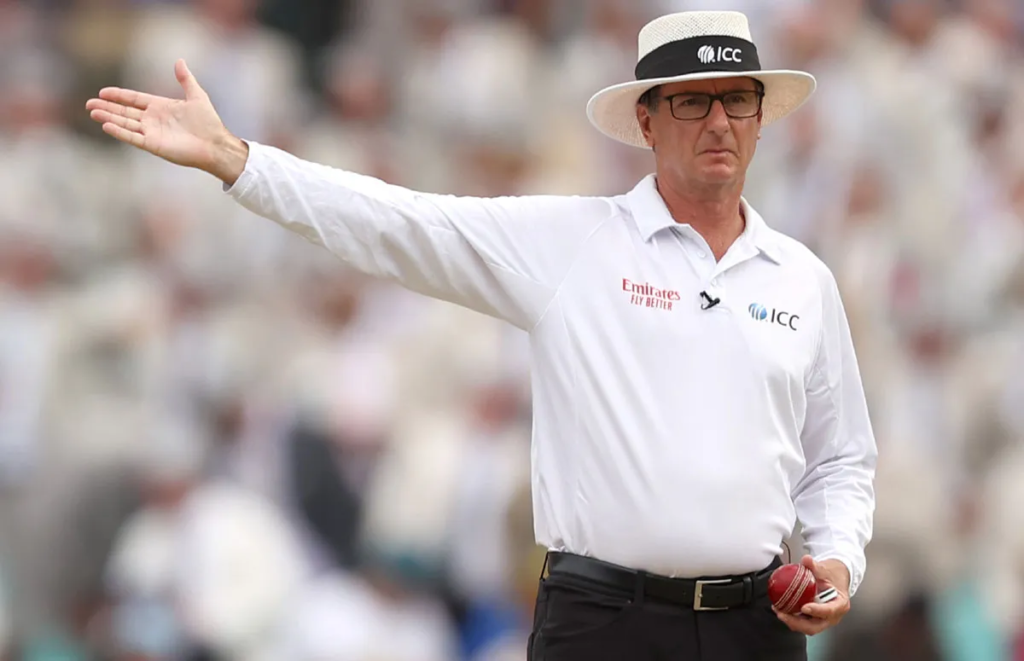
Test: So, how many bouncers are allowed in the Test? For readers searching “test me kitne bouncer allowed hai” Test cricket has its own limit on short-pitched deliveries. In Test cricket, a fast bowler is allowed 2 bouncers above shoulder height. When the first bouncer is bowled, the umpire signals one bounce for the over by tapping his/her opposite shoulder with their primary arm. The signal is repeated again in the event of a second bouncer, and the bowler is cautioned politely after reaching the bouncer threshold under the bouncer no ball rule. But as soon as the limit is breached, the bowling team is liable to be penalized under the bouncer no ball rules in cricket. The bouncer rule in cricket only kicks in when more than 2 bouncers are bowled in an over.
ODI: Let’s move on to our next query on how many bouncers are allowed in ODI? In ODIs, a fast bowler is also allowed the same number of bouncers (2) in an over as in Test cricket. The umpire usually taps the opposite shoulder with one arm when the first bouncer is bowled. The process stays the same in the event of a second bouncer in an over, followed by a friendly caution. If at any point in an over, this threshold is breached under the no ball bouncer rule, the fielding team is slapped by a no ball offence. Unlike Tests, a free-hit delivery follows, which further adds to the woes of the fielding side. The bouncer no ball rule in cricket does not apply, as the bowler is permitted to bowl a maximum of two bouncers above shoulder height.
T20I: Did you know how many bouncers are allowed in T20 internationals? This is where the 2nd bouncer rule in cricket comes into play. If you’re wondering “T20 me kitne bouncer allowed hai?”, the answer is one permitted short-pitched delivery per over under the relevant playing conditions. In T20s, the bouncer no ball rules in cricket apply a little differently compared to the other two formats. Instead of 2, a bowler can only bowl 1 bouncer in an over. In T20 cricket, only one bouncer is allowed in an over. Therefore, the second bouncer is immediately called a no ball. This is why many fans ask, “Is 2nd bouncer a no ball in T20?” The answer is yes. Once the bowler delivers a second bouncer above shoulder height in the same over, the umpire signals a no ball and awards the batting side a free hit.
2nd Bouncer Rule in Cricket: Is Bouncer Warning Issued in Cricket?
The bouncer no ball rules in cricket are designed in a way to prevent fast bowlers from bowling an unlimited amount of short-pitched deliveries in an over. Under the ICC Playing Conditions, clause 41.6.1 states that a bowler is limited to 2 bouncers in ODI and Tests and just one bouncer in T20s.
If the bouncer count exceeds under the second bounce rule in cricket, the umpire reserves the right to signal a no ball. But if the no ball under the bouncer rules in cricket is ignored, the playing conditions guide an umpire to do the following:
41.6.1.1. The umpire shall call and signal No ball, and when the ball is dead, caution the bowler and inform the other umpire, the captain of the fielding side and the batsmen of what has occurred. This caution shall apply to that bowler throughout the innings.
Clause 41.6 (Unfair Play)
41.6.1.2. If there is a second instance, the umpire shall repeat the above procedure and indicate to the bowler that this is a final warning, which shall apply to that bowler throughout the innings.
41.6.1.3. Should there be any further instance by the same bowler in that innings, the umpire shall:
a) Call and signal No ball
b) Direct the captain of the fielding side to suspend the bowler immediately from bowling
c) Inform the other umpire for the reason. The bowler is not allowed to bowl again in that match.
Points a, b, and c under clause 46.6.1.3 make it very clear that repeated offences under the bouncer no ball rule in cricket would compel the umpire to debar a bowler from bowling again in the match. As per the bouncer warning in cricket, a maximum of two warnings is issued to a bowler after the second bouncer in an over is bowled, before he/she gets taken out of the attack.
FAQ on Bouncer No Ball Rules in Cricket
What is a bouncer?
A bouncer is any short-pitched delivery that is deemed to have passed above the shoulder height of a batter standing upright at the popping crease.
Difference between bouncer and short ball?
A bouncer usually passes above the shoulder height of a batter, whereas a short-pitched delivery constitutes any cricket ball (regardless of height) that causes the batter to play the ball off the back foot.
Are 2 bouncers allowed in cricket?
The 2nd bounce rule in cricket allows 2 bouncers to be bowled in the Test and ODI format.
How many bouncers are allowed in ODI?
Under the bouncer rule in cricket, a bowler is allowed to bowl a maximum of 2 bouncers in an over.
How many bouncers are allowed in test cricket?
Under the second bouncer no ball rule, a bowler has the ability to deliver a maximum of 2 bouncers in an over.
Is second bouncer a no ball in T20?
In T20, the second bouncer no ball rule in cricket kicks in which restricts a bowler’s ability to bowl only one bouncer in an over.
Is 2nd bouncer a no ball?
Bowling a second bouncer is not considered a no ball in Tests and ODIs. However, in T20s, the second bouncer rule kicks in as the bowler is only allowed one bouncer, which in turn leads to a no ball.
What is 2nd bouncer ball rule in cricket all about?
The 2nd bouncer rule in cricket is only applicable in the T20 format, which limits a bowler’s ability to bowl a maximum of one bouncer in an over. A no ball is issued once a bowler passes this threshold.
Is 2nd bouncer a no ball in T20 cricket?
Yes, the second bouncer is a no ball in T20 cricket, as only one bouncer per over is allowed in this format.
Is 3rd bouncer a no ball?
A 3rd bouncer in an over, regardless of any format, is instantly a no ball.
Is two bounce a dead ball?
Under the second bouncer no ball rule (a.k.a 2 no ball rule), the situation of a dead ball does not arise. 2nd bounce is either considered a fair delivery (unless T20) or a wide, or in worst cases, a no ball if the bowler exceeds the bouncer limit in an over.
Is second bounce in cricket the same as the second bouncer rule?
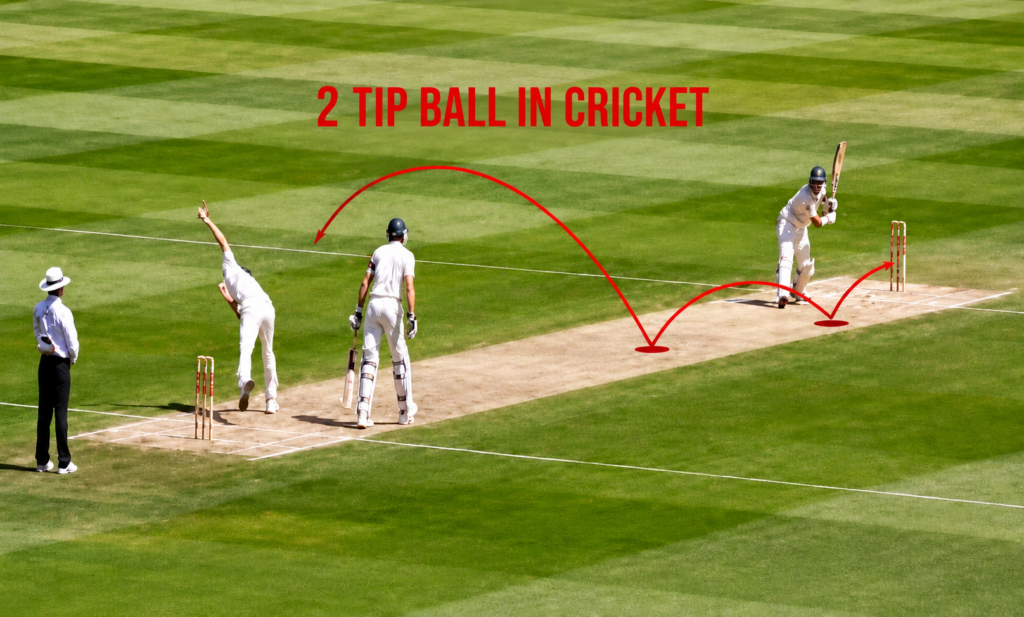
No. A second bounce refers to the ball pitching twice before reaching the batter, whereas the second bouncer rule relates to the number of short-pitched deliveries a bowler can bowl in an over.
Closing Thoughts on 2nd Bouncer No Ball Rule in Cricket
So to those asking “ek over mein kitne bouncer dal sakte hain?” That depends on whether you’re watching T20, ODI, or Test cricket. Any cricket ball that is deemed to have passed above the shoulder height of a batter constitutes a bouncer. Under the 2nd bouncer rule in cricket, only two bouncers are allowed in Tests & ODIs, while T20 cricket only permits one bouncer in an over. Once the threshold under the bouncer ball rule in cricket is breached, the fielding team is liable to be punished by a no ball, followed by a free hit in case of a limited-overs format.
To summarise, the 2nd bouncer rule in cricket varies by format. In Tests and ODIs, a second bouncer is perfectly legal because two bouncers are permitted in an over. However, in T20 cricket the second bouncer is a no ball, which is why searches such as “Is second bouncer a no ball?” and “Is 2nd bouncer a no ball in T20?” have a different answer depending on the format being played.
More On No Ball Rules in Cricket
Complete Guide To Primary Forms Of No Ball Rules (Major Scenarios Explained)
Can a Cricket Ball Bounce Twice? Double Bounce No Ball Rules Explained
Looking to Share Your Cricket Coaching Expertise?
We’d love to work with passionate cricket experts like you. Whether you’re a coach or part of an academy, collaborate with us to create high-quality content and help make cricket coaching free and accessible to everyone.
Collaborate With Us