

So what are 5 penalty runs in cricket? That’s the worst thing that can happen to any team. Whether you are the batting side or the bowling side, you’re expected to contend with the harsh consequences of 5 runs penalty in cricket. At a time when cricket is becoming a game of fine margins, being slapped by 5 penalty runs in cricket can certainly go down as a costly mistake for the erring side. But that’s not all. Let’s not forget, the list of punishments handed out under the 5 penalty run rule is pretty endless to say the least.
In a nutshell, the 5 penalty run rule in cricket is a punishment inflicted on the erring side for the actions that they commit, which are either deemed unfair or illegal according to the laws of the game. As a consequence, the team at the receiving end sees their opponent walk away with 5 bonus penalty runs, which are later added to their current overall score or past scores from earlier innings. How these 5 penalty runs are adjusted into the scores will be explained with clarity on a case-by-case basis.
In this article, we will address the fuss behind 5 penalty runs in cricket, and explore a long list of punishments, apart from 5 penalty runs, that are handed out to the batting or bowling side whenever an on-field offence is committed.
Table of Contents
5 Penalty Runs In Cricket: Understanding The Historical Context
The rules around penalty run in cricket were first devised at the turn of the 18th century. Back then, the 5 penalty runs in cricket were only awarded for very few instances, most notably when a fielder stopped the cricket ball with their hat. Although to this day, that provision still remains in place, the scope of the 5 runs penalty rule in cricket has since been expanded to incorporate a host of new scenarios.
Since 2000, numerous penalty run instances with regards to player conduct and unfair play have been incorporated into the ruling, which are now governed under Law 41 (Unfair Play) and Law 42 (Player Conduct) of the MCC Laws of Cricket.
5 Penalty Runs in Cricket: Offences Committed By The Batting Side

Let’s look at all the possible scenarios and offences under which a batting side can suffer a 5 penalty run punishment. When 5 run penalty in cricket are awarded to the opposition as a result of wrongdoing from the batting side, then the 5 penalty runs signal is issued by the umpire. The umpire conveys the 5 penalty run signal to the scorers by touching his/her opposite shoulder with their main arm.
Here are all the possible instances covered under the 5 penalty run rule, outlining a long list of offences which can potentially be commited by the batting side.
Batters Wasting Time
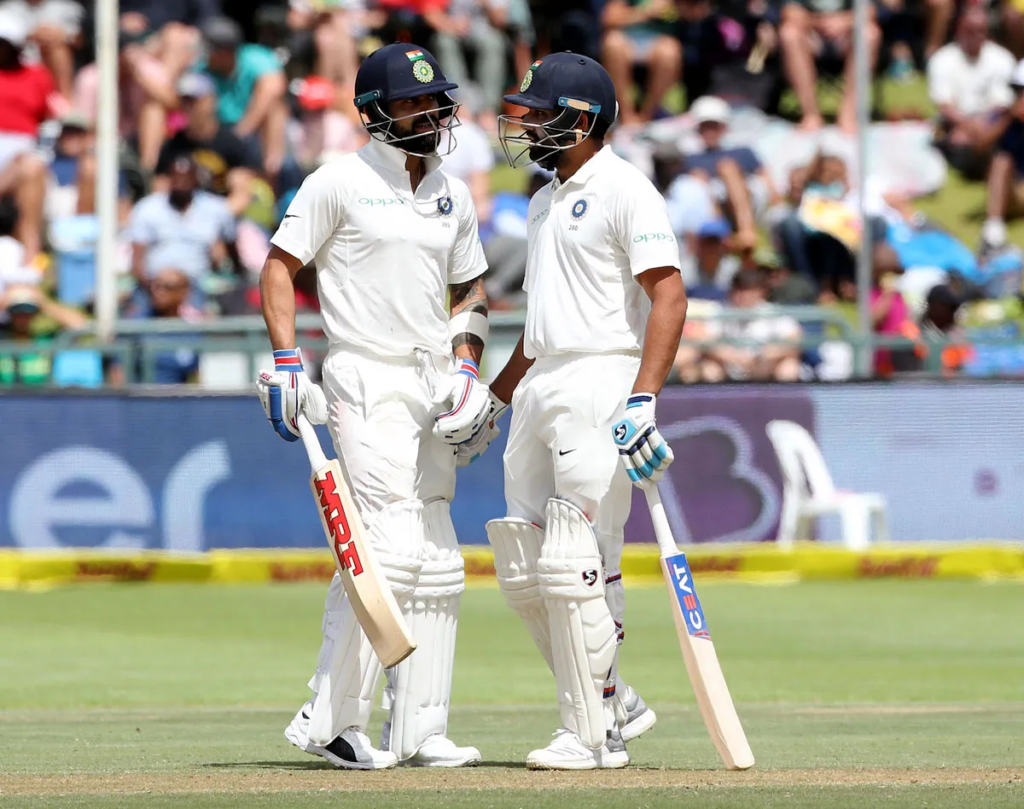
According to Law 41.10 under Unfair Play, the batting team is not permitted to deliberately waste time. This could include instances such as taking too long to take guard, unnecessary delays between deliveries, fake equipment issues, etc.
When the first offence of such kind is recorded under 5 runs penalty rule, the umpire will issue a first and final warning to the batting side if they believe the delay is intentional. However, if further time is wasted by the batting side, then the inevitable has to happen.
Here is how the batting side is punished
- 5 penalty runs in cricket are awarded to the fielding side.
- The matter is then reported by the umpires to the match referee or the governing body, who is tasked with overseeing the proceedings of that fixture.
Changing Condition of Match Ball (Ball Tampering)

We always associate the ball tampering offence with the fielding side. But did you know that even the batting side can be penalized for ball tampering in their innings, too? So how does this bizarre 5 penalty runs punishment apply to the batting side in real time?
Well, Law 41.3.2 and Law 5.5 state that no batter is allowed to willfully damage the cricket ball, except in carrying out his/her normal duties while batting. To put things in perspective, the law debars players from both sides from damaging the ball either by stroking it too hard or by willfully tampering with it. So, in such an unlikely event, if this law is contravened by the batting side, then the umpires will issue 5 penalty runs to the fielding side.
Batters Running On The Protected Area
According to 41.14, batters are prevented from running on the protected area of the pitch. The protected area is roughly 2 feet wide and is situated right in the center of the pitch. No player, including the batter, is allowed to run on the protected area and cause avoidable damage to the pitch.
If a shot is played which naturally drags the batter onto the protected area, then he/she must leave immediately. If this offence is committed for the first time, then the umpires issue a first and final warning to the batting side. But if this offence is repeated, then the umpire reserves the right to impose 5 penalty runs punishment on the batting side.
Here is how the batting side is punished
- 5 penalty runs in cricket are awarded to the fielding side.
- Runs scored by the batting side are disallowed.
- But the call of a no ball or wide will stand.
Deliberate Short Run
Now this is where things take an interesting turn. Batters are known to maximize every single run-scoring opportunity. So then why would any batter deliberately run one run short? Well, this is a usual occurrence when the dominant batter aims to farm the strike in an effort to shield his or her partner down at the other end.
To prevent the batting side from gaining an unfair advantage, the lawmakers decided to award 5 penalty runs to the fielding side when such events occur. According to MCC Law 18.5, a batter at any stage of the game is prohibited from taking a deliberate short run. It will be left to the umpire’s judgment to decide whether the batter had indeed run short on purpose.
As soon as a deliberate happens, umpires are instructed by the regulations to perform the following actions.
Here is how the batting side is punished
- Disallow all runs to the batting side
- Return any not out batter to his/her original end
- Signal No ball or Wide to the scorers, if applicable
- Repeat the short-run signal to the scorers
- Award 5 Penalty runs to the fielding side
- Report the incident to the match authorities, who would be expected to oversee the proceedings of that fixture.
Batters Practicing On The Pitch

While the match is in progress, no player, be it a batter, bowler, or fielder, is allowed to practice on the match pitch according to MCC Law 26. Any form of practice is only permitted during intervals and innings breaks, which needs to be done under the supervision of the fourth official. Only places where a team is allowed to practice are on the outfield or the cut strips designed next to the actual pitches.
If a batter is foolish enough to ignore this fundamental rule, then they are warned first before being punished under the 5 runs penalty rule in cricket.
5 Runs Penalty in Cricket: Offences Committed By The Bowling Side

The list of possible scenarios and offences under which a bowling side can suffer a brutal 5 penalty run setback broadens a lot further. Unlike the batting side, the fielding team is not so fortunate and can find numerous ways of attracting 5 cricket penalty runs punishment. These offences include, but are not limited to, events such as a ball hitting the helmet placed on the ground, illegal fielding with equipment, or intentional distractions, to name a few.
The 5 penalty runs signal to the bowling side is issued by the umpire, who taps his/her opposite shoulder with their primary arm. Key scenarios causing 5 penalty runs in cricket against the fielding team include:
Ball Hitting the Helmet In Play
According to the 5 runs penalty rule, if a helmet belonging to the fielding side is placed on the ground (e.g., behind the wicketkeeper or anywhere on the field), and makes contact with the cricket ball, then the batting side is awarded 5 runs penalty in cricket.
Here is how the bowling side is punished
- Call and signal Dead Ball
- Award 5 penalty runs to the batting side
- Any extra run for a no ball or wide ball will count
- Any completed runs before the ball becomes dead is to be recorded
- Additional runs after the batters have crossed over are also recorded.
For a detailed explanation of this offence, we have curated a user-friendly guidebook which aims to simplify the 5 penalty run ruling when the ball makes contact with the helmet in play.
Fielding Team Wasting Time

The MCC Law 41 does not spare anyone when it comes to time wasting. Just like the batting side, the bowling side is also handed a punishment under the 5 runs penalty rule for wasting time. Common tactics of time wasting from a fielding side include deliberately delaying the start of the next over or taking too much time between deliveries.
If the fielding team deliberately wastes time, a first and final warning is issued to the fielding side before a punishment is handed. Only after the first and final warning is ignored, the umpire, under the current regulations of the game, has the authority to award 5 runs penalty in cricket to the batting side.
Illegal Fielding
Illegal fielding falls under Law 28.2, where a fielder deliberately uses any part of their body, clothing, or equipment not part of normal fielding (e.g., cap, towel) to stop or deflect the cricket ball.
This breaches fair play and results in 5 runs penalty in cricket under the 5 runs penalty rule.
Here is how the bowling side is punished
- Call and signal Dead Ball (if required)
- Award 5 penalty runs to the batting side
- Allow any runs completed before the offence
- Inform scorers (runs + 5 penalty runs in cricket)
- Report the incident for disciplinary action (if serious)
- The ball has to be rebowled.
Fielder returning without permission
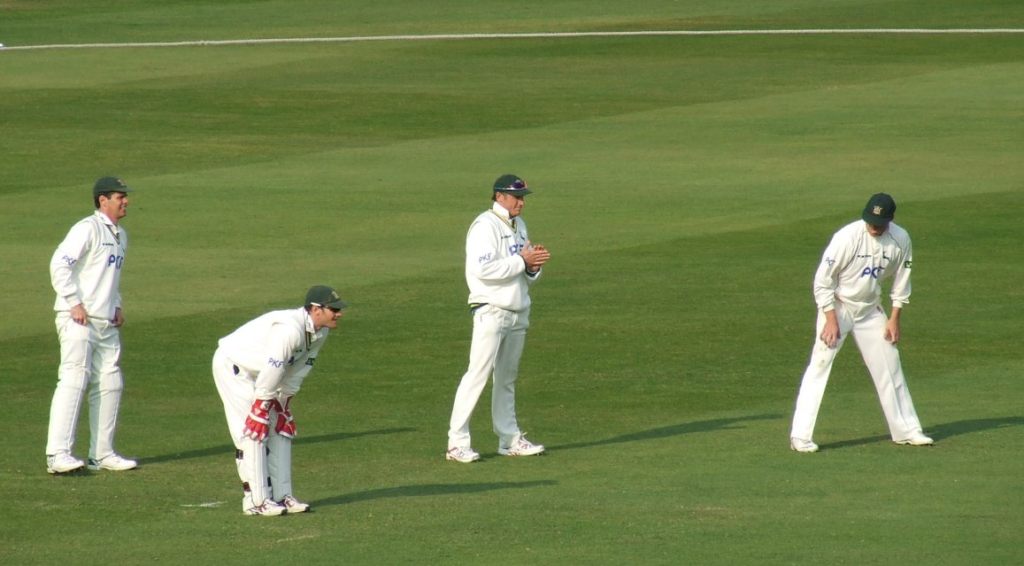
Under Law 24.4, a fielder who has left the field (injury, equipment issue, etc.) must get the umpire’s permission before returning. Entering the field and participating in play without permission is treated as unfair play. This can result in 5 penalty runs in cricket under the 5 runs penalty rule.
Here is how the bowling side is punished
- Call and signal Dead Ball as soon as the fielder makes contact with the cricket ball
- Award 5 penalty runs to the batting side
- Disallow the delivery that was bowled
- Award all the completed runs plus any additional run if the two batters crossed
- Report the incident for further disciplinary action
Ball Tampering: Changing condition of the match ball
The ball tampering offence is more linked to the fielding side than the batting side. It’s the fielding side that often lands in trouble under this offence. Under Law 41.3, players are not allowed to unfairly alter the condition of the ball (e.g., scratching, picking the seam, applying artificial substances). The bowling team tries to resort to such tactics in an effort to make the old ball talk, most commonly referred to as reverse swing.
But unfortunately, such a type of practice is banned and can trigger the 5 runs penalty rule, resulting in 5 penalty runs being awarded to the batting side.
Here is how the bowling side is punished
- Award 5 penalty runs to the batting side
- Replace the match ball after taking consent from the batting side
- Ban the bowler from bowling further, if the offence is committed during an over
- Report the incident for disciplinary action to the match authorities, who will then take action as deemed appropriate under the prevailing playing conditions
Deliberate distraction to the batters
Under Law 41.5, it is illegal for any fielder to deliberately distract, deceive, or obstruct the batter before a bowl is bowled or after he/she receives the delivery. This could be in the form of shouting, fake movements, verbal intimidation, etc.
If the umpires consider the distraction to be deliberate, then the team is penalized, and 5 runs penalty in cricket are awarded to the batting side.
Here is how the bowling side is punished
- Ball is not counted as one for the over
- 5 penalty runs are awarded to the batting side
- All completed runs, including the run in progress, are captured even if the batters hadn’t crossed
- Batters can decide who gets to face the next ball.
- Incident reporting formalities are applied, where the umpires have the authority to escalate this matter to the highest level
Fielder damaging the pitch
Under Law 41.12, it is illegal for a fielder to deliberately damage the pitch or protected area. This includes actions like scuffing the surface with boots, kicking or scraping the pitch, or running repeatedly on the protected area to create rough patches. Since the pitch condition directly affects batting and bowling, this is treated as serious unfair play. A first and final warning is issued to the fielder and the fielding side before the 5 runs penalty in cricket kicks in, resulting in 5 cricket penalty runs being awarded to the batting side.
Here is how the bowling side is punished
- Call and signal Dead Ball
- Award 5 penalty runs to the batting side
- Warn the captain and the player involved
- The fielding captain and the player, who commited the offence, can be investigated as a part of further scrutinity under the 5 runs penalty rule.
Quick Summary On 5 Penalty Runs Rule In Cricket
The 5 penalty runs rule in cricket applies to both batting and fielding sides, but in practice, most offences are committed by the fielding (bowling) team. While batting-side offences exist (like deliberate time wasting or obstruction), they are fewer compared to the wide range of fielding infringements such as ball tampering, illegal fielding, damaging the pitch, or deliberate distraction.
One important thing to note is that when 5 penalty runs in cricket are awarded, the ball can either count or not count in the over, depending on the situation. If the ball is declared dead immediately due to the offence, it may not count as a valid delivery. The rule is designed to maintain fairness and discipline, ensuring neither side gains an unfair advantage through illegal actions.
More Insights You’d Love on Cricket Coaching Tips & Rules Explanation

Ball Hitting The Helmet In Play – No Ball or Dead Ball? Full Rule Explained
LBW Full Form in Cricket (Meaning, Rules & Easy Explanation)
How To Grip The Ball for Off Spin Bowling? Off Spin Release & Wrist Position Explained In Simple Steps
Looking to Share Your Cricket Coaching Expertise?
We’d love to work with passionate cricket experts like you. Whether you’re a coach or part of an academy, collaborate with us to create high-quality content and help make cricket coaching free and accessible to everyone.
Collaborate With Us