
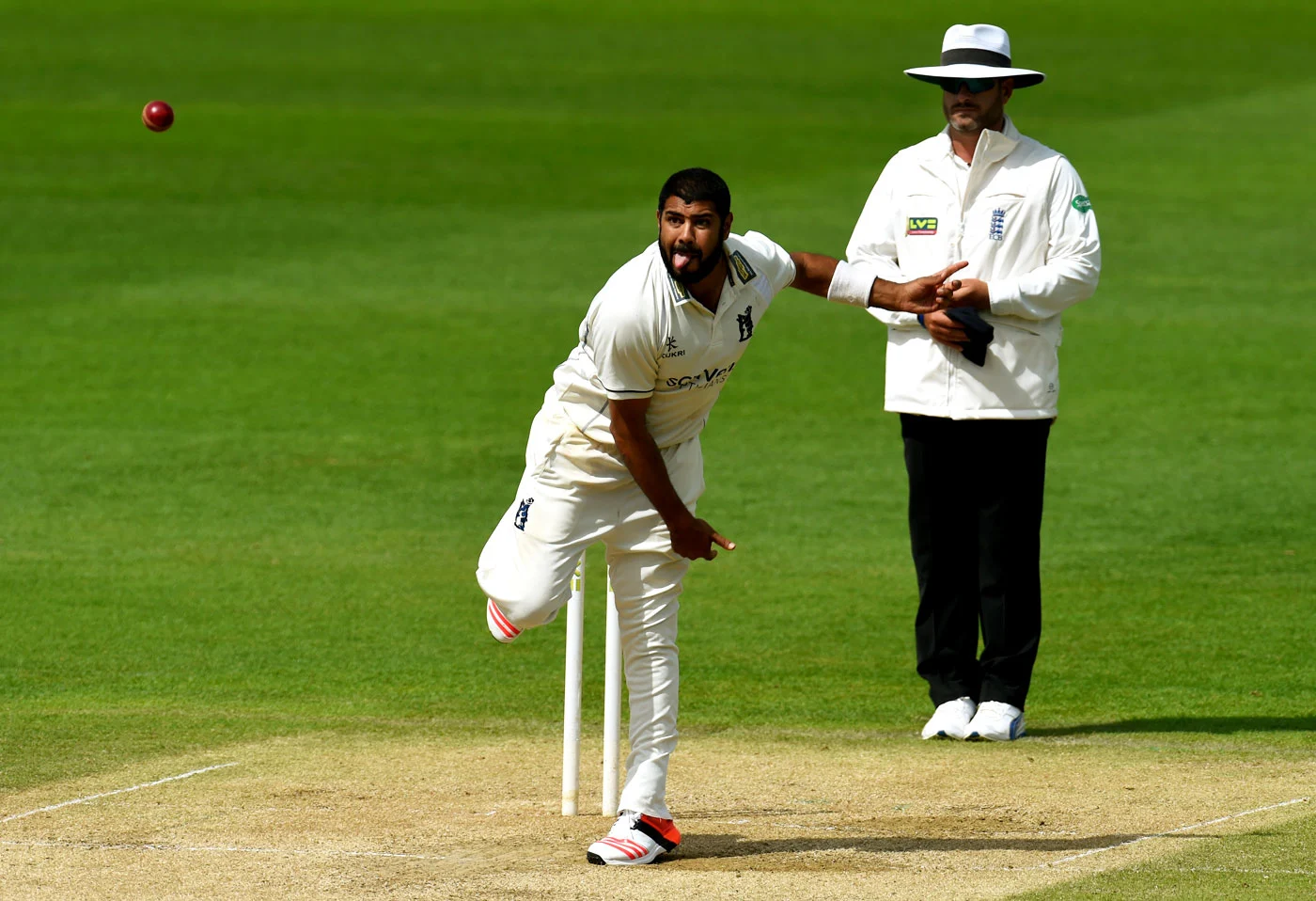
This guide is about the arm ball as a specific delivery, its grip, release and practice drills. The arm ball is a variation of off-spin, so if you are new to off-spin bowling, start with our main off-spin guide for the fundamentals first, then come back here for the arm ball itself.
The arm ball is one of the most deceptive variations used by off-spinners in cricket. Unlike a traditional off break that spins away from a right-handed batter, the arm ball travels straight with the angle of the bowler’s arm, often confusing batters expecting conventional turn. When bowled correctly, it can rush onto the pads, trap batters in front of the stumps, or induce false shots due to the lack of spin. Many legendary off spinners have used this variation effectively alongside deliveries like the doosra to create uncertainty and break batting rhythm. Understanding proper arm ball grip and release is therefore essential for off spinners looking to add more variation and control to their bowling arsenal. Learning how to bowl an arm ball starts with mastering a repeatable grip, wrist position, and release that closely resembles your stock off spinner.
In this spin bowling masterclass, we will uncover some powerful coaching tips, release mechanics, and practical drills designed to sharpen your arm ball grip and release. We will also explore the difference between arm ball and off spin, explain important arm ball off spin grip variation techniques, and help you refine your overall off spin grip for better deception, accuracy, and consistency.
What is an Arm Ball?
An arm ball is a deceptive variation used by off spinners where the ball travels straight on with the angle of the bowling arm instead of spinning sharply like a traditional off break. In many ways, it can be compared to an outswing delivery bowled by a fast bowler because the movement occurs more in the air rather than off the pitch. For a right-handed batter, the arm ball generally moves from leg to off, while against a left-handed batter, the ball angles from off to leg. Mastering proper arm ball grip and release is extremely important because even subtle wrist and finger adjustments can significantly affect the amount of drift and deviation generated through the air. Because the arm ball looks almost identical to a stock off break until release, batters often misjudge the amount of spin and play down the wrong line.
One of the biggest differences between arm ball and off spin deliveries is the batter’s expectation of turn. Most batters prepare for the traditional off-spinner’s movement spinning into them (in case of a right-handed batter), but the arm ball instead continues straight or tails back in sharply after pitching (for a left-handed batter). This makes it especially effective against left-handed batters when bowled from around the wicket. Many successful off spinners use this arm ball off spin grip variation to trap batters on the front pad as they play for spin that never arrives, often resulting in successful LBW appeals and reviews.
Difference Between Arm Ball and Off Spin
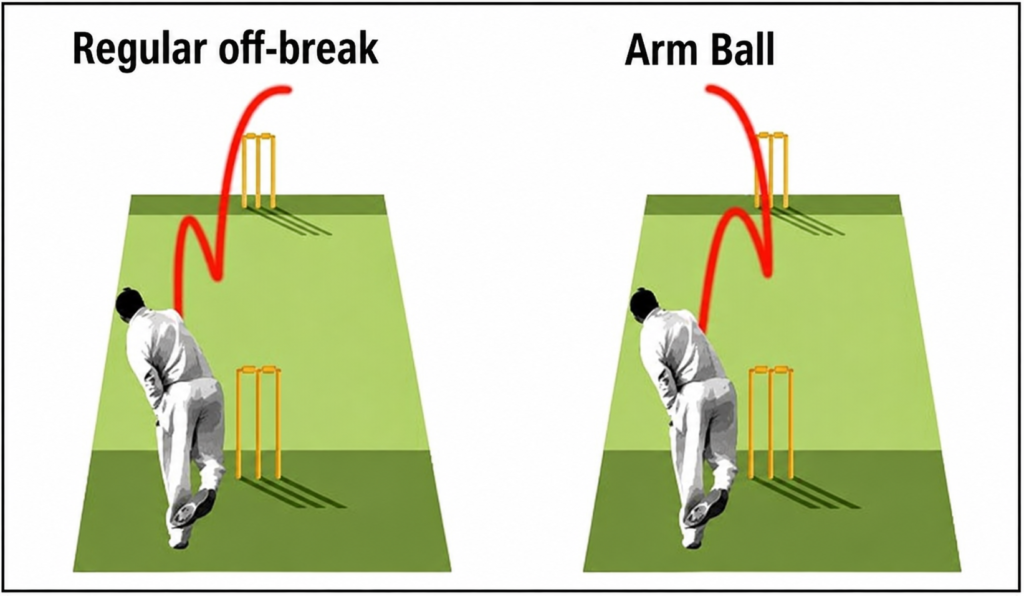
Understanding the difference between arm ball and off spin is extremely important for developing spin bowlers because both deliveries may look similar initially, but behave very differently after release. While a traditional off break relies heavily on finger spin and deviation off the surface, the arm ball depends more on drift, angle, and subtle changes in ball grip and release to deceive the batter. The comparison below highlights the major differences between the two deliveries.
| Feature | Off Spin Delivery | Arm Ball Delivery |
| Primary Purpose | Turns into a right-hand batter | Deceives the batter with straight or away movement |
| Grip | Traditional finger-spin grip | Predominantly tighter seam grip |
| Release Technique | Strong finger roll across the seam | Cleaner wrist position with minimal side spin |
| Ball Movement | Spins off the pitch | Drifts and moves through the air |
| Ideal Use Case | Building pressure and attacking edges | Surprise variation for LBW or bowled dismissals |
Step-by-Step Breakdown Of Arm Ball Variation
Arm Ball Grip
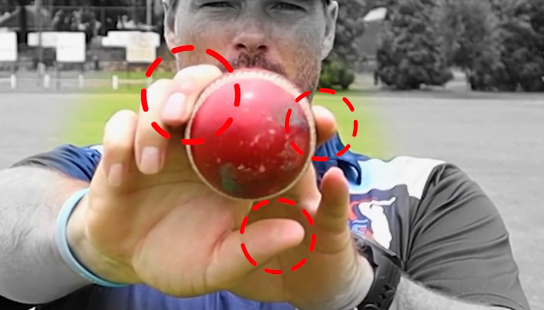
The arm ball grip is slightly different from a traditional off spin grip because the bowler aims to reduce side spin and keep the cricket ball travelling straighter through the air. Hold the ball with the index and middle fingers placed comfortably across the seam while maintaining relaxed wrist control. A tighter seam position often helps generate better drift and control. The ideal arm ball grip should feel almost identical to your regular off-spin grip so that batters cannot detect the variation before release.
Arm Ball Wrist Position
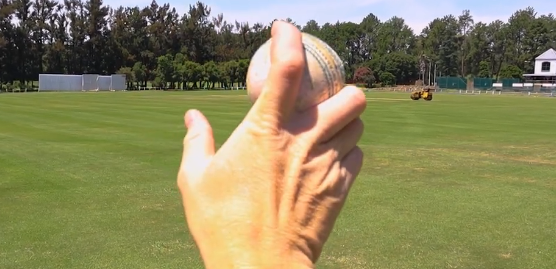
Wrist position plays a major role in controlling the direction and movement of the arm ball. Unlike a conventional off break where the wrist rotates heavily, the arm ball requires a more upright and stable wrist at release. This allows the ball to skid on with the angle of the arm instead of turning sharply off the pitch.
Arm Ball Grip and Release
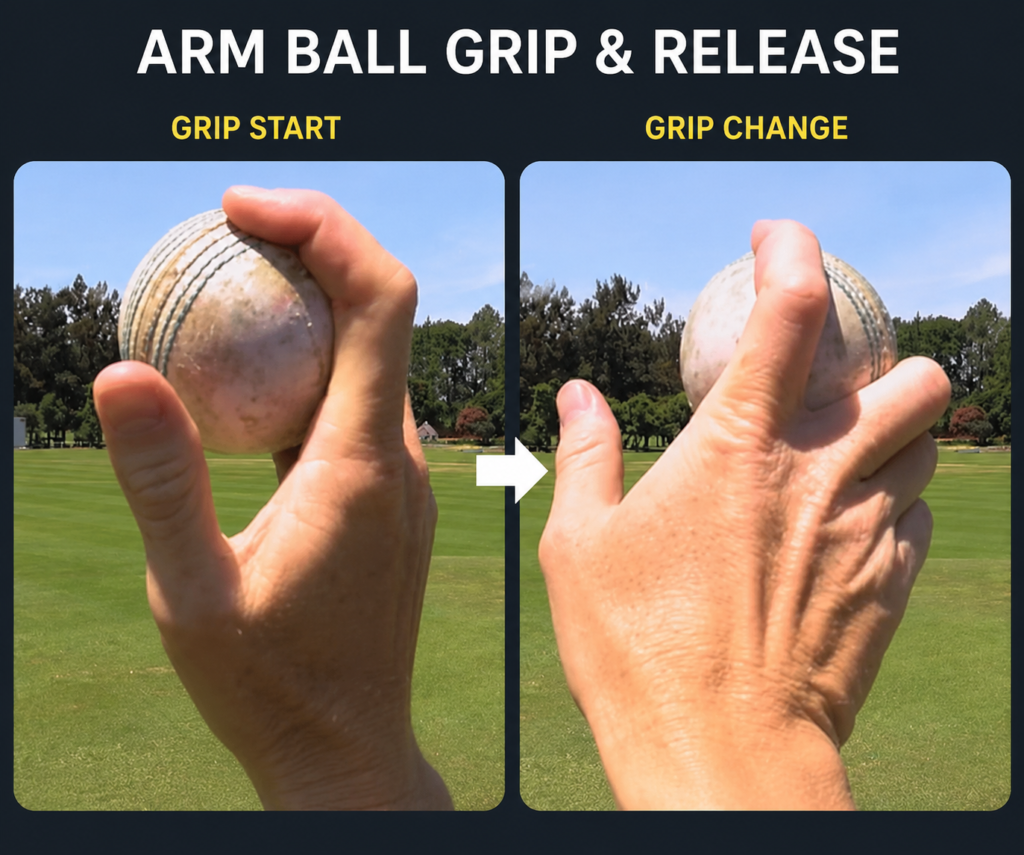
Perfecting your arm ball grip and release is essential for creating deception against the batter. The release should feel smooth and natural, with minimal finger roll across the seam compared to a regular off spinner. Instead of ripping the ball hard, focus on allowing the seam and wrist position to guide the ball straight or slightly back into the batter. Aim to point your wrists and the seam position in the direction of the first slip as shown above. When learning how to bowl an arm ball, avoid forcing the release. Instead, let the upright wrist position and seam orientation naturally produce the desired movement through the air.
Follow Through
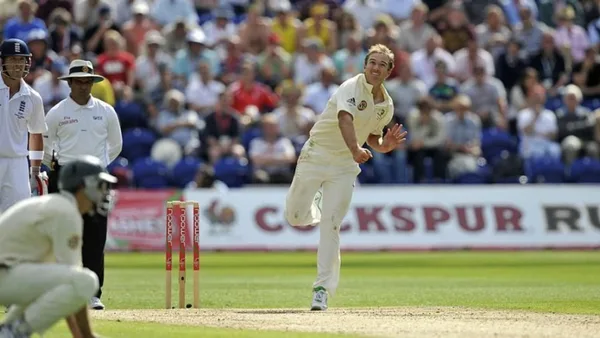
A balanced follow through helps disguise the arm ball variation and prevents the batter from picking the delivery early. Try to maintain the same bowling action and body momentum used for your stock off spinner. This involves a reasonable pivot motion over your bent front knee, with your bowling arm finishing beneath your opposite armpit. Focus on keeping the index finger on the ball for as long as possible during release. This helps in maintaining a straight seam and increasing the speed of the arm ball. Successful off spinners often use identical actions for both deliveries to create uncertainty and deception.
Arm Ball Grip and Release: Practice Drills
Kneeling Arm Ball Release
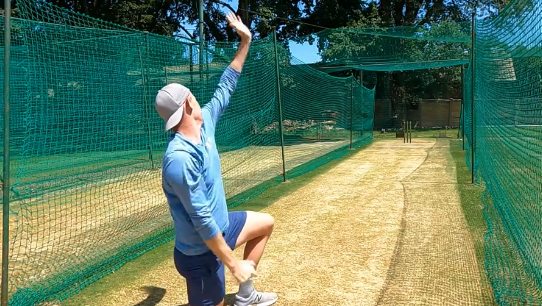
Kneel on your dominant leg (right leg for right-arm spinners) and practice bowling the ball at a 3/4 pitch length. This isolates the upper body and forces a high, straight-arm action to get the ball to skid.
The “Pancake Palm” drill

The “Pancake Palm” drill is a cricket bowling technique designed to help young or developing spinners get accustomed to the overarm type of bowling. A repeatable overarm bowling action is mandatory to get the most out of your arm ball variation delivery. Use a larger ball (like a soccer or basketball) to practice the overarm action. Ensure the palm faces the target upon release to encourage a natural, non-thrown delivery.
Knee Up Drill
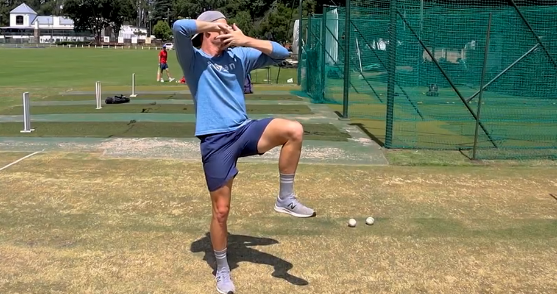
For this drill, stand at 3/4 length of the pitch. Your aim would be to deliver the arm ball from a stationary position, without the help of the run-up. Maintain a high knee up position, as demonstrated in the above screenshot and look to deliver the arm ball towards your designated target. Your front arm pulls down, which initiates your body weight transfer in full swing. As soon as your front foot lands, try to complete your entire bowling action and stress more on the feel of the follow-through.
One-Stump Accuracy Drill
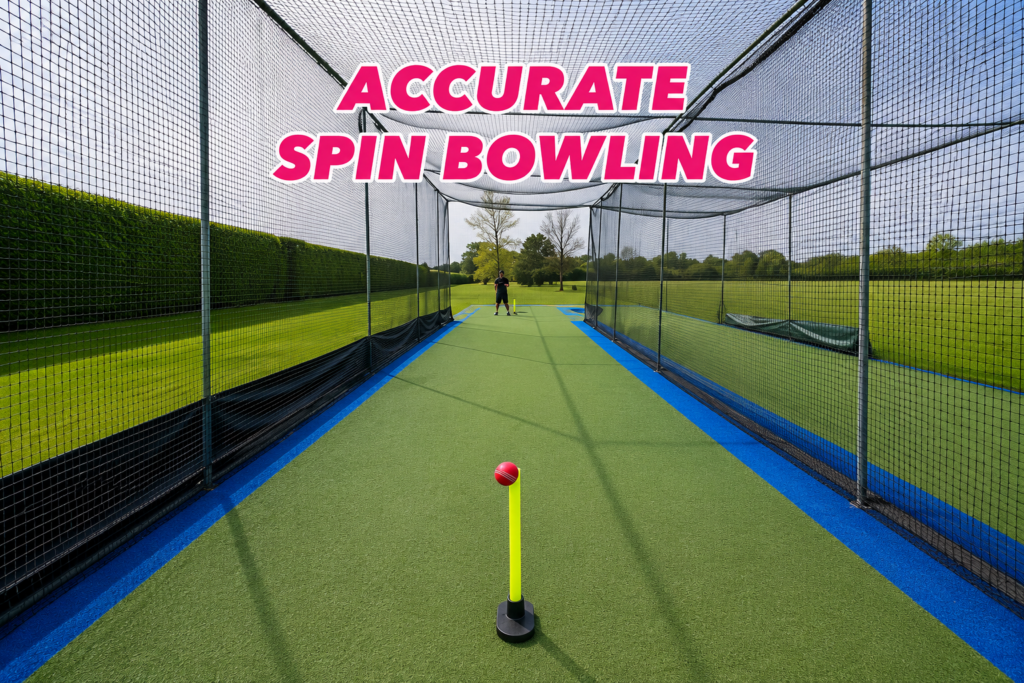
Use a single stump as your target and attempt to angle the arm ball back towards the base of the stumps. This helps bowlers develop greater control and understand how the delivery drifts into the batter.
Key Benefits:
- Improves bowling accuracy
- Develops drift and angle control
- Sharpens attacking bowling lines
Final Thoughts On Having The Perfect Arm Ball Grip And Release
Mastering the arm ball takes patience, repetition, and strong control over your wrist position and seam release. While the delivery may appear simple, developing an effective arm ball grip and release requires bowlers to focus on subtle variations that can completely deceive the batter in match situations. The more frequently you practise your arm ball in cricket alongside your stock off spinner, the harder it becomes for batters to distinguish between the two deliveries.
The best off spinners continue refining their variations through consistent practice, drills, and game awareness. Keep experimenting with your arm ball grip, release timing, and bowling action to improve control and deception over time. Also, continue visiting our cricket coaching tips page for more valuable training insights, bowling guides, and spin bowling masterclasses like these.
Found Our Cricket Coaching Guide Insightful?
With the right equipment, access to top experts, and the resources to grow, Cricvision can go the extra mile! If you’d like to be part of this journey, visit our donation page. Every contribution counts and directly fuels our growth.
Donate Now


One response to “Arm Ball Grip and Release: How to Bowl the Perfect Arm Ball in Cricket”
[…] awarded to the opposite team, no punishment is awarded to them when a cricket ball is lost. If a cricket ball is lost and cannot be recovered, the umpires replace it with a ball that has comparable wear to the […]