
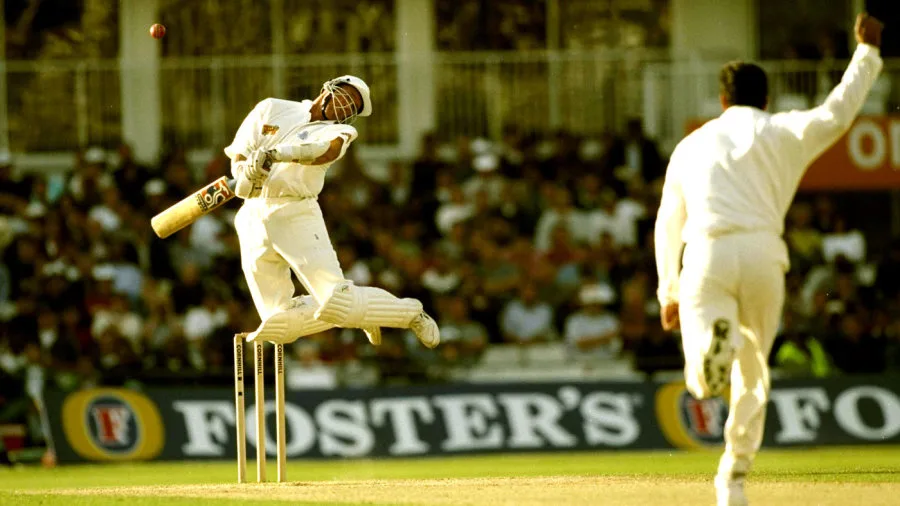
A bouncer is one of the most aggressive and effective weapons available to a fast bowler in modern-day cricket. Bowled short and aimed around the batter’s upper body or shoulder region, the delivery is primarily designed to push batters onto the back foot and disrupt players who naturally prefer driving and attacking on the front foot. Learning how to bowl a bouncer in cricket, therefore, becomes an important skill for any aspiring fast bowler looking to add variation, control, and tactical awareness to their bowling arsenal.
While many bowlers dream of delivering the perfect bouncer, most often struggle with consistency, bounce control, or proper execution due to limited access to practical fast bowling techniques and coaching guidance. Poor release points, incorrect wrist position, and flawed run-up rhythm can easily turn a dangerous bouncer into an easy scoring opportunity. In this guide, we will break down five simple yet highly effective fast bowling action tips, release mechanics, and bouncer bowling tips that will help you bowl controlled and accurate bouncers more consistently.
Are Bouncers Legal?
A bouncer is any short-pitched delivery that rises sharply after pitching and passes above the batter’s shoulder region. Although the delivery can be challenging and sometimes dangerous to negotiate because it is directed towards the batter’s upper body, the bouncer remains completely legal under the laws of cricket. In fact, short-pitched bowling has always been considered an important tactical weapon in fast bowling, particularly when used alongside yorkers and fuller attacking deliveries to unsettle batters.
However, modern cricket places certain restrictions on how many bouncers a bowler can deliver in an over. In Test cricket and One Day Internationals, a bowler is generally permitted to bowl a maximum of two bouncers per over. If the bowler exceeds this limit, the 2nd bounce no ball rule comes into the equation. In T20 cricket, the rules are even stricter, with only one bouncer allowed per over. Any additional short-pitched delivery beyond the permitted limit results in a no ball penalty. Furthermore, if a bouncer passes over the batter’s head without making contact, it is usually called a wide. However, the 2nd bounce no ball rule will always take precedence over the wide call.
How To Bowl A Bouncer in Cricket: Step-by-Step Breakdown
Wondering where to start on how to bowl a bouncer in cricket? Then look no further! We outline 6 simple fast bowling tips that will enable you to hone your bouncer bowling ability like a PRO.
Bouncer Grip

There is no standardized bouncer bowling grip in cricket. It is left to the bowlers to decide how they want to grip the ball. The traditional seam-up grip offers greater control, while a cross seam bouncer can generate unpredictable bounce depending on the surface. You can either go with a typical yorker grip with two fingers running behind the seam of the cricket ball, or opt for a cross-seam bouncer bowling grip. The real benefit behind adopting a cross-seam bouncer bowling grip is that it allows the bowler to achieve variable bounce off the pitch. The ball can kick off the surface when it hits the seam, or simply skid through if the ball lands on the shiny side. With an unpredictable bounce on offer, the bowlers are able to plant seeds of doubt in the minds of the batter, which ultimately leads to his dismissal.
Bouncer Length
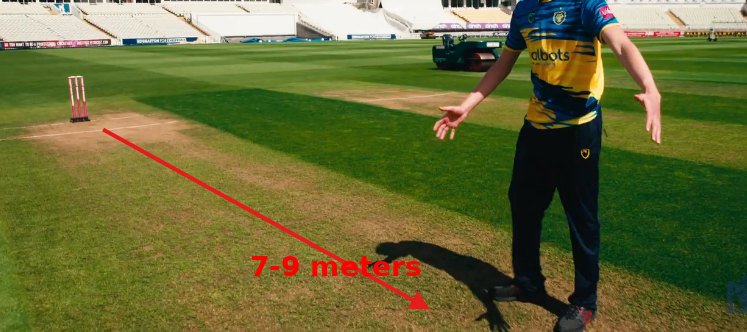
Once we have the bouncer bowling grip sorted, we move on to the next step of your bouncer bowling technique which is to identify the length. For a bouncer ball in cricket to be well directed, it is important that you land the cricket ball in the right area, allowing sufficient time for it to climb onto the batter. The ideal bouncer length in cricket generally falls between seven and nine metres from the batter’s stumps, although this varies depending on pitch pace and batter height. On a fast pitch, the bouncer length will shift a lot closer to the batter’s feet. Conversely, on a sluggish pitch, the length of a bouncer ball will have to be dragged back fractionally.
Bouncer Line
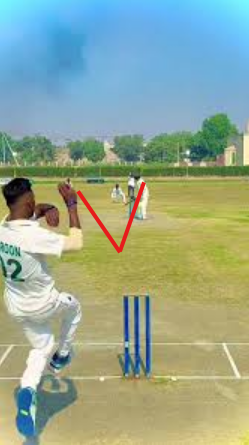
The line of a bouncer has to be straight and tight enough to prevent the batters from freeing their arms. In order for a bouncer to be well-directed, a fast bowler must work on getting the line right. The whole idea is to tuck the batters up, giving them barely any room to work with. As the above illustration suggests, the line of a bouncer must be marginally around off-stump line. The aim is to get the cricket ball just above the shoulder but below head height. However, as a word of caution, if you get your line too straight, then you allow the batter to get inside the line of the delivery. Similarly, if you drag the line too far wide across to the off-side, you risk giving batters too much room to swing their arms. Either way, this waywardness in the bouncer line will cost your team plenty of runs.
Eyes Fixed
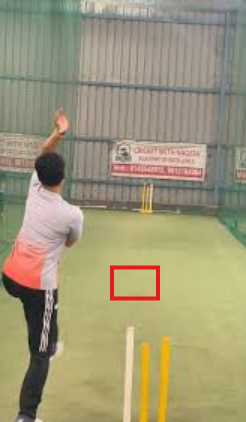
As an essential fast bowling technique, it is important to lock your eyes on the target area where you wish to land the cricket ball. This is a fundamental bowling basic from a fast bowling accuracy standpoint. As you run into bowl the bouncer, your eyes should be fixated halfway down the pitch. This fast bowling technique ensures that your head stays still as you enter the delivery stride to bowl the bouncer.
Release Ball Late
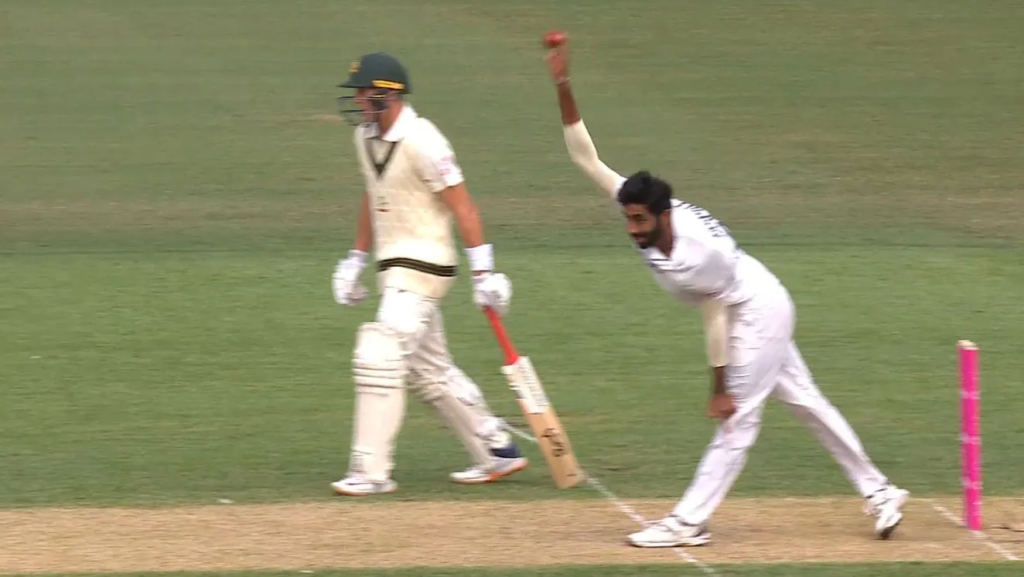
Unlike the yorker bowling tips, where the legendary fast bowler Brett Lee could famously be heard talking about releasing the ball early, the bouncer release technique works the other way round. To release the ball short, the bowler needs to let go of the ball as late as possible. Take a look at how Indian speedster Jasprit Bumrah attempts to release the ball late during the Pink-Ball Border-Gavaskar Trophy Test, in an attempt to bowl a short-pitched bouncer.
Follow Through
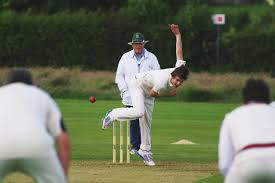
The follow through is the final and one of the most important stages of learning how to bowl a bouncer in cricket. A strong and aggressive follow through helps fast bowlers generate extra pace, steep bounce, and better body momentum through the crease. To execute the perfect bouncer, the bowler must drive the bowling shoulder hard towards the target while “banging” the cricket ball into the surface from a higher release point. This downward force and shoulder rotation are key fast bowling techniques that allow the ball to climb sharply towards the batter’s upper body.
Equally important is the use of the front arm during delivery stride. The non-bowling arm should pull down aggressively towards the hip to create rotational force and maintain alignment through release. These fast bowling action tips help bowlers transfer momentum efficiently from the run-up into the delivery stride, resulting in greater bounce and control. A balanced follow through also prevents bowlers from falling away sideways and improves overall bouncer bowling grip execution and consistency.
How To Bowl A Bouncer In Cricket: Key Drills To Follow
Before practicing advanced short-pitched deliveries in matches, it is important to build control, rhythm, and confidence through structured fast bowling drills. Here are some highly effective training exercises that will sharpen your understanding of how to bowl a bouncer in cricket while improving pace, bounce, body strength, and overall bowling consistency.
Cone Target Bouncer Drill
This is one of the most effective bouncer bowling tips for improving short-pitched accuracy and consistency. Place a cone or marker roughly 7–9 meters away from the batter’s stumps and repeatedly aim to land the ball on that target area. This drill helps bowlers understand the ideal bouncer length while improving control and rhythm.
Key Benefits
✅Improves bouncer accuracy
✅Develops better short-pitched control
✅Reinforces proper release point and length
Heavy Ball Bowling Drill
In this drill, bowlers use a slightly heavier training ball to strengthen the bowling shoulder, wrist, and forearm during the delivery action. The additional resistance forces the body to work harder through release and follow through, helping bowlers improve momentum transfer and power generation.
Key Benefits
✅Builds bowling-specific strength
✅Improves shoulder conditioning
✅Enhances bowling rhythm and power
Medicine Ball Slam Drill
The drill you mentioned is commonly known as the Medicine Ball Slam Drill, and it is extremely important for fast bowlers developing explosive upper-body strength. Bowlers lift a heavy medicine ball above shoulder height and aggressively slam it into the ground using both hands while engaging the core, back, and shoulders. This closely mimics the downward force required while bowling a bouncer.
Key Benefits
✅Strengthens back and core muscles
✅Improves explosive shoulder movement
✅Develops power for steeper bounce and pace
Resistance Band Pull-Down Drill
This is an excellent drill for strengthening the upper back, lats, and front-arm mechanics used during the bouncer action. Attach a resistance band overhead and simulate the aggressive front-arm pull-down movement used during fast bowling release. This drill supports many important fast bowling techniques and improves posture through delivery stride.
Key Benefits
✅Strengthens upper back and shoulders
✅Improves front-arm pull mechanics
✅Enhances bowling stability and balance
How To Bowl A Bouncer In Cricket: Closing Thoughts
A successful bouncer is not generated through pace alone. Fast bowlers need strong shoulders, explosive upper-body strength, and a sharp side-arm action to consistently produce steep bounce and aggression from short-pitched deliveries. The ability to “hit the deck hard” comes from proper front-arm pull mechanics, shoulder rotation, and physical conditioning developed through regular strength and mobility training. Bowlers learning how to bowl a bouncer in cricket should therefore place equal emphasis on fitness, recovery, and nutrition alongside technical training. For more guidance on fast bowling fitness, recovery methods, and nutrition plans, feel free to explore our dedicated fast bowling training resources page.
Whether you’re learning how to bowl a bouncer in cricket or trying to improve your overall fast bowling techniques, consistency and repetition remain the biggest factors behind a successful short-pitched attack. Mastering the bouncer takes patience, repetition, and a solid understanding of important fast bowling techniques such as release point, shoulder alignment, and body momentum through delivery stride. By consistently practicing these fast bowling action tips, improving your bouncer bowling grip, and following structured bouncer bowling tips and drills, you can gradually develop a more controlled and dangerous short-pitched delivery. For more fast bowling tips and coaching insights, take a look at some of our additional cricket training resources below.
Recommended Fast Bowling Coaching Guides
Fast Bowling Action Drills for Beginners: Step-by-Step Coaching Guide
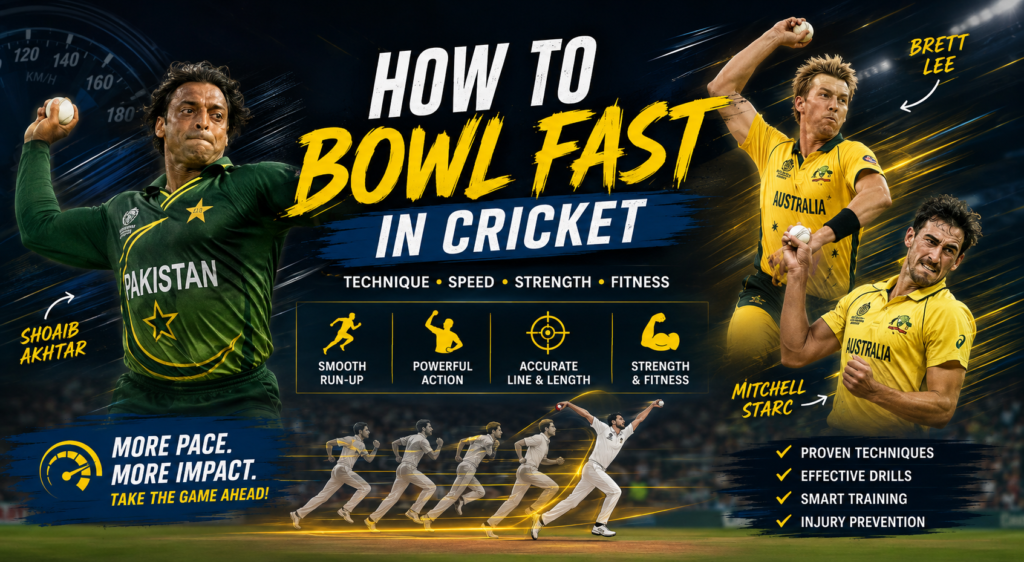
How to Bowl Fast in Cricket: Proven Tips, Drills & Exercises to Increase Pace
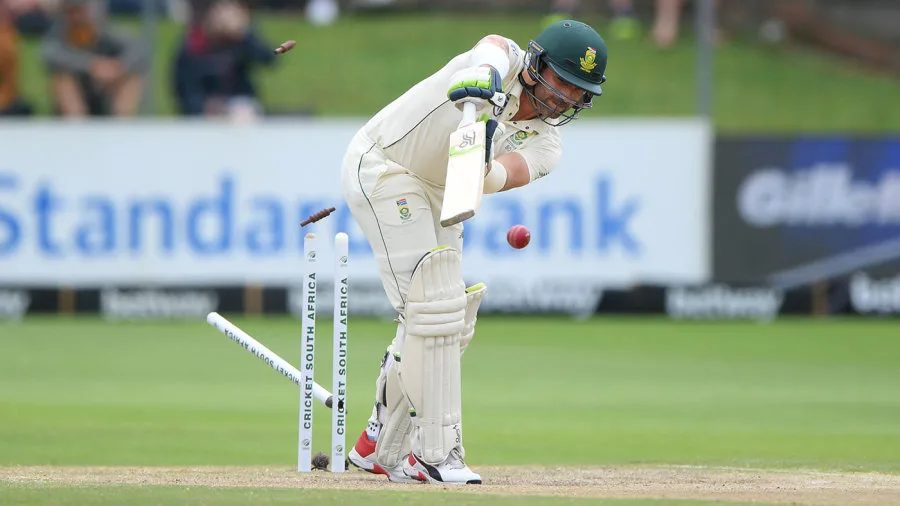
How to Bowl a Perfect Yorker in Cricket: Grip, Accuracy Tips & Yorker Drills
Found Our Cricket Coaching Guide Insightful?
With the right equipment, access to top experts, and the resources to grow, Cricvision can go the extra mile! If you’d like to be part of this journey, visit our donation page. Every contribution counts and directly fuels our growth.
Donate Now


One response to “How to Bowl a Bouncer in Cricket: Beginner Guide”
[…] what the major difference is between a bouncer and a short ball? What makes the two deliveries so distinct? Any delivery that causes the batter to […]