
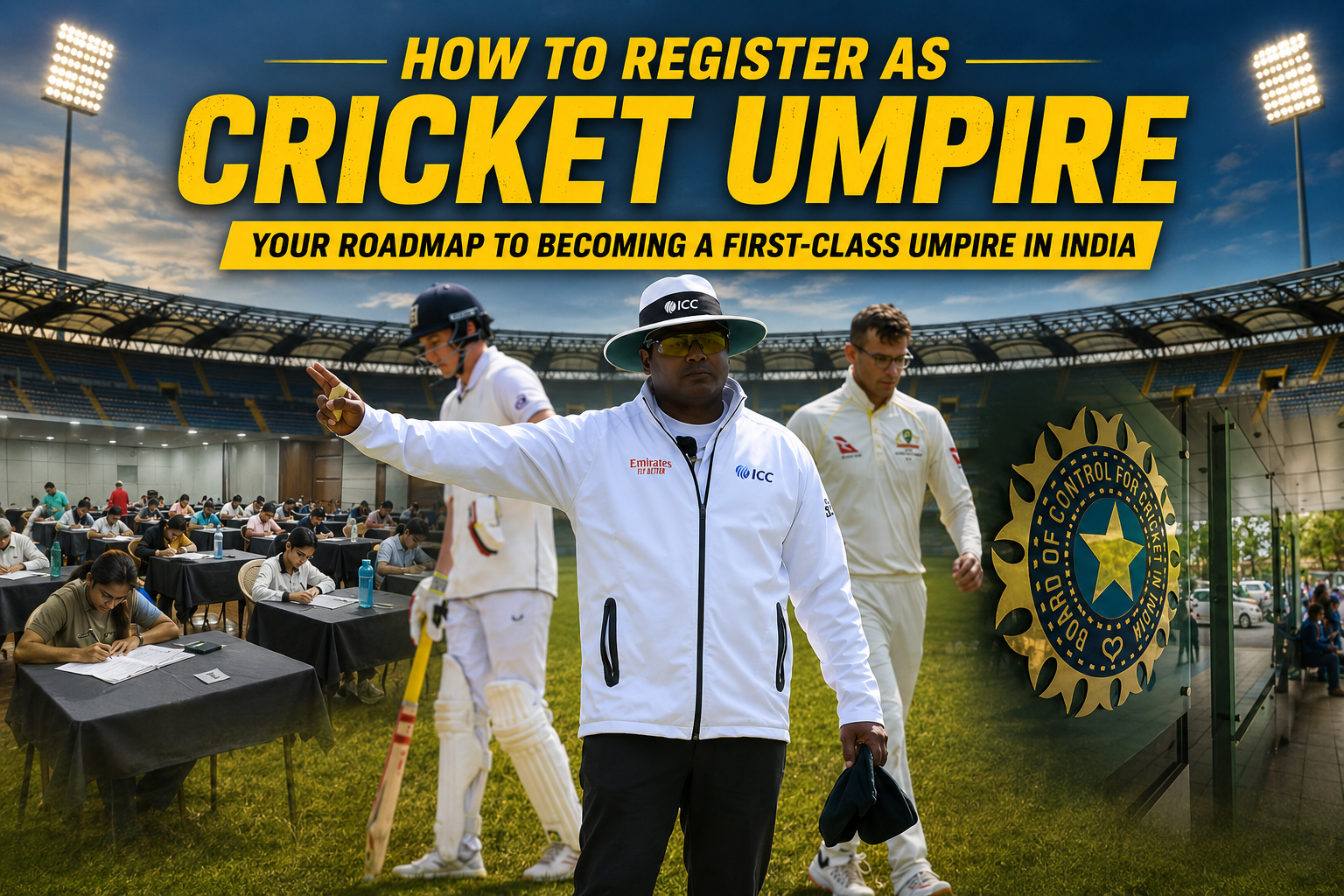
To become a BCCI-registered cricket umpire in India, you first pass your state association’s Level 1 umpire course (the Karnataka State Cricket Association’s is a well-known example), officiate in local matches to build experience, and then sit the BCCI’s Level 1 written exam. Once you clear it you move up through Level 2, the field test and interview. Registration is open to any Indian citizen aged 21 or older with reasonable eyesight and a clean cricket record.
Being a cricket umpire is one of the most enjoyable side gigs for ardent sports lovers in India. Players and working professionals who could not make it big in their cricketing careers often turn to umpiring as a way to stay connected with the game they love. While for some, umpiring provides a temporary escape from the pressures of corporate life, for others, it offers a ray of hope during difficult times in their family life.
However, the road to registering yourself as a state-panel umpire and subsequently progressing towards first-class umpiring can be filled with unforeseen challenges and uncertainty. How do you begin your cricket umpire journey in India, whom should you contact to get things rolling, and how do you prepare yourself for the role? Many aspiring umpires lack clarity on these crucial steps.
This detailed guide explains how to become a cricket umpire in India, covering the registration process, umpiring qualifications, exams, preparation, and the pathway towards becoming a BCCI domestic umpire. If you are wondering how to become a cricket umpire in India, the journey usually begins at the state or association level before progressing towards the BCCI umpire exam.
How to Become a Cricket Umpire in India: The 8-Step Path
Every BCCI-registered umpire in India goes through the same route in the same order. The full detail on each step is in the sections below.
- Meet the basic eligibility. Class 10 pass, able to read and write (preferably in two languages including your mother tongue), able to prove residency in the state you want to represent, and comfortable with basic scoring maths. You also need to be an Indian citizen aged 21 or older, with reasonable eyesight and a clean cricket record.
- Contact your nearest state or Union Territory cricket association. The state association’s official website is the fastest route. Ask about the umpiring course schedule and the exam calendar.
- Register for the state association’s Level 1 umpire course. This is the entry programme (the Karnataka State Cricket Association’s course is a well-known example). Batches typically open once a year.
- Attend the refresher course and sit the preliminary exam. The refresher covers the MCC Laws of Cricket before moving into playing conditions and situational rulings.
- Clear the main state umpiring exam. Depending on the association, this is a written paper, an oral round, or a mix of the two.
- Officiate local matches to build panel experience. Most state associations move new umpires through club, district and age-group games before considering them for higher panels.
- Sit the BCCI Level 1 written exam. Once you are on the state panel, BCCI Level 1 is the gateway to national-level umpiring.
- Progress through BCCI Level 2, the field test and the interview. These are the final stages before you are recognised as a BCCI-registered cricket umpire in India.
Cricket Umpire Qualifications: Basic Eligibility and Requirements in India
There are no particularly stringent umpiring qualifications required to begin your journey as a cricket umpire. You generally need to have passed Class 10 and be able to read and write, preferably in at least two languages, including your mother tongue. Furthermore, you must be able to prove your residency in the state you wish to represent as a cricket umpire. You should also be comfortable with basic mathematical calculations, which can come in handy when keeping track of scores, overs, and other aspects of a match. Above all, however, your passion for the game should take precedence over everything else.
It is an added advantage if you have played cricket at the district level or, ideally, first-class level while representing your state. Such experience can strengthen your credentials when seeking registration as a state-panel cricket umpire and may also help you receive preference for high-profile first- or second-division matches. In other words, having a strong playing background can make progression through the umpiring ranks somewhat easier.
However, it is not all gloom and doom if you have never played competitive cricket. Those without a playing background can also pursue umpiring and have a fair chance of registering as a cricket umpire. They will, however, need to spend considerable time familiarising themselves with the MCC Laws of Cricket and proving their ability at the grassroots level before progressing to higher levels. And finally, at the time of umpiring registration, the aspirant must be no older than 65 years of age, though the age guidelines can vary and are always subject to change at the discretion of the state cricket association. As you move forward, understanding how to apply for the cricket umpire exam and preparing thoroughly for the assessment become increasingly important steps on the pathway towards becoming a BCCI domestic umpire.
| Umpiring Qualification / Requirement | What You Need | Importance |
|---|---|---|
| Age Requirement | No more than 65 years of age. | Basic requirement |
| Educational Qualification | Minimum Class 10 qualification. | Basic requirement |
| Language Skills | Ability to read and write, preferably in at least two languages including your mother tongue. | Important |
| Basic Mathematics | Ability to perform basic mathematical calculations required during matches. | Important |
| Knowledge of Cricket | Strong understanding of cricket and its laws, with a willingness to continuously learn. | Essential |
| Passion for Cricket | A genuine passion for the game and commitment to learning the craft of umpiring. | Crucial |
| Playing Experience | District-level or first-class playing experience can strengthen your credentials. | Added advantage |
| MCC Laws | Familiarity with the MCC Laws of Cricket is essential for progressing as an umpire. | Essential for progression |
| Competitive Experience | Those without a playing background can build experience and prove themselves at grassroots level. | Helpful for progression |
Where to Start Your Cricket Umpire Journey: Getting in Touch With Your Nearest Cricket Association
Once you meet the basic umpiring qualification criteria, the first major stepping stone in your cricket umpire journey is to contact your nearest cricket association. Get in touch with the association to enquire about the umpiring exam schedule, if one is available. The best way to do this is by visiting your state cricket association’s official website. Alternatively, you can use the directory below to find the contact details of your nearest state or Union Territory cricket association, including relevant phone numbers and email addresses.
| S. No. | Association Name | Website URL | Phone | |
|---|---|---|---|---|
| 1 | Andhra Cricket Association | andhracricket.org | 0891-2727955 | office@andhracricket.com |
| 2 | Arunachal Pradesh Cricket Association | arunachalcricket.in | Not publicly listed | Not publicly listed |
| 3 | Assam Cricket Association | assamcricket.com | +91 361 2490930 | assamca@rediffmail.com |
| 4 | Bihar Cricket Association | biharcricketassociation.com | Not publicly listed | info@biharcricketassociation.com |
| 5 | Chhattisgarh State Cricket Sangh | cricketcscs.tv | 0771-2420008/9 | office@cricketcscs.tv |
| 6 | Delhi & District Cricket Association | ddca.in | 9811914960 | generalenquiry@ddca.co |
| 7 | Goa Cricket Association | goacricketassociation.com | +91 832 2416844 / 6514595 | goacricketassociation@rediffmail.com |
| 8 | Gujarat Cricket Association | gujaratcricketassociation.com | 079-35201090 | gca@gujaratcricketassociation.com |
| 9 | Haryana Cricket Association | haryanacricket.org | +91 86979 77373 | Not publicly listed |
| 10 | Himachal Pradesh Cricket Association | hpcricket.org | 01892-229539 | contact@hpca.cricket |
| 11 | Jammu & Kashmir Cricket Association | jkca.tv | Jammu: 9419146471; Srinagar: 9419013040 | jkcricketjw@gmail.com; jkcricketsw@gmail.com |
| 12 | Jharkhand State Cricket Association | cricjharkhand.org | 0657-2432722 / 2233950 | jsca_keenan@rediffmail.com |
| 13 | Karnataka State Cricket Association | cricketkarnataka.com | 080-40154015 / 22864487 | KSCA@cricketkarnataka.com |
| 14 | Kerala Cricket Association | keralacricketassociation.com | +91 471 2331368 / 2326522 | office@keralacricket.in |
| 15 | Madhya Pradesh Cricket Association | mpcaonline.com | 0731-2543602 | cricket.operations@mpcaonline.com; secretary@mpcaonline.com |
| 16 | Maharashtra Cricket Association | cricketmaharashtra.com | 020-27377162 | cricketmaharashtra@yahoo.com |
| 17 | Manipur Cricket Association | mnca.tv | 8415945298 / 8787591099 | Not publicly listed |
| 18 | Meghalaya Cricket Association | meghalayacricket.com | 0364-2592110 | meghalayacricket11@gmail.com |
| 19 | Cricket Association of Mizoram | cricketassociationofmizoram.org | +91 8132841869 | info@camizoram.com |
| 20 | Nagaland Cricket Association | nagalandcricket.com | 097351 31712 | nagalandca@gmail.com |
| 21 | Odisha Cricket Association | odishacricket.in | 0671-2302742 | info@odishacricket.in; ceo@odishacricket.in |
| 22 | Punjab Cricket Association | cricketpunjab.in | 0172-3532291–300 | pca@cricketpunjab.in |
| 23 | Rajasthan Cricket Association | cricketrajasthan.in | +91 141 2940700 / 701 / 702 / 703 | rca@cricketrajasthan.in |
| 24 | Sikkim Cricket Association | sikkimcricket.com | +91 7407407799 | info@sikkimcricket.com |
| 25 | Tamil Nadu Cricket Association | tnca.cricket | +91 44 28544175 | office@tnca.in |
| 26 | Hyderabad Cricket Association | hycricket.in | +91 40 27177842 | hycricket@rediffmail.com; info@hycricket.org |
| 27 | Tripura Cricket Association | tcalive.com | 0381-2388260 | tcaagt@yahoo.com |
| 28 | Uttar Pradesh Cricket Association | upca.tv | Not publicly listed | admin@upca.tv |
| 29 | Cricket Association of Uttarakhand | ukca.co.in | Not publicly listed | contact@ukca.co.in; divyanautiyal12@gmail.com |
| 30 | Cricket Association of Bengal | cricketassociationofbengal.com | 033-2248 0411 / 2447 | cab@bengalcricket.com |
| 31 | Cricket Association of Pondicherry | cap-cricket.com | 0413-2671070 / 2671071 | office@cap-cricket.com; secretary@cap-cricket.com; ceo@cap-cricket.com |
| 32 | UT Cricket Association Chandigarh | chandigarh.cricket | Not publicly listed | operations@chandigarhcricket.in |
| 33 | Mumbai Cricket Association | mumbaicricket.com | 022-67553800 | mca@mcacricket.com |
| 34 | Vidarbha Cricket Association | vca.co.in | 0712-2522700 | info@vca.co.in |
| 35 | Saurashtra Cricket Association | saucricket.com | 0281-2480700 | secretary@saucricket.com |
| 36 | Baroda Cricket Association | barodacricketassociation.com | 0265-2792200 | info@barodacricketassociation.com |
Unfortunately, unlike in some other cricket-playing nations, umpiring exams are not conducted frequently by state associations, and aspiring umpires may not receive a fixed schedule well in advance. This can naturally leave newcomers feeling uncertain about how to enter the process. You may need to be prepared for a long and patient wait before getting a genuine opportunity to represent your state association as a state-panel cricket umpire. Not everyone who expresses an interest or enrols gets an immediate opportunity to join the panel. In the meantime, you can also build connections online (possibly via LinkedIn) with umpires associated with your state association and learn more about the process directly from their experience.
What to Expect When You’re Invited for the Cricket Umpire Exam
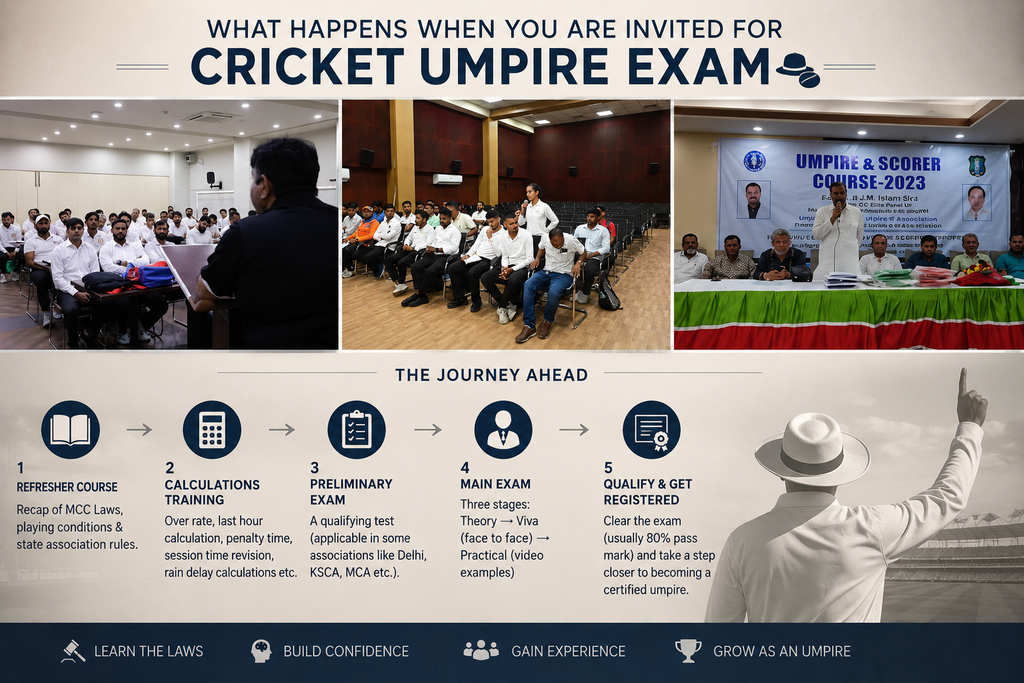
Once you have been shortlisted by a state cricket association, the next stage is usually the cricket umpire exam and the training that comes before it. The exact process can vary between associations, but candidates can generally expect a combination of refresher training, a preliminary assessment and a final examination.
Refresher Course and Preliminary Exam
Many associations begin by inviting candidates to a refresher course. This usually starts with the basic MCC Laws of Cricket, before moving on to the playing conditions followed by the respective state association.
Candidates may also be introduced to the practical calculations that a cricket umpire needs to understand during a match, including over-rate calculations, last-hour calculations, penalty time, session-time revisions and rain-delay calculations.
Some prominent associations, including Delhi, KSCA and MCA, may also conduct a preliminary examination before candidates proceed further with their umpiring registration. However, this is not a universal requirement across every association.
The Main Umpiring Exam
The main examination generally requires candidates to achieve a passing score of around 80% and may consist of three stages:
- Theory – Questions based primarily on the MCC Laws and relevant playing conditions, along with practical arithmetic involving penalty time, over rates, revised session timings and rain interruptions.
- Viva – A face-to-face assessment designed to test your understanding of the laws and your ability to apply them.
- Practical – Video-based match situations where candidates must identify and correctly interpret different umpiring scenarios.
For anyone preparing, practising cricket umpiring exam questions and answers, and umpiring exam questions, practical law-based scenarios can be particularly useful. Understanding how the laws are applied in real match situations is just as important as memorising them.
What Happens If You Fail to Make the Cut as a Registered Cricket Umpire?
Not to worry if you miss out on qualifying for your state association’s umpiring exam. All is not lost if you fail the exam or do not yet meet the required umpiring qualifications. As a cricket umpire aspirant, there are still several ways to gain knowledge, build confidence, and get closer to your goal. One option worth exploring is a cricket umpire course online.
Let’s look at three alternative routes.
1. CoLLearn’s Cricket Umpiring Certification
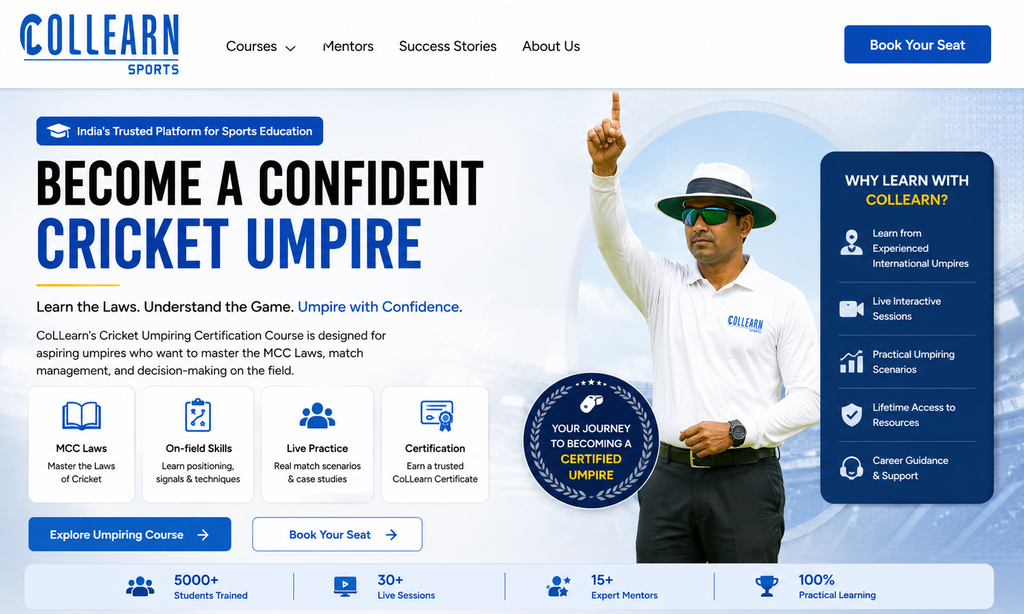
CoLLearn Cricket Umpiring Course offers a live, interactive cricket umpiring programme that can be attended remotely. The course covers the MCC Laws, ICC playing conditions, on-field decision-making, and practical match situations. It includes more than 12 live sessions, six months of mentorship and career assistance, and a certificate endorsed by NSDC and CoLLearn. The best part of this online umpiring course is that there is virtually no barrier to entry.
The programme is led by Sriharsha Kuchimanchi, a T20 International cricket umpire. Completing the course can give aspiring umpires a structured foundation before they pursue opportunities to officiate at local, academy, or other private matches.
2. Register as a Cricket Umpire on CricHeroes
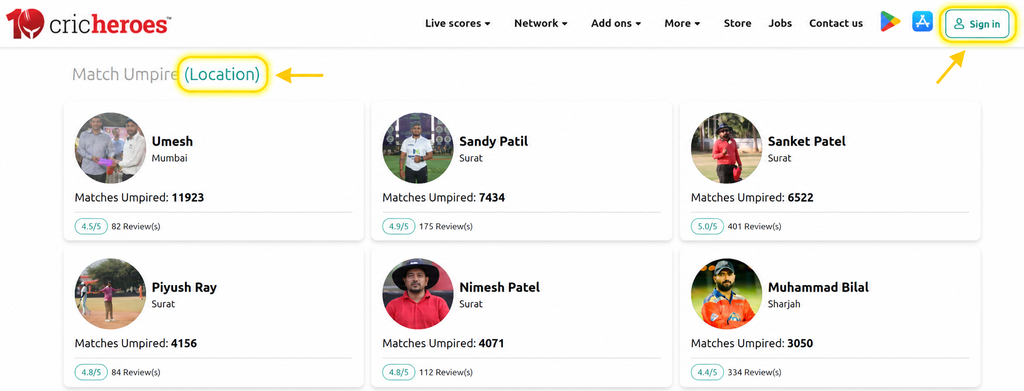
CricHeroes is built around the grassroots cricket ecosystem, connecting players, teams, organisers and tournaments. For an aspiring cricket umpire who has missed the state-association examination, grassroots matches on the platform can provide an opportunity to gain practical match experience. Private, academy and corporate tournaments can expose you to many of the situations you would encounter in competitive cricket. Just as the Collearn Umpiring Course, officiating matches as a Cricheroes cricket umpire requires no prior qualifications – just pure passion for the game of cricket.
The experience is particularly useful for developing game management, decision-making, and communication skills. Players can also challenge decisions from time to time, giving you a taste of the pressure and responsibility that comes with umpiring.
Download CricHeroes
Download the CricHeroes app on your phone and create an account to get started.
Start hereCreate Your Umpiring Profile
Open the app and go to Community → Umpire. Select Create Umpiring Profile and complete your profile.
Build your profileFind Umpiring Opportunities
Go to Looking and apply the “Umpire” filter to discover matches and tournaments looking for umpires.
Find opportunities3. Become an Exchange Umpire with Western Province Cricket Umpires’ Association
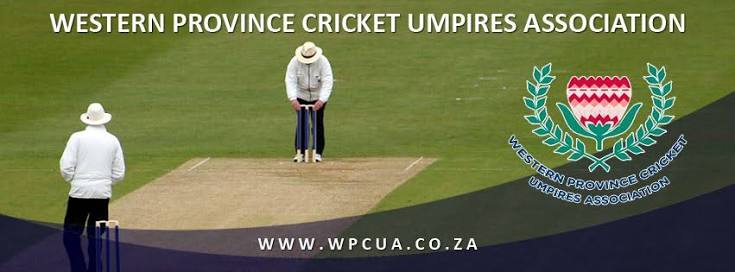
For those willing to take the experience a step further, an exchange-umpiring opportunity with the Western Province Cricket Umpires’ Association in Cape Town can be an interesting route.
This option requires considerably more commitment. You would need to travel to Cape Town, South Africa, with flights, accommodation and visa expenses borne by you. In return, you get an opportunity to experience competitive club cricket and officiate matches involving established clubs that have produced some very renowned cricketers such as Charl Langeveldt and Ashwell Prince.
For someone with little or no previous umpiring experience, standing in competitive South African club cricket can be a significant learning experience. And, of course, you get to experience Cape Town beyond the cricket — from Table Mountain to the Sea Point coastline.
Datrim Ray, founder of CricVision, explains his own experience of officiating as a visiting exchange umpire in Cape Town in the video below, including what aspiring umpires can expect and how they can prepare.
To get started, candidates can first complete the relevant online umpiring course. Attending the online umpiring course carries no charge and entails no major criteria to be met. However, the subsequent Cricket South Africa umpiring examination carries an examination fee ranging from $30 to $60, while the Level 1 assessment focuses on theory-based questions. Clearing Level 1 can open the door to the Cape Town exchange opportunity during the Western Province cricket season, which generally runs from October to March.
📢 Want to Start Your Umpiring Journey With WPCUA?
For information about the Western Province Cricket Umpires Association and its umpiring courses, you can get in touch with Tom Mokorosi, who has previously served as the association’s training coordinator.
It is still a long shot from becoming a BCCI domestic umpire, but you have to start somewhere. These alternative routes can help you build your knowledge, gain real match experience and take your first meaningful steps towards becoming a cricket umpire.
Career Progression: From Club Umpire to ICC Elite Panel
Most aspiring umpires focus on the next exam. Fewer think about the shape of the full ladder. Here is what the pathway looks like end to end, and the kind of matches each rung lets you officiate.
| Rung | Qualification | Matches you officiate |
|---|---|---|
| 1 | Club or district umpire (self-registered) | Club league, local tournaments, under-16 fixtures |
| 2 | State Level 1 course passed | District trophies, state age-group matches |
| 3 | State Level 2 course passed | Senior inter-district, state T20 league |
| 4 | State panel umpire | Senior inter-district finals, BCCI zonal under-19 and under-23 |
| 5 | BCCI Level 1 exam passed | Vijay Hazare Trophy, Syed Mushtaq Ali Trophy |
| 6 | BCCI Level 2 exam passed | Ranji Trophy, Irani Cup, India A series |
| 7 | BCCI international panel (national list) | Home T20 and ODI series as standing or reserve umpire |
| 8 | ICC International Panel | Overseas internationals, World Cup appointments |
| 9 | ICC Elite Panel | Test match standing umpire anywhere in the world (twelve umpires globally) |
Reading this top to bottom shows why patience matters. The gap between your State Level 1 course and your first BCCI first-class appointment is usually several seasons at best. Most state-panel umpires never cross into first-class, and that is fine. State panel work still gives you around twenty competitive matches a season and real access to Ranji players who will one day captain India.
Your Journey As a State Panel Cricket Umpire: What To Expect
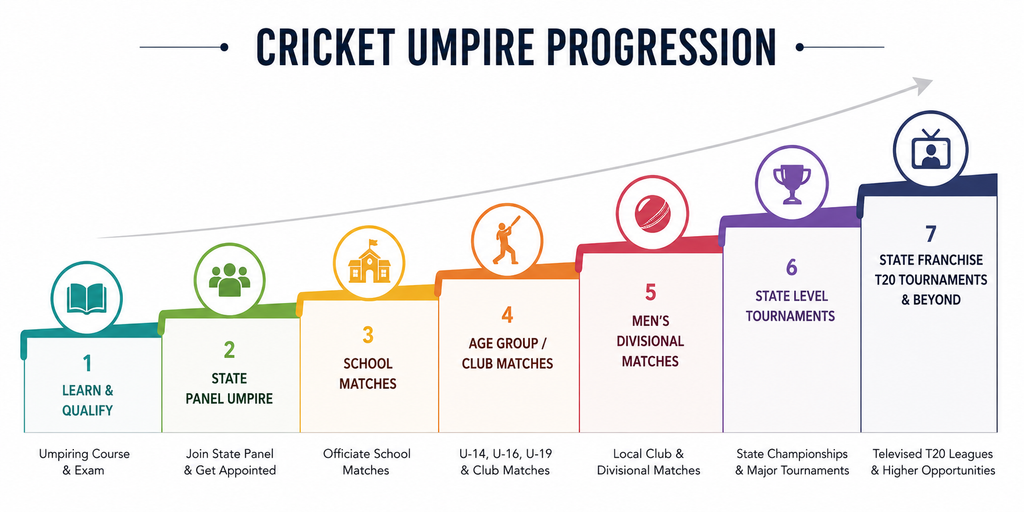
Clearing the cricket umpiring exam and earning a place on your state association’s panel is a major milestone, but it is not the end of the journey. In many ways, it is where your real development as a cricket umpire begins.
Once registered, you can expect a combination of match appointments, assessments, briefings and continued learning. Your performances on the field will gradually determine the type and level of matches you are considered for.
Here Is What Can Happen
Official recognition: You become a registered umpire with the state association and can be considered for matches administered by the association.
Continued learning: Don’t expect your umpiring qualifications to be the end of your studies. Associations may conduct meetings, briefings and refresher sessions covering MCC Laws, playing conditions, match procedures and recent changes.
Match appointments: Your initial appointments will generally be at the lower levels. This is where you learn how to manage an actual match, work with scorers and fellow officials, handle players and make decisions under pressure.
Performance matters: Getting onto the panel does not automatically guarantee bigger appointments. Your consistency, knowledge of the laws, fitness, punctuality, decision-making and overall conduct can influence how quickly you progress.
Higher-level opportunities: As you gain experience and establish a good record, you can become eligible for increasingly competitive matches. This is also where your cricket umpire salary and match fees can improve, depending on the association and competition.
Think of your first few seasons as a progression rather than a single jump from the exam room to elite cricket.
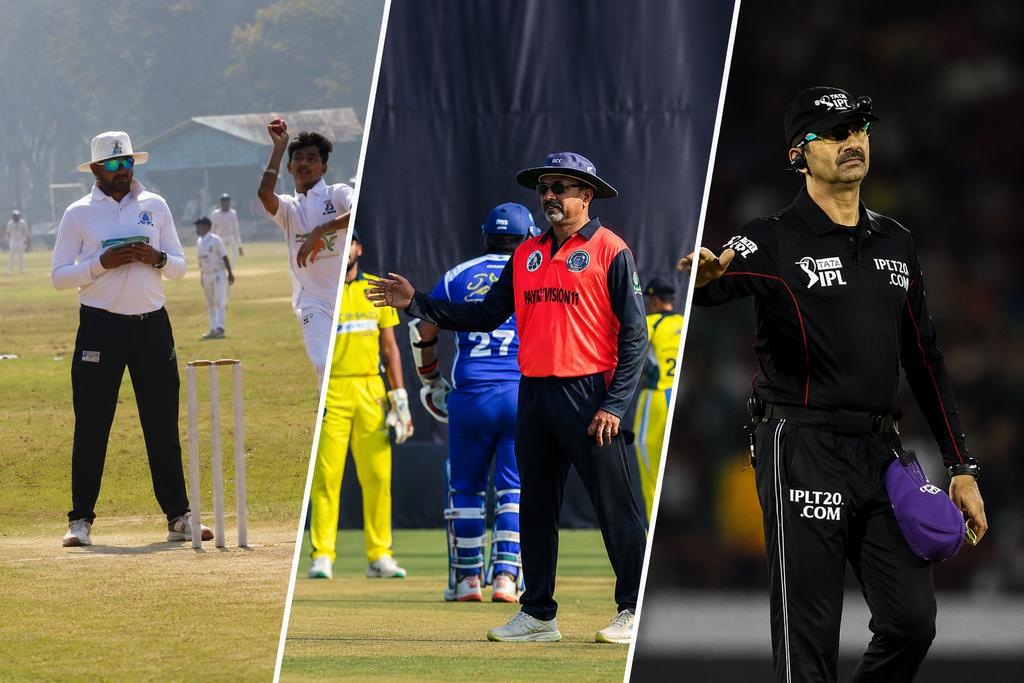
1. School cricket
School matches can provide an excellent introduction to competitive umpiring. You get to practise positioning, signals, communication and basic match management while becoming comfortable making decisions in a live game.
2. Age-group and junior club cricket
The next step can involve U-14, U-16, U-19 and other age-group or junior club competitions. The standard and intensity gradually increase, giving you more opportunities to test your knowledge of the Laws and playing conditions.
3. Men’s club and divisional cricket
Men’s divisional matches represent another significant step. The cricket becomes more competitive, players are more experienced and the pressure on officials increases. This is where your ability to remain calm, consistent and authoritative becomes particularly important.
4. State-level tournaments
Strong performers may eventually receive opportunities in more prominent state competitions, where the standard of cricket, scrutiny and expectations are higher. These matches can provide valuable exposure and help senior officials assess your potential.
5. Televised state franchise T20 tournaments
For some umpires, the big opportunity is a televised, IPL-style state franchise T20 tournament conducted by the association. These competitions can offer higher match fees than ordinary umpiring appointments, while also providing valuable exposure.
But there is an important caveat: getting onto the state panel does not mean you will be fast-tracked to these tournaments. You have to earn those appointments. Performance, experience, consistency and the confidence of the association’s umpiring hierarchy all matter.
Cricket Umpire Equipment: What to Carry on Match Day
Walking onto the field without the right kit is the fastest way to lose credibility with captains and senior umpires. Here is what every state-panel umpire carries in their match-day bag, and what each item is for.
The non-negotiables
- Over counter (6-ball counter): a hand-held counter to track balls bowled. Keep a second one in your bag in case one jams during a crucial over.
- Spare bails: carry at least four. Replacing a broken bail from your own pocket is faster than sending someone off the field.
- Umpire’s notebook or scorecard: for logging unusual incidents, batters you have given out, and over counts if your counter fails.
- Two pens plus one pencil: pens for the official scorecard, pencil for notes that may need erasing.
- Ball gauge: a plastic ring the ball should pass through. If a ball becomes soft or deformed, you need this to rule on replacement.
Required at first-class level and above
- Light meter: mandatory for bad-light decisions in first-class and international cricket. Sekonic and Konica Minolta are the common industry choices. Cheap models give readings that can embarrass you in front of a Ranji captain.
- Match ball bag: for carrying the on-field ball between innings and storing the backup ball you may need mid-innings.
- Bowler’s marker: a small disc the bowler places to mark their run-up. Grounds usually supply these but carry a spare.
Personal match-day kit
- White long-sleeved shirt and dark trousers: the standard pattern for most Indian state associations. First-class matches move to an association-issued blazer and shirt combination.
- Wide-brim hat and sunglasses: Indian cricket runs seven hours in the sun. A soft hat packs down better than a formal panama.
- Water bottle plus electrolytes: you lose more fluid standing in one spot for four hours than batters do running between the wickets.
- Small first-aid kit: antiseptic, bandages, one knee support. Field injuries that stop play are the umpire’s call to manage.
- Umpire’s whistle: optional, but useful at junior level where there is no PA system.
The full kit assembles for well under what you earn in your first full season of state-panel appointments. The one piece worth paying for is a good light meter the day you move into first-class work.
BCCI Umpire Exam Preparation: What to Expect as Cricket Umpire
The BCCI umpire exam is not conducted on a fixed or frequently announced schedule. The BCCI does not generally disclose an examination date well in advance, and the process is understood to be need-based, meaning aspiring umpires may have to wait until an official announcement is made.
For candidates working towards waiting to appear for a BCCI umpire exam, this waiting period should not be treated as downtime. While you wait in anticipation of an official announcement on the BCCI umpire exam, it is an opportunity to continue umpiring regularly for your respective association, gain match experience, and strengthen your understanding of the Laws of Cricket and relevant playing conditions. Revisiting previous BCCI umpire exam questions and answers can also help you identify areas that require further preparation.
If your goal is to learn how to become a cricket umpire in India, you need to understand the BCCI umpire exam structure. Ideally, the BCCI Umpiring Examination is split into two phases as indicated below.
BCCI Level 1 Exam: This is the first phase of the BCCI umpire exam. The Level 1 umpiring exam involves theory-based training and assessments of the cricket umpires, followed shortly by a written exam. The cut-off for the BCCI Level 1 written exam is stringent, where candidates are often required to score a minimum of 90%. While the Level 1 of BCCI Umpire exam is uniformly rigorous, testing the MCC Laws of Cricket and specific BCCI Playing Conditions. The number of questions can vary, and upon passing, the candidates are still not cleared to stand in BCCI-sanctioned matches.
BCCI Level 2 Exam: This is probably the last major obstacle for those wondering how to become an umpire. Cricket umpires who successfully complete phase 1 of the BCCI Umpire Exam, are invited to appear for the BCCI Level 2 Exam. As one could expect, the bar for the Level 2 exam is set a lot higher. If you want to see your dream of “how to become cricket umpire in India” get fulfilled, then you will need to pass this exam with flying colors and bag a score of at least 95% and above. After clear Level 1, candidates often need to wait for a year or two before being invited for the Level 2 exam. Unlike Phase 1 of the BCCI Umpire exam, the Level 2 umpiring examination comprises several stages such as:
- Advanced Theory (Written): Tests deep knowledge of the MCC Laws of Cricket and specific BCCI playing conditions.
- Viva (Oral): Examiners ask scenario-based questions and analyze video clips of match decisions.
- Practical Assessment: Candidates officiate live match situations (such as standing for a set number of overs) while being evaluated on-field.
When an opportunity eventually arises, candidates are invited by their respective state or union territory association to appear for a screen exam before being formally eligible for the BCCI umpire exam. The association handpicks its strongest cricket umpire candidates and forwards their names to the BCCI for the subsequent BCCI umpire exam process.
So, if you are wondering how to become a cricket umpire in India, there is no simple year-round application window. For anyone asking how to become an umpire in cricket in India, the key is to build experience through your state or local cricket association and remain prepared for the BCCI pathway. Your best approach is to remain active as a cricket umpire, build a strong record within your association, and stay prepared for when the opportunity arrives.
BCCI Umpiring Exam Timeline
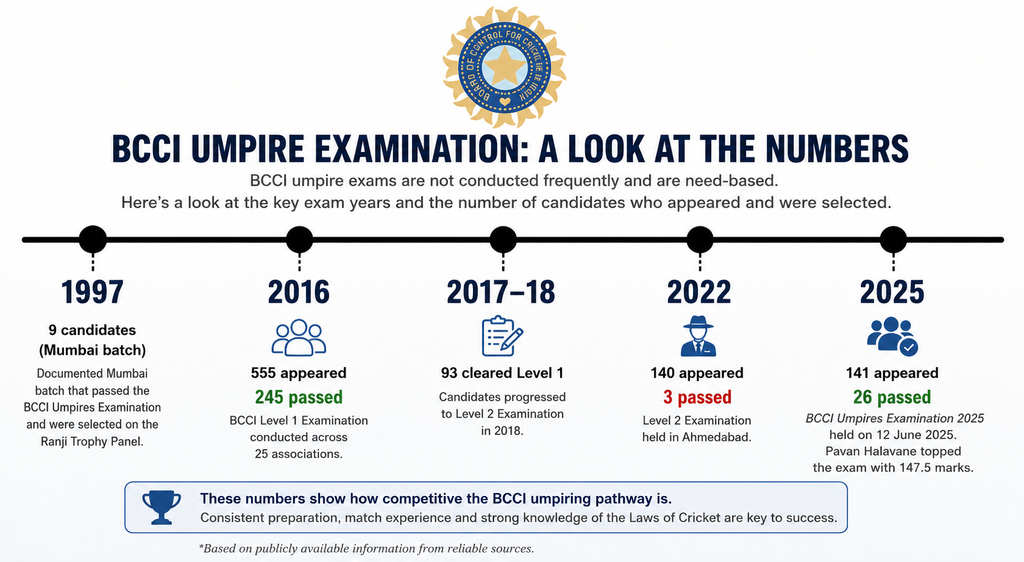
As you can clearly see, the path to becoming a cricket umpire at the BCCI level is anything but straightforward. For aspiring officials exploring how to become cricket umpire in India, this timeline gives a clearer picture of the stages involved before reaching the BCCI level. As the timeline indicates, BCCI umpiring exams are conducted infrequently, and the number of candidates who ultimately make the cut is very small. This makes consistency, preparation, and dedication absolutely crucial.
While you wait for the next opportunity, keep officiating state-panel matches, stay familiar with the Laws of Cricket and playing conditions, and continue sharpening your skills. In the upcoming section, we’ll share cricket umpiring exam questions from the available BCCI exam papers, giving you a valuable resource to prepare whenever the next opportunity arrives. The exam may not come often, so when it does, you need to be ready.
BCCI Umpire Exam (Past Question Paper Samples)
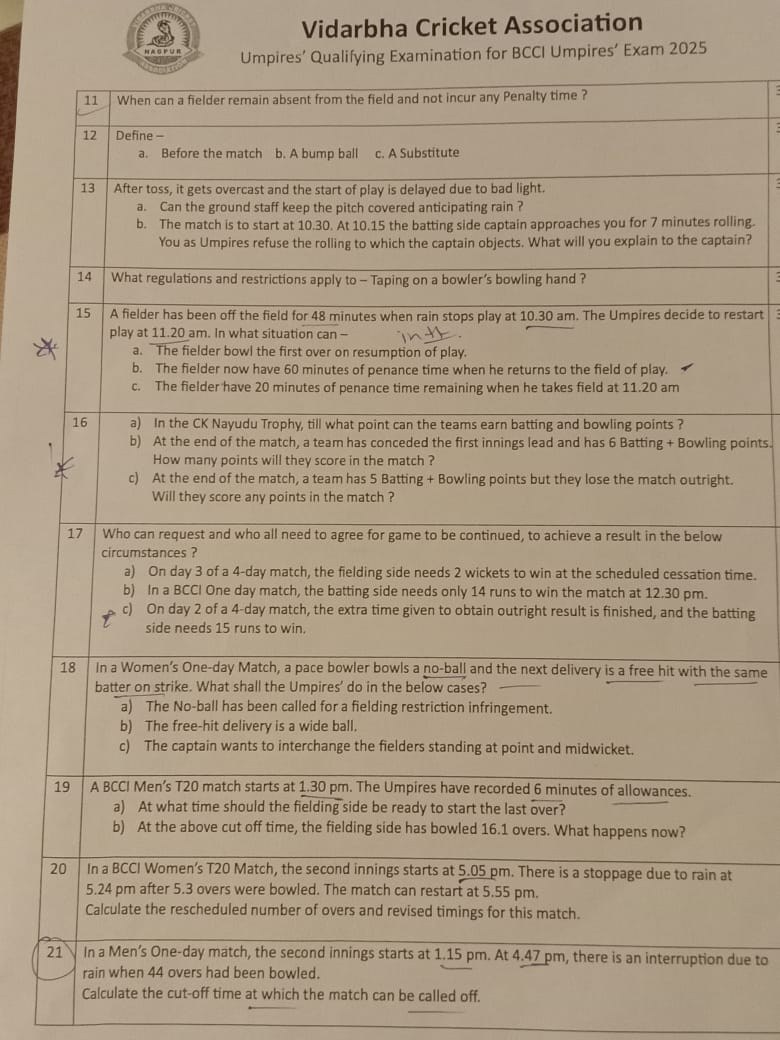
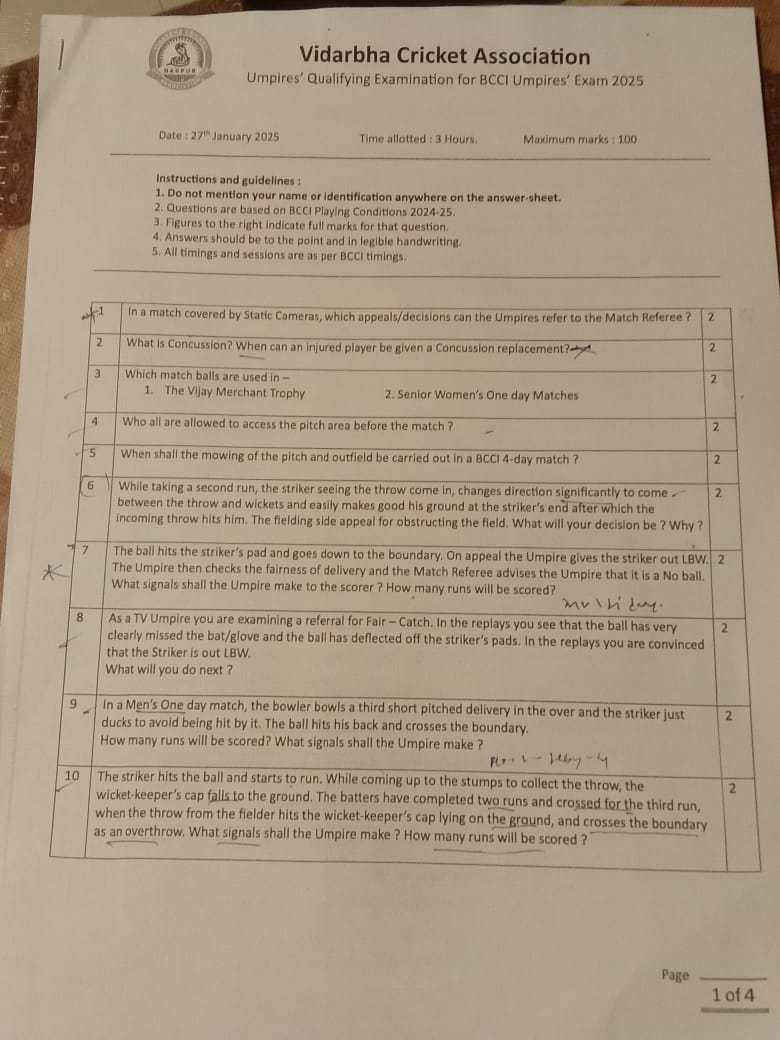

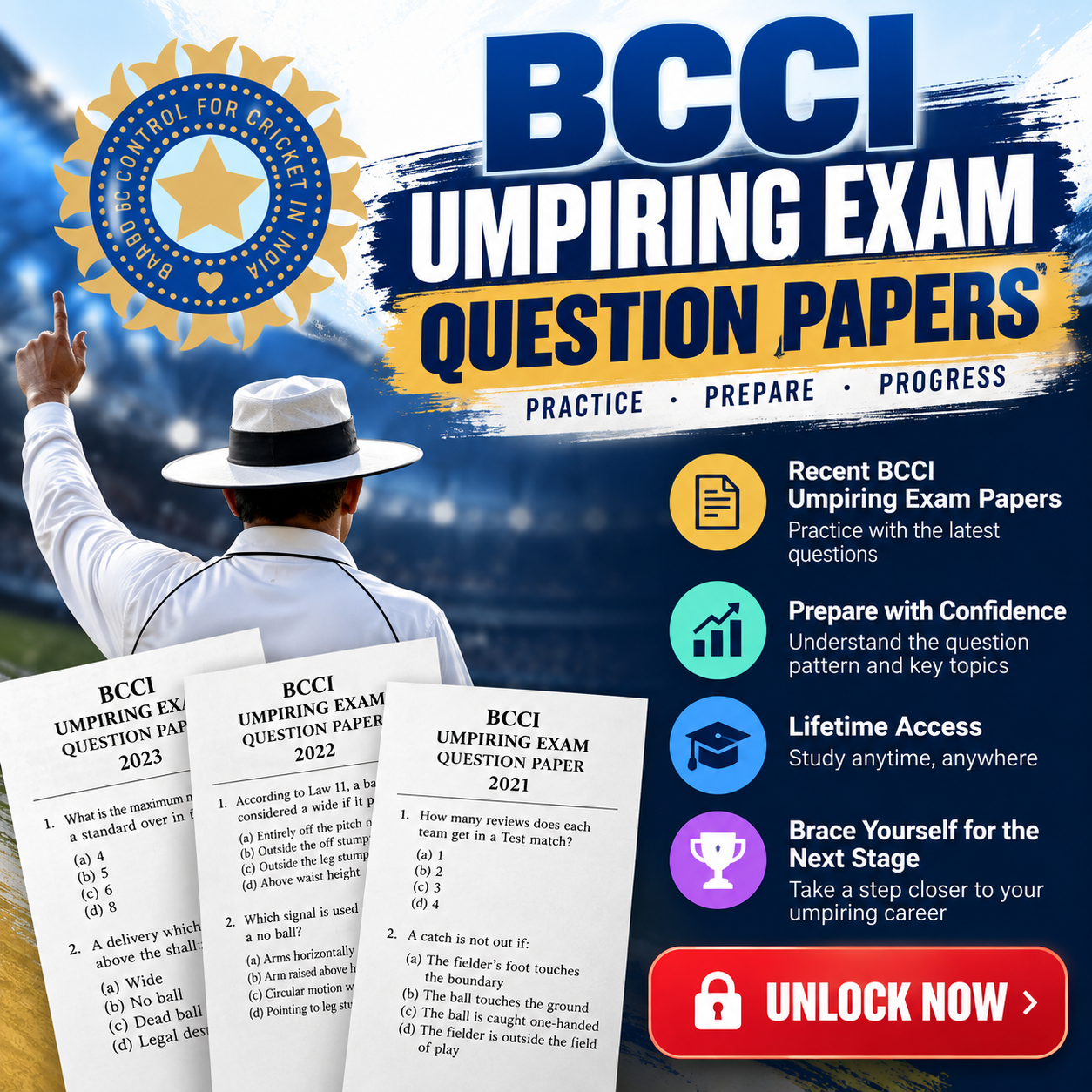
BCCI UMPIRE EXAM QUESTION PAPERS
Past BCCI Umpire Exam Question Papers
Question Papers
Lifetime Access
Study Anytime
Payment
(≈ $6)
We at Cricvision are fortunate to bring you the past question paper samples of the BCCI Umpire exam. Some of them are screening question paper samples obtained after the completion of screening exams held by select cricket associations around India. These BCCI umpire exam questions are strictly based on BCCI playing conditions, which could certainly overlap with the current or existing MCC laws and playing conditions of your respective state cricket association. Therefore, a holistic grasp of the MCC laws and playing conditions of the BCCI and your respective state cricket association is mandatory to have a serious crack at the BCCI umpire exam.
The questions asked in the BCCI umpire exam mimic the real-life scenarios a BCCI domestic cricket umpire would typically face in his/her officiating experience, often covering key aspects of the game from making over and session time calculations in a multi-day game to managing third-umpire protocols, something not often touched upon rigorously at state/district level cricket.
How to Become a Cricket Umpire: Key Umpiring Contacts

Name: Tom Mokorosi
Nationality: South African 🇿🇦
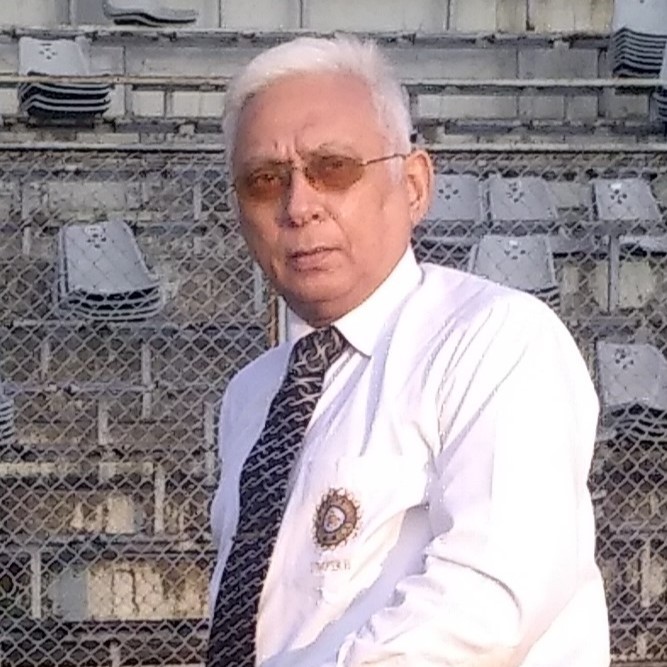
Name: Madan Singh
Nationality: Indian 🇮🇳

Name: Marcus Couto
Nationality: Indian 🇮🇳
Name: Anand Navjot
Nationality: Indian 🇮🇳 (🇭🇺)
If the thought of how to become a cricket umpire seems daunting, that is completely understandable. Despite the available resources and potential pathways, aspiring officials can still feel lost about what it takes to enter umpiring or the challenges they may face as they progress. To help, we have highlighted some experienced cricket umpire contacts who have gone through this journey themselves and can offer practical advice and a realistic perspective on the profession. They can be reached through available contact channels, including email, phone, or social media, and may be able to answer your questions, share practical umpiring advice, and offer a more realistic perspective on what lies ahead.
Some, including Anand Navjot and Madan Singh (Mr Singh), have officiated at the ICC level, while others have first-class experience and have worked as umpiring tutors at ICC level. Their experience can help budding officials understand the realities of how to become cricket umpire in India, navigate potential roadblocks and prepare for the demands of progressing through the ranks. Whether you’re researching how to become cricket umpire, how to become an umpire in cricket in India, or simply trying to understand the profession better, speaking to someone who has already walked the path can be invaluable.
However, while these contacts can guide you at key stages of your journey, the real onus lies on you. Their advice can help you understand how to become an umpire and what to expect, but building the knowledge, experience and resilience needed to succeed ultimately depends on your own effort.
Frequently Asked Questions About Cricket Umpiring
How do I become a cricket umpire in India?
The simplest way to begin as a cricket umpire is to contact your nearest state or union territory cricket association. Ask about upcoming umpiring courses, registrations, examinations and opportunities to join their local panel.
What are the eligibility criteria to become a cricket umpire?
The umpiring qualifications vary between associations, but a strong understanding of cricket, the MCC Laws and a genuine interest in officiating are essential. Some associations may also have their own age, education or examination requirements.
How do I become eligible to take an umpiring exam?
Start by approaching your state association and asking about its registration process. Depending on the association, you may need to attend a refresher course or preliminary assessment before being invited to the main examination.
What does a state-panel umpiring exam look like?
A typical examination can include theory, viva and practical/video-based assessments. Candidates are generally tested on the MCC Laws, playing conditions and practical calculations involving areas such as penalty time, over rates, session timings and rain interruptions.
How can I prepare for cricket umpiring exam questions and answers?
Focus first on the MCC Laws and your association’s playing conditions. You should also practise match-related calculations and scenario-based questions, as the examination tests whether you can apply the laws rather than simply memorise them.
What are the alternatives if I do not qualify as a state-panel umpire?
There are several ways to gain practical experience outside the traditional state-panel route. Options include a cricket umpire course online through providers such as CoLLearn, registering as an umpire on CricHeroes, or exploring international exchange opportunities such as the Western Province Cricket Umpires Association programme.
What type of matches does a state-panel umpire officiate?
New panel umpires generally work their way up through different levels of cricket. This can include school matches, age-group fixtures and club cricket before progressing to men’s divisional matches and, for those who establish themselves, state-level franchise-style T20 tournaments.
How do I become a BCCI domestic umpire?
To become a BCCI domestic umpire, you generally need to build a strong record by regularly officiating matches for your state association and establishing yourself within its umpiring system. When the BCCI announces a screening process, your association can forward suitable names. A screening examination conducted by the state association is also part of the pathway.
Can I become an international umpire without playing cricket professionally?
It is highly unlikely, particularly at the highest level. Preference is generally given to candidates who have substantial playing experience and have experienced the game at a high level during their professional cricket career. However, playing experience is not necessarily an absolute requirement to begin your journey as an umpire.
What is the average cricket umpire salary in India?
The average cricket umpire salary for a state-panel umpire is around ₹2,000–₹3,000 per match, or roughly US$20–$30, although payments can vary between associations, match levels and competitions. Higher-level appointments can command considerably more.
How do I apply for a cricket umpire exam?
The best approach is to contact your nearest state cricket association and ask when registrations or applications open. This is also the most reliable way to find out whether the association currently has an upcoming course, preliminary test or how to apply for cricket umpire exam process.
Can I become a BCCI umpire immediately after passing my state exam?
No. Passing the state-level examination is only one step. You still need to gain regular match experience, demonstrate consistent performance, and establish yourself within your association before you can be considered for higher-level opportunities.
Can foreign umpiring certification or online course help me get registered with my state/district association?
Possible to register as a cricket umpire on the basis of foreign credentials, but that is solely at the discretion of your respective state cricket association body.
Final Thoughts On Becoming Professional Cricket Umpire (In India & Worldwide)
Becoming a cricket umpire can be an ethralling experience at first glance, but it is important to understand that the journey is neither quick nor financially predictable. Once registered with a state or union territory association, you may finally get opportunities to officiate matches, but the initial cricket umpire salary can be modest. Even in a good cricketing month, officiating a handful of matches may bring in around ₹10,000–₹15,000 ($100–$150). And that income depends entirely on the number of matches available. Some months may be considerably quieter.
The road from state-panel umpire to first-class BCCI domestic umpire and eventually to elite ICC panel is also highly competitive and unpredictable. Having the required umpiring qualifications does not guarantee progression. There is no fixed schedule for umpiring examinations either, meaning aspiring umpires may sometimes find themselves waiting in limbo for the next announcement. That is why having a stable job or business as a backup is important. Financial stability allows you to pursue umpiring opportunities without putting your livelihood under pressure.
Finally, make self-assessment part of your routine. Review your decisions after every match, identify areas for improvement and learn from your mistakes. Over time, this can help build consistency, confidence and mental resilience.
Umpiring is a long game. Stay patient, keep learning and maintain financial stability while you work towards your next opportunity. 🏏🕴🏽
Found Our Cricket Umpiring Guide Insightful?
With the right equipment, access to top experts, and the resources to grow, Cricvision can go the extra mile! If you’d like to be part of this journey, visit our donation page. Every contribution counts and directly fuels our growth.
Donate Now


9 responses to “How to Become a Cricket Umpire in India”
Thanks for guidance.
My pleasure!
Very well! You are very organized
Really appreciate it! Keep following us for helpful cricket tips!
[…] Saltburn Cricket Club cricketer Brian Devine allegedly used a deceptive tactic to influence an umpiring decision. The incident has since become known online as the Clicky Ponting controversy, putting […]
[…] essence, that is what the rain rules in cricket are all about. During every rain delay in cricket, umpires must decide how many overs need to be reduced, whether the innings should continue, and what the […]
[…] of wrongdoing from the batting side, then the 5 penalty runs signal is issued by the umpire. The umpire conveys the 5 penalty run signal to the scorers by touching his/her opposite shoulder with their […]
[…] the LBW criteria remain exactly the same, irrespective of the batter’s change in stance. The umpire continues to assess four key factors before raising the […]
[…] Umpire’s call is one of the most misunderstood aspects of DRS in cricket, particularly when it comes to close LBW decisions. Introduced as part of the Decision Review System (DRS), umpire’s call in cricket exists to preserve the authority and credibility of the on-field umpire when technology cannot deliver a completely definitive answer. While tools such as ball tracking, UltraEdge (Snicko), and Hawk-Eye have significantly improved decision-making, they still have a small margin of uncertainty. In such situations, the original on-field decision remains unchanged if the available evidence is not conclusive enough to overturn it. This approach allows technology to assist umpires rather than replace them, creating a balance between human judgement and modern innovation under the LBW law. […]