
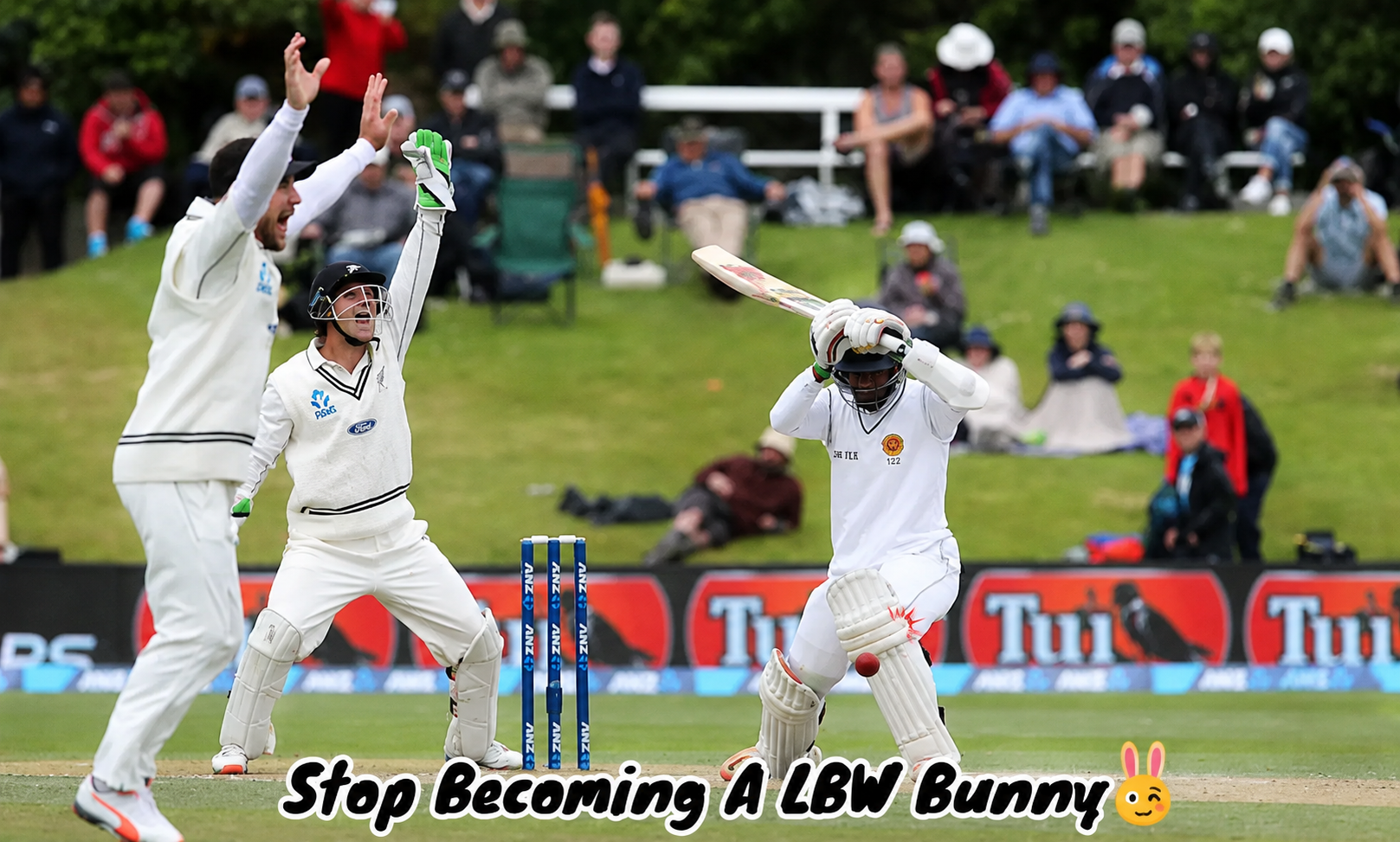
The LBW rules in cricket can be a nightmare for any batter. It’s often the last thing you want to experience as an on-field batter. The struggles become imminent when batters get their hands and their feet in the wrong position while negotiating the in-dipping deliveries from fast bowlers and spinners alike. As a matter of fact, the LBW out rules have accounted for at least 14% to 15% of all dismissals, making it the third most common form of dismissal after caught (approx. 59%) and bowled (approx. 21%).
So, a burning question looms – how to avoid LBW in cricket? And what are some of the proven ways that the batters can address to avoid being adjudged LBW? In this article, we will highlight major pitfalls that cause a batter to be pinned on the front pad and explore proven ways (along with drills) that are aimed at eradicating your LBW roadblock once and for all.
List Of Batters With Most LBW Dismissals In Cricket (Features Top 10 Across Formats)
| Batter | Team | Estimated LBW Dismissal Count |
| Sachin Tendulkar | India | 130+ |
| Mahela Jayawardene | Sri Lanka | 110+ |
| Jacques Kallis | South Africa | 100+ |
| Ricky Ponting | Australia | 95+ |
| Rahul Dravid | India | 90+ |
| Inzamam-ul-Haq | Pakistan | 85+ |
| Kumar Sangakkara | Sri Lanka | 80+ |
| Sanath Jayasuriya | Sri Lanka | 80+ |
| Ross Taylor | New Zealand | 75-80 |
| Brian Lara | West Indies | 75+ |
How To Avoid LBW In Cricket: Uncovering The Common Causes Behind LBW Dismissals
So, how to avoid LBW in cricket? What do you think might be the first step? The first step to eradicating this mode of dismissal from your dictionary begins with admission. Understanding the fact that the problem indeed exists will inadvertently put you on the path of imminent recovery, thus compelling you to address your grey areas more proactively.
The LBW rules in cricket spare no one. Under the LBW conditions, a batter can be out in many different ways, leaving you with virtually no room for error. Here are 5 major reasons why a batter won’t stop getting out under the LBW rule in cricket.
Reason 1: Getting Your Front Foot Across Too Early
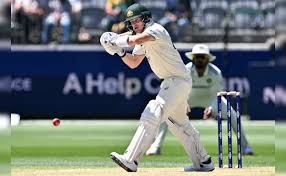
One of the primary reasons for LBW out dismissals in cricket is a batter’s tendency to get their front foot across far too early, and by a substantial margin. As a result, many batters end up playing around their front pad, thus making them easy prey for the bowlers. Moreover, getting your front foot across also deters you from playing with a straight bat, which further limits your ability to make reasonable contact with the cricket ball.
Reason 2: Head Falling Over To The Off-Side
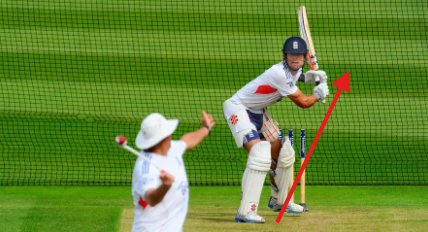
Another major obstacle faced by the batters these days is that their head falls too far across to the offside. This primarily stems from your front foot being planted across too early. Planting your front foot too far across closes your stance completely, limiting your ability to explore on-side options. Naturally, this triggers a cascading effect, with your head also following the direction of your front foot. Once you get your front foot across, your head follows, and so does your entire body eventually. This results in total imbalance, which blocks their bat’s path and traps them in line with the stumps, making it easier for the cricket ball to hit the pads and result in an LBW.
Reason 3: Stuck In The Crease (Lack of Feet Movement)
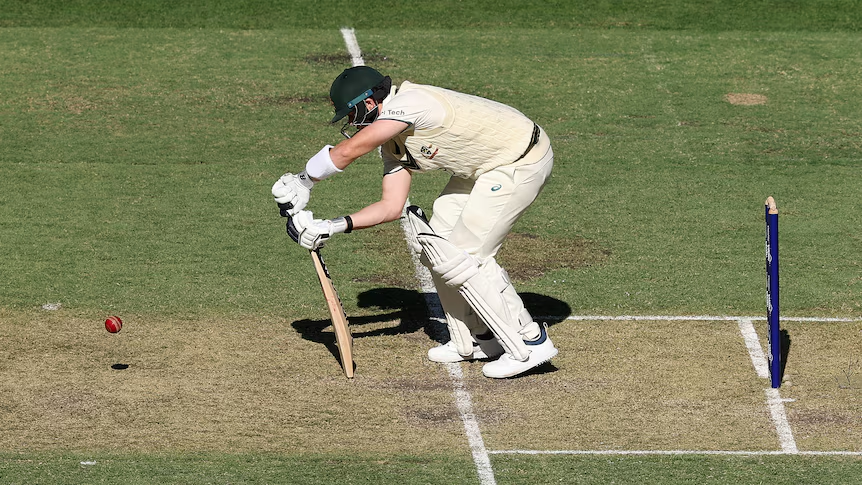
Movement of your feet is paramount if you’re to score runs. By being tentative at the crease or by not showing a great deal of conviction with your foot movement, you risk playing into the hands of the bowler. In this day and age, a bowler possesses a wide range of tricks up his/her sleeve, enough to test your negotiating skills, both on the front foot as well as back foot. Any weakness with your feet movement can easily be exposed. Hence, it becomes imperative that you remain proactive with your feet movement, especially against a moving cricket ball. Proactive feet movement keeps you in the game and ensures that you have a much better chance of tackling good deliveries with ease.
Reason 4: Misreading The Incoming Delivery
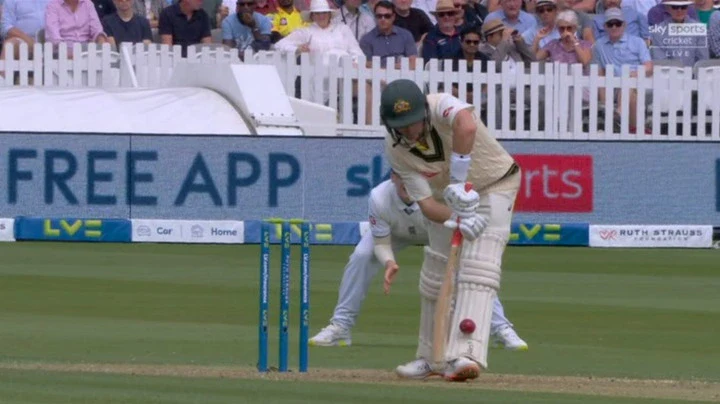
Balls that move sharply back into the batter (inswing or off-spin) are the most dangerous, often beating the bat and striking the pad. At times, batters fail to judge the movement of the ball early and end up playing down the wrong line, which further opens up the possibility of being dismissed under the latest LBW conditions. This issue is further aggravated if you do not watch the cricket ball closely or end up reacting to it very late.
5 Ways To Avoid LBW in Cricket
Exploring ways to avoid LBW in cricket? Well, this is where your search comes to a swift end. Here are some proven cricket batting drills that you can practice without distractions that will help you avoid becoming a regular LBW victim under the latest, modern-day LBW criteria.
Solution 1: Play With a Straight Bat
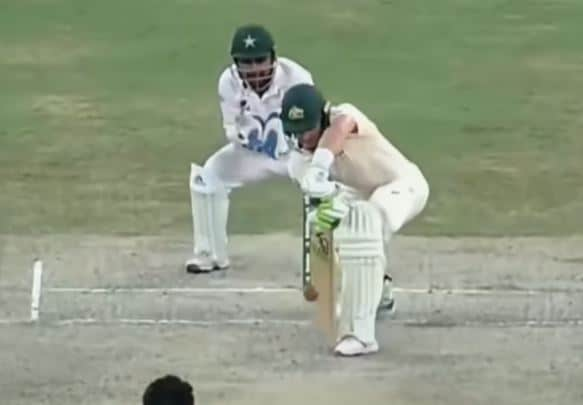
The first step to avoid LBW in cricket is to ensure that you keep your bat coming down in a straight line close to the pad. This reduces the gap between bat and pad, making it harder for the ball to sneak through and hit your pads.
How to do it:
- Stand in your stance without a ball.
- Practice your forward defense with the bat coming down perfectly straight (like a pendulum).
- Check that the bat face points towards the bowler or ground, not square.
Solution 2: Head Forward Drill
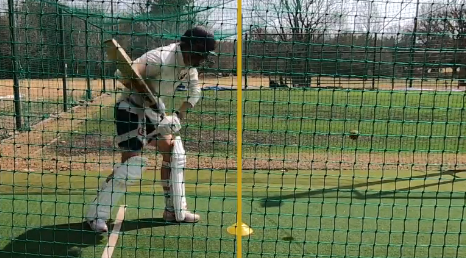
If you ever wondered how to get out of the “how to avoid lbw in cricket” roadblock, then this cricket batting drill will surely make your life a lot easier.
How to do it:
- Place a cone near the front leg, barely 2-3 feet away.
- Try to gently time the ball along the ground by ensuring that your front foot stays beside the line of the ball.
- Make sure your head stays over the cone while you practice this cricket batting drill.
Purpose: To ensure you get your front foot beside the line of the cricket ball and NOT across.
Solution 3: Catch The Ball With Your Gloves

Another innovative cricket drill to help you avoid LBW in cricket is the catch the ball with your gloves drill. Instead of playing a shot, you focus on catching the ball with your gloves instead. We list down simple ways below to help you get started with this cricket practice drill.
How to do it:
- Find yourself an empty net and tag along with your partner
- Ask your partner to throw the ball at your pads from a distance of roughly 5-7 meters. (The throw must be underarm)
- Try to move your front foot out of the way to catch the ball with your gloves.
Purpose: Build muscle memory by reinforcing the correct positioning of your front foot so that you avoid playing across the line.
Solution 4: One-Handed Straight Drive Drill
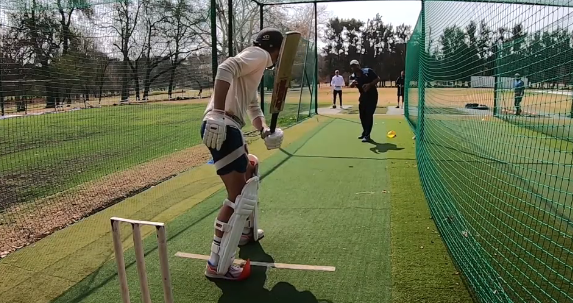
This simple, yet effective batting drill allows you to work on your front foot positioning and bat swing, all in one go. We can’t stress the importance of getting your feet in the right position to the line of the ball. But the real success comes when your hands (primarily your top hand) follows through along with your front foot.
How to do it:
- Begin with a stationary position with your back foot pointing towards point.
- Use only your top hand for this drill
- Place a cone under your back foot to ensure you have the ideal balance
- Get your partner to do underarm throwdowns aimed at your front pad.
- Get your bat down in a straight line and swing through the line of the cricket ball.
- Avoid rotating your back hip in this cricket batting drill.
Purpose: To ensure that you access the cricket ball with your hands first instead of your legs.
Solution 5: Feet Beside The Line Of The Ball Drill
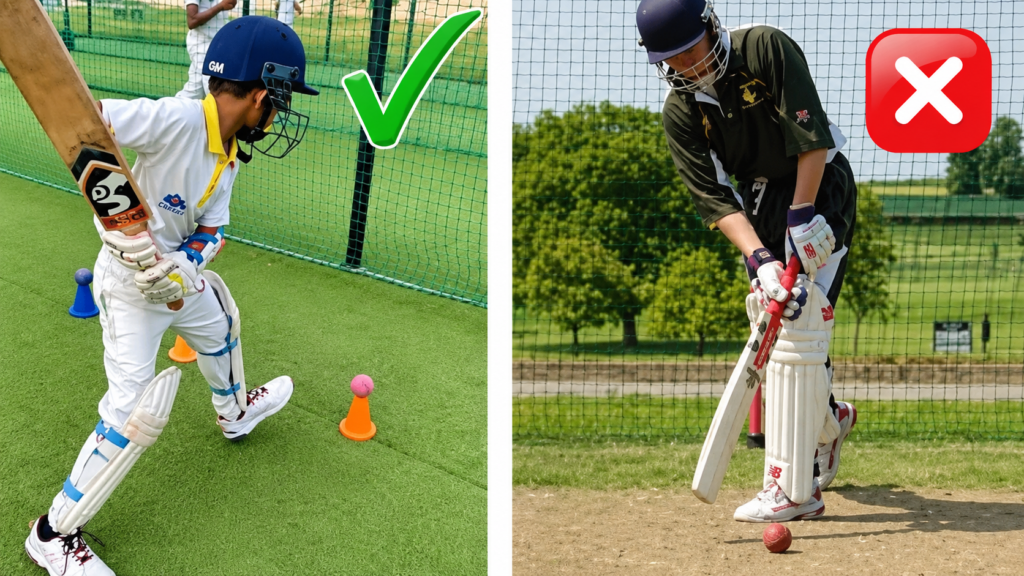
This cricket batting drill was previously recommended in our front foot drive tutorial, which can be found here. As an extension of this cricket guide, your front foot plays a key role in determining the outcome of the LBW out rules. Here is how you can get your front foot in the right position to avoid LBW in cricket.
How to do it:
- Mount a cricket ball on a cone in a stationary setup
- Place the cone 2-3 feet away from your body.
- Lean into the shot by moving your front foot first to the pitch of the cricket ball.
- Focus strongly on getting your front foot to the side of the ball and not in front of it, as highlighted in the screenshot above.
Purpose: The key objective of this batting drill is to help you avoid playing around the front pad.
Final Thoughts On How To Avoid LBW in Cricket
LBW out dismissals can amount to one of the most infuriating experiences for a batter. More so, if such failures are repeated often with no real remedy in sight. The primary reason that leads to a batter’s undoing under the LBW conditions is their repeated tendency to play around the front pad. It’s often the incorrect positioning of the front foot which often gets the batter into troubled waters, leading to their dismal demise under the modern-day LBW out rules. By practising our user-friendly batting drills, you can hope to eliminate your LBW woes once and for all by training your body and your feet to be in the right position.
For more helpful tips on cricket coaching and free cricket practice drills, bookmark this page and be sure to regularly visit our website for further guidance on all things cricket.
Related Content On Cricket Coaching
Fast Bowling Tips and Drills for Beginners & Developing Bowlers
Step-Wise Guide On How To Play A Front Foot Drive
Front Foot Defence (Forward Defence) Technique With Helpful Insights & Drills
Looking to Share Your Cricket Coaching Expertise?
We’d love to work with passionate cricket experts like you. Whether you’re a coach or part of an academy, collaborate with us to create high-quality content and help make cricket coaching free and accessible to everyone.
Collaborate With Us