
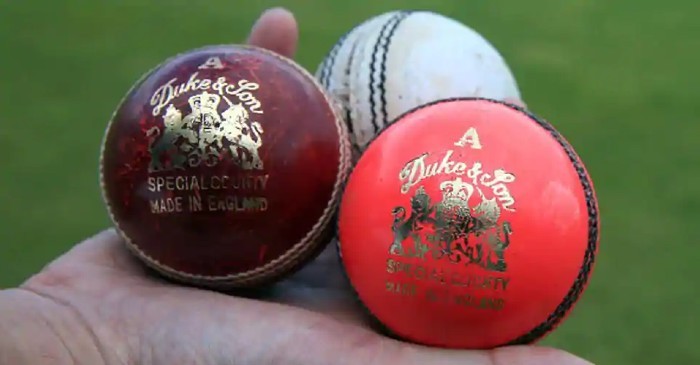
A cricket ball is a hard, solid ball with a leather exterior and a cork core. The cork core is tightly compressed and layered with wound string, which significantly contributes to the overall cricket ball weight. Cricket balls are a lot heavier compared to their counterparts in baseball and hockey. The lethal effects of a cricket ball weight are felt when the ball travels at high velocity and hits the bat slice hard.
So, have you ever wondered what the typical range of a cricket match ball weight is and why it is heavier in comparison to other balls? The cricket ball weight is one of the most tightly regulated aspects of the game. Whether you’re wondering about the weight of a cricket ball, the international cricket ball weight, or the normal cricket ball weight used in professional matches, every leather ball must comply with strict ICC and MCC regulations.
In this guide, we’ll explain the official cricket ball weight in grams and ounces, how the weight varies across different age groups, and why maintaining the correct weight is so important in international cricket.
Table of Contents
How Does Manufacturing Process Make a Cricket Ball Weight Heavy?
The weight of cricket ball is heavy not because of size, but because of density engineering. The cricket ball weight is not accidental. It is engineered through material selection, compression, winding tension, leather treatment, and finishing.
In further steps, we will offer a rundown on how a cricket ball is made and the manufacturing processes that play out behind the scenes, which add to the overall cricket ball weight.
Core Formation (The Foundation of Cricket Ball Weight)
| Materials Used | Estimated Weight Range |
| Cork granules, Rubber compound | 100-110 grams |
The cricket ball weight in grams significantly shoots up with the presence of a cork core and an interior rubber layer. The cork is compressed into a solid sphere and then a rubber layer is later molded around it. The high density of the core is achieved by placing the core under a hydraulic press.
High compression increases density and the overall weight of cricket ball. Tightly compacted cork becomes heavier per unit volume. Additional rubber layers add mass. Manufacturers intentionally calibrate compression pressure to reach a target core weight (typically 60–70% of total cricket ball weight). If compression is increased even slightly, the ball becomes denser, which further adds to the cricket ball weight without changing its size.
String Winding (Building Mass and Hardness)
| Materials Used | Estimated Weight Range |
| Polyester or cotton yarn | 10-15 grams |
This next phase of the manufacturing process also plays a pivotal role in defining the overall cricket ball weight in grams. The yarn is wrapped tightly around the core under controlled mechanical tension. Thousands of revolutions build a uniform layering. As a result, this contributes to at least 10-15 grams of the entire cricket ball weight.
Greater winding tension increases compactness and density. In other words, more layers entail material mass. This stage of the cricket ball manufacturing process increases overall cricket ball weight in grams while also determining hardness and rebound.
Leather Preparation (Outer Shell Construction)
| Materials Used | Estimated Weight Range |
| Alum-tanned cowhide leather, Dye (red, white, pink) | 30-35 grams |
This is the phase where the leather coating of the cricket ball is made. Leather is cut into four pieces which are in turn, sharpened into hemispheres. Dying and oiling are then performed which spikes the mass of a cricket ball. Moisture retained after the process temporarily increases the weight of cricket ball. Furthermore, applying oil on the outer layer spikes the overall cricket ball weight in grams. Premium match balls use dense, high-quality leather, which can be slightly heavier than lower-grade hides.
Stitching and Seam Construction
| Materials Used | Estimated Weight Range |
| Heavy linen thread | 2-5 grams |
The seam of the ball adds to the cricket ball weight by a few grams. A heavy linen thread runs through the center of the ball, separating the two halves. Two leather hemispheres are stitched together by hand (in high-quality balls). Around 70–90 stitches form the raised seam.
Multiple layers of stitching increase localized mass along the equator. A more pronounced seam means more thread, slightly increasing the total weight of the cricket ball. For example, the Dukes cricket balls have a more prominent hand-stitched seam. While all comply with ICC standards, seam construction influences cricket ball weight distribution.
Lacquering and Finishing
| Materials Used | Estimated Weight Range |
| Lacquer (Polish) | 1-5 grams |
The lacquer is applied to give the cricket ball a shiny outlook. Multiple coats of lacquer are applied. Each coat is dried and polished. It is worth noting that even the polishing process alone can have an impact on the overall cricket ball weight. The weight of cricket ball in grams spikes up by approximately 5 grams.
Extra lacquer means additional surface mass. White balls often receive a thicker coating for durability. Though small, this finishing stage can bump up the overall cricket ball weight by a considerable margin.
How Does Cricket Ball Weight & Size Vary Across Levels?
| Age Group | Cricket Ball Weight | Cricket Ball Circumference |
| Men, and boys 13 and over | 5.5 to 5.75 oz (156 to 163 g) | 8.81 to 9 in (224 to 229 mm) |
| Women, and girls 13 and over | 4.94 to 5.31 oz (140 to 151 g) | 8.25 to 8.88 in (210 to 226 mm) |
| Children under 13 | 4.69 to 5.06 oz (133 to 143 g) | 8.06 to 8.69 in (205 to 221 mm) |
The average weight of cricket ball is strictly regulated by the MCC Laws of Cricket to maintain consistency. These regulations are further inherited by the ICC (International Cricket Council) along with a few tweaks. According to Law 4 of the MCC, a cricket match ball weight in grams typically ranges from 144 to 165 g. This threshold is very much in line with the guidelines set by the ICC that define the international cricket ball weight across formats. The variations in normal cricket ball weight exist primarily because cricket is played across levels. The game involves young kids, teenagers, adults, and women from all walks of life. In an effort to keep the game fair and consistent across levels, balls of varying weights are deployed.
For instance, players from the adult men’s category are more accustomed to playing with a heavier cricket ball. According to the cricket ball weight regulations set for men’s cricket, the adult cricket ball weight should be no less than 5.5 ounces/155.9 g. Whereas, the maximum weight of a cricket ball in men’s cricket is not permitted to exceed 5.75 ounces/163 g. Since men are more prone to playing with a heavy ball, this certainly makes up the heaviest variant of the cricket ball. As for the cricket ball size, a typical men’s cricket ball has a circumference of no less than 8.81 in/22.4 cm, nor more than 9 in/22.9 cm. These normal cricket ball weight regulations apply even at the highest level where men’s cricket is played, often sharing matching consistencies with ICC white ball weight & World Cup cricket ball weight.
For younger players and women cricketers, the cricket ball weight tends to be on the lighter side. We have a slightly lighter version of the cricket ball, typically used by women cricketers. The weight of a cricket ball in women’s cricket drops considerably to a minimum of 4.94 ounces/140 grams. However, the maximum weight of cricket ball for women is not permitted to exceed a maximum of 5.31 ounces/151 grams. The cricket ball size (circumference) is also truncated and whittled down to a minimum of 8.25 in/21.0 cm and a maximum of 8.88 in/22.5 cm. These normal cricket ball weight regulations apply even at the highest level, where men’s cricket is played, often mirroring consistencies with the ICC T20 ball weight & ODI cricket ball weight.
Bearing safety in mind, the junior cricket ball weight is downsized even further. These cricket ball weight regulations ideally apply to kids under the age of 13. Under the cricket ball weight regulations standards for the juniors, this lightest variant of the cricket ball weighs between 4.69 ounces/133 grams and 5.06 ounces/144 grams. Naturally, the cricket ball size also shrinks to fit in the given circumference range of 8.06 in/20.5 cm and 8.69 in/22.0 cm. These weight measurements further align with the international cricket ball weight guidelines that govern junior cricket.
Does the Cricket Ball Weight Change Between Test, ODI and T20 Cricket?
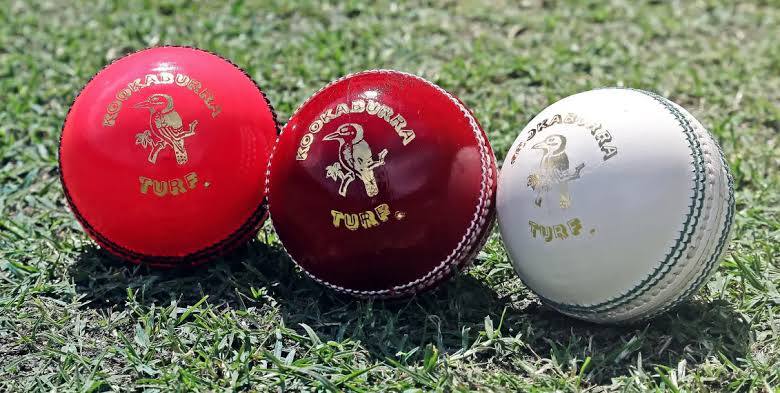
The cricket ball weight in ounces does differ according to formats, but only in certain instances when questions on gender and age are brought into the equation. The variations in cricket ball weight are primarily dictated by these two factors alone. In the case of men’s cricket, the क्रिकेट ball weight will comply with the regulations set by the MCC. This would mean that the men’s cricket ball weight for all three formats (Test, ODI, T20I) will remain between 5.5 ounces/155.9 g and 5.75 ounces/163 g. In other words, there will be no variations between a test match ball weight, an ODI match ball weight, and a T20 World Cup ball weight in adult cricket.
But the minute we turn our attention to girls cricket ball weight, the weight sees a sharp reduction to approx 140-150 g. The girls’ cricket ball weight, whether it’s Test Cricket or limited -overs cricket, will remain the same. Similarly, the junior folks, irrespective of the format that they play, will play with a ball with the same cricket ball weight that is consistent with their age group. This further clarifies that no variations between a test match ball weight, an ODI match ball weight, and a T20 World Cup ball weight are permitted for women’s and youth cricket.
ICC World Cup Cricket Ball Weight Regulations
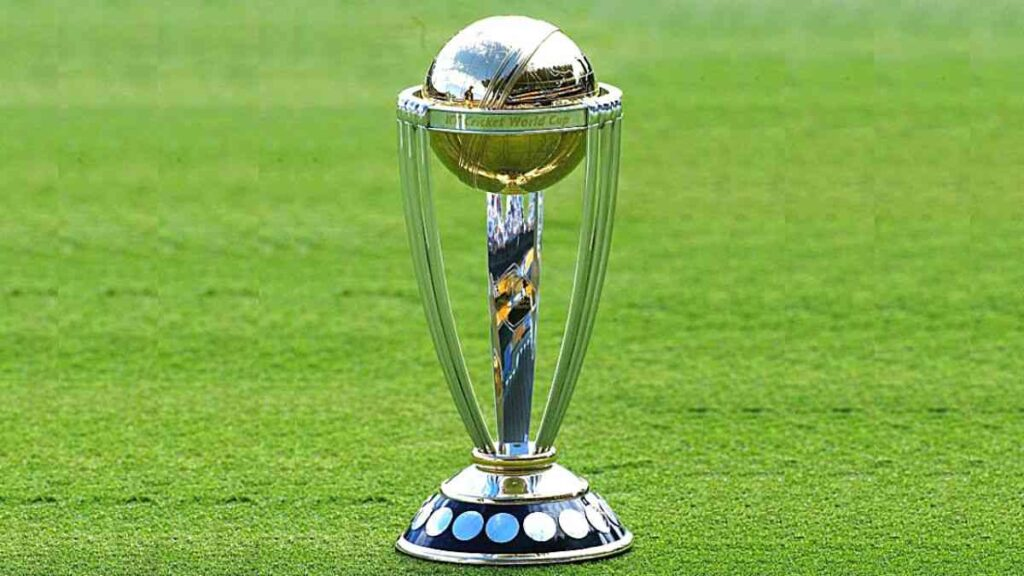
The ICC World Cup cricket ball weight follows the exact specifications laid down under the MCC Laws of Cricket, ensuring complete consistency between domestic and international cricket. Contrary to popular belief, there is no special World Cup ball weight reserved exclusively for ICC tournaments. Every ball used during the ICC Men’s Cricket World Cup and ICC T20 World Cup must comply with the same international cricket ball weight regulations followed in bilateral international matches.
For men’s international cricket, the ICC cricket ball weight must remain between 5.5 and 5.75 ounces (156–163 grams). The international cricket ball weight in grams is therefore identical whether the match is played during a World Cup, a bilateral ODI series, a Test match or a T20 International. Likewise, the circumference of the ball must remain within the official limits prescribed by Law 4 of the MCC, ensuring that both the weight of a cricket ball and its dimensions remain standardized throughout international cricket.
Before every ICC fixture, match officials inspect the cricket balls to ensure they comply with the prescribed ICC cricket ball weight and size regulations. Any ball falling outside the permitted weight or circumference limits is rejected before play begins. This rigorous inspection process guarantees that every international contest is played under identical conditions, allowing bowlers and batters to compete with complete fairness.
The same principle also applies to ICC World Cup tournaments. Although the colour of the ball may differ between formats—for example, white balls in ODI and T20 World Cups and red balls in Test cricket—the world cup cricket ball weight remains unchanged. The international cricket ball weight continues to fall within the 156 to 163-gram range, with only the colour, lacquer finish and manufacturer varying between competitions. This standardization ensures that the ball behaves consistently while preserving the integrity of the game at the highest level.
FAQ On Normal Cricket Ball Weight
-
What is the cricket ball weight in ounces for adult men’s cricket?
The average weight of cricket ball in men’s cricket is usually between 5.5 and 5.75 ounces. In terms of cricket ball weight in grams, this translates to 156-163 grams.
-
What is the cricket ball weight in ounces for adult women’s cricket?
The average weight of women’s cricket ball is usually between 5.5 and 5.75 ounces. In terms of cricket ball weight in grams, this translates to 156-163 grams.
-
What is the normal cricket ball weight for junior cricket?
The normal cricket ball weight in junior cricket (Under 13) drops to 4.69 to 5.06 ounces. The maximum weight of cricket ball for junior cricket is capped at 143 grams.
-
What is the normal cricket ball weight used in international matches?
That’s not the case. The cricket ball weight in gram or ounce is primarily dictated by the gender and age-group level.
-
What is the international cricket ball weight in grams?
The best way to purchase a cricket ball is by placing an online order. Refer to the anc above for exclusive insights on varying cricket ball prices and how and where to order them from.
-
Does the ICC World Cup use a heavier cricket ball?
Both the ICC and MCC follow the same cricket ball weight regulations, which keep the average weight of cricket ball consistent across all levels of the game.
Final Thoughts On Cricket Ball Weight And What Makes It Heavy
The average weight of international cricket ball strictly adheres to the guidelines prescribed by the ICC, which originally inherited much of the cricket ball size weight specifications from the MCC under law 4. That said, the weight of the cricket ball is not regulated at the national level, meaning that the notion of a national cricket ball weight certainly does not exist. However, we do see variations in cricket ball weight across several levels of the game. Minor variations in cricket ball weight can also be seen across formats. The type of materials used to manufacture the ball, and the quality of it, go on to play an instrumental role in determining the cricket ball weight and cricket ball price. Higher material density and multiple layers of cork, rubber, leather, and threading add to the cumulative weight of cricket ball.
If you found this cricket rules & regulations guidebook helpful, then please bookmark this post and visit us again for more useful cricket coaching tips. Alternatively, you might be interested in checking out the simplified version of the LBW pitching outside leg law in cricket.



One response to “Cricket Ball Weight & Size: ICC Rules Explained”
[…] a result, you may intend to bowl a conventional leg spin delivery, but the cricket ball can come out with the wrong wrist position and fail to produce the expected turn. This is where the […]