What is the double bounce rule in cricket all about? There are endless variations of no ball rules in cricket and the double bounce no ball rules are just one of them. While most of us are very clear on what the 2nd bouncer no ball rules mean in cricket, what does the double bounce ball in cricket imply? One of the most frequently asked cricket rules is: “Can a cricket ball bounce twice in cricket?” The answer is yes—but only under very specific circumstances. Whether the delivery becomes a no ball depends entirely on where the second bounce occurs in relation to the batter’s popping crease. This is precisely why the double bounce rule in cricket often creates confusion among players, coaches and spectators alike.
If the cricket ball bounces twice before reaching the batter’s popping crease, the umpire immediately calls a no ball under MCC Law 21.7. A typical bounce ball in cricket implies the pitching of a cricket ball. Usually, the ball can either bounce once or twice before reaching the batter.
Can a cricket ball bounce twice in cricket? Yes, it certainly can. However, not every delivery that bounces twice automatically becomes a no ball. Under the MCC Laws, everything depends on where the second bounce occurs. If the ball bounces twice before reaching the batter’s popping crease, the umpire immediately calls a no ball. Conversely, if the second bounce happens after crossing the popping crease, the delivery can still remain legal provided no other law has been infringed.
This distinction explains why searches such as “what happens if the ball bounces twice in cricket”, “if the ball bounces twice is it a no ball”, and “is double bounce allowed in cricket” often produce conflicting answers online. The double bounce rule is actually straightforward once the position of the popping crease is understood. Throughout this guide, we’ll break down several real match scenarios to explain exactly when a ball bouncing twice results in a no ball, when it remains a legal delivery, and when it could instead be called a wide.
Table of Contents
Double Bounce No Ball Rules In Cricket: Here Is What The Law Says
21.7 Ball bouncing more than once, rolling along the ground or pitching off the pitch
Law 21.7 (No-Ball)
The umpire shall call and signal No ball if a ball which he/she considers to have been delivered, without having previously touched bat or person of the striker,
bounces more than once or rolls along the ground before it reaches the popping crease
or
pitches wholly or partially off the pitch before it reaches the line of the striker’s wicket. When a non-turf pitch is being used, this will apply to any ball that wholly or partially pitches off the artificial surface.
According to Law 21.7 framed under the Marylebone Cricket Club (MCC), any cricket ball that bounces more than once, or rolls along the ground, before it reaches the popping crease is a no ball. The fundamental point to consider here is that the cricket ball must have pitched twice before crossing a batter’s popping crease. If this fundamental criterion under the double bounce no ball rule isn’t met, then the double bounce ball in cricket might not always lead to a no ball. In the upcoming section, we will demonstrate the application of the bounce ball rule in cricket with the help of real-time scenarios.
What Happens If the Ball Bounces Twice in Cricket?
Below are some possible scenarios that will help demonstrate the thorough application of the double bounce no ball rules.
Scenario 1: Ball Bouncing Before Popping Crease
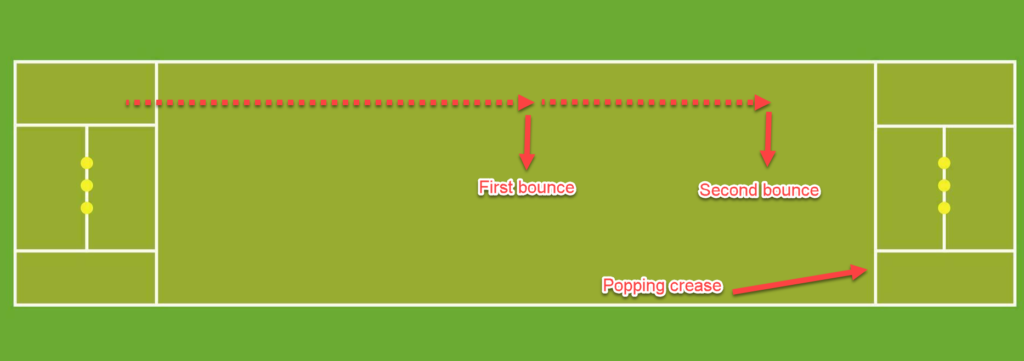
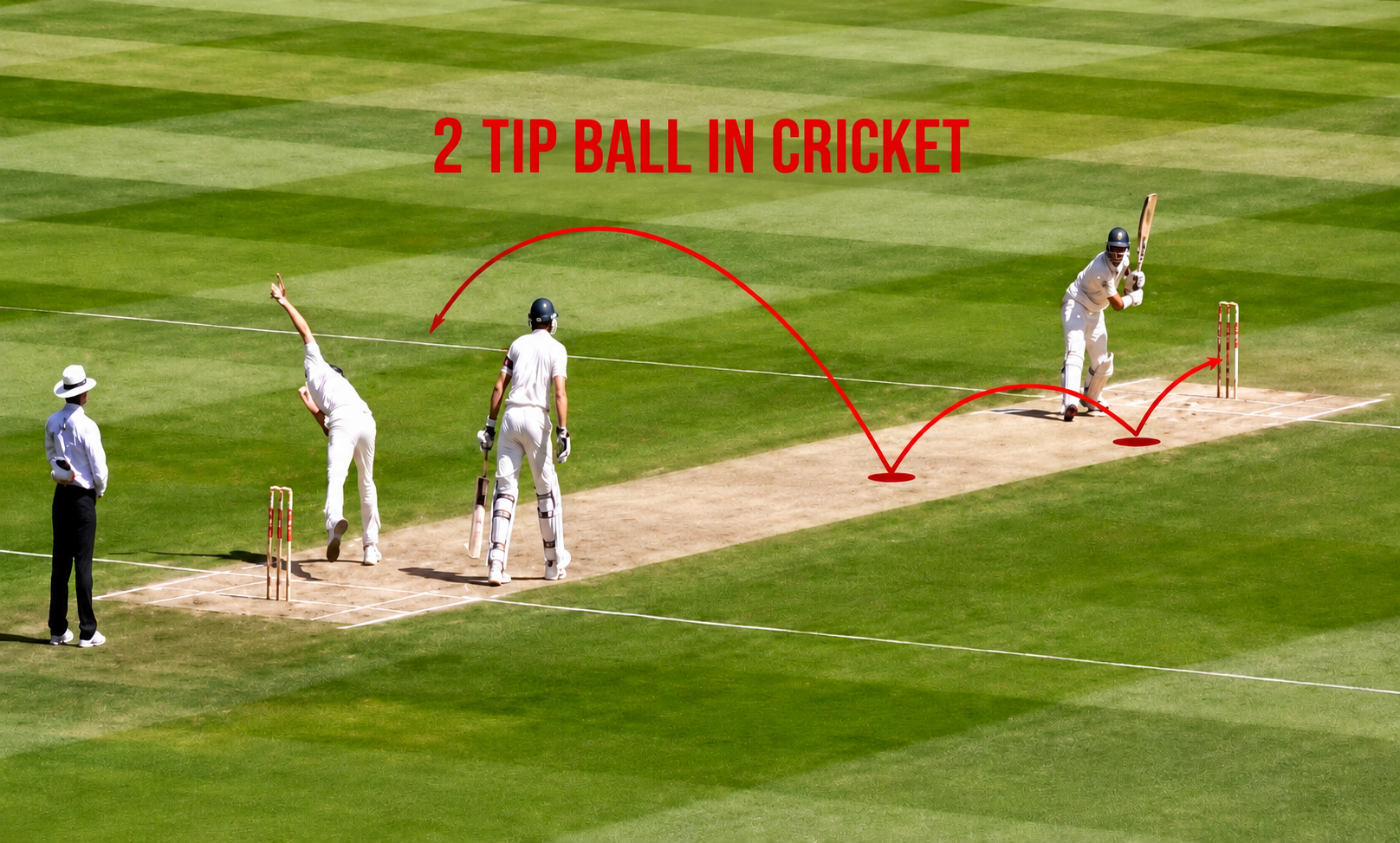
We have already gone through this before. The first bounce refers to the point where the ball first pitches after leaving the bowler’s hand. Under the double bounce rule, what matters is whether the second bounce occurs before or after the popping crease. If a double bounce ball in cricket occurs when the second bounce takes place just before the popping crease (as highlighted above), then it is a clear case of a double bounce no ball rule.
Scenario 2: Ball Bouncing After Popping Crease
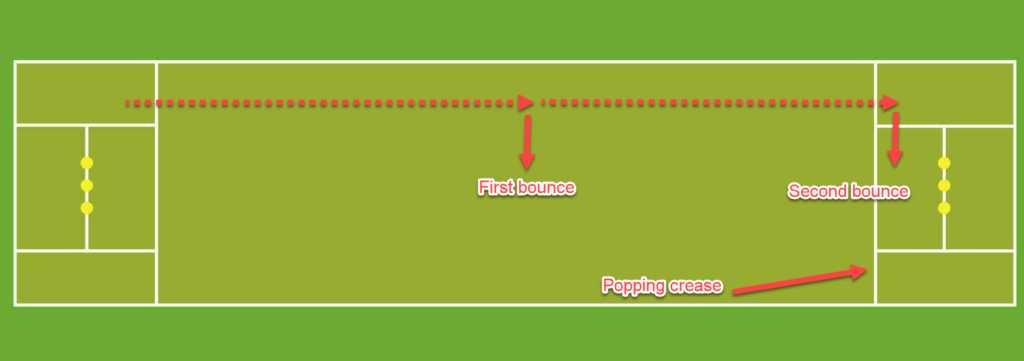
If the first bounce occurs on the pitch and the second bounce happens after the cricket ball passes the popping crease, then under rare circumstances, the 2 bounce ball in cricket will not constitute a no ball. Many people assume that if a ball bounces twice in cricket it must automatically be called a no ball. However, that is incorrect. If the first bounce occurs on the pitch and the second bounce takes place after the ball has crossed the batter’s popping crease, the delivery remains legal under Law 21.7. This scenario answers one of the most common questions searched online: “What happens if the ball bounces twice in cricket?” Simply put, the location of the second bounce—not merely the fact that it bounced twice—determines whether the umpire calls a no ball.
Scenario 3: First Bounce On The Pitch Second Bounce Off The Pitch
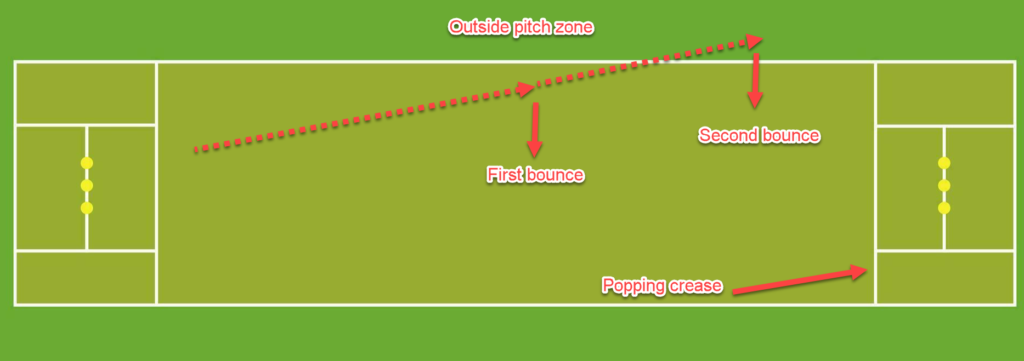
This is the moment where the bounce ball rule in cricket adds a whole new twist. If the second bounce happens outside the pitch, but before the popping crease, then the double bounce no ball rules would stand as is. However, if the second bounce occurs after the ball has passed the popping crease, then it could either result in a legal delivery, or a wide ball depending on how wide the delivery was bowled.
Scenario 4: First Bounce Second Bounce Outside The Pitch
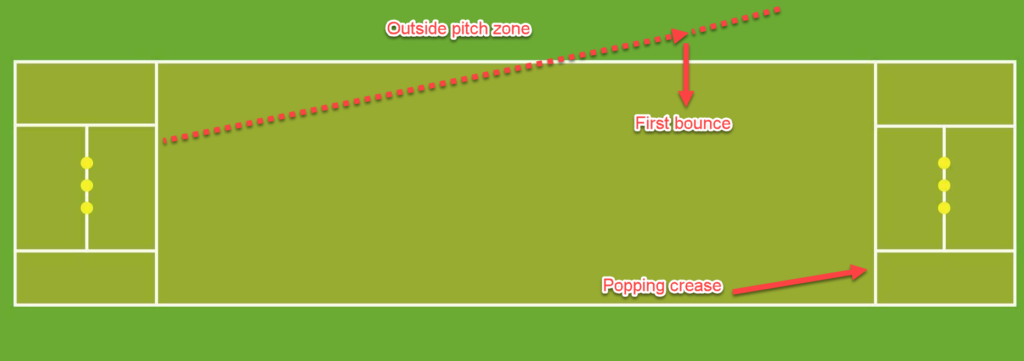
This is a more obvious scenario of a bounce ball no ball rule in cricket. If the ball pitches wholy or marginally outside the pitch, then the second bounce of the ball is not taken into account. According to the outside pitch no ball rule, a no ball is issued right away if the umpire considers the bowler to have pitched the ball marginally or wholly outside the cut strip.
Why Do We See Double Bounce Ball in Cricket?
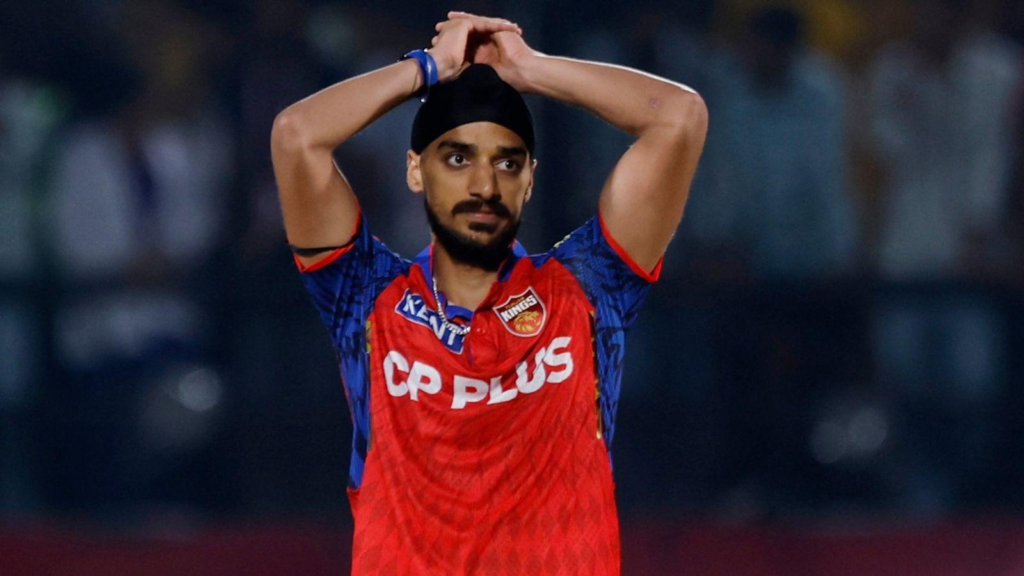
A double bounce ball in cricket is far more common in junior cricket, amateur leagues and recreational matches than at the professional level. Young bowlers often lack the strength to carry the ball the full length of the pitch, especially on slow surfaces. As a result, the ball may lose momentum after its first pitch and bounce a second time before reaching the batter. Although embarrassing for the bowler, these deliveries provide an excellent practical example of how the double bounce rule in cricket is applied by umpires.
Holding the Ball Too Tightly: An overly tight grip can restrict a bowler’s release, causing the ball to leave the hand later than intended. This often results in the ball being pushed into the surface too early, increasing the chances of a double bounce.
Poor Body Alignment: Body alignment plays a major role in a bowler’s accuracy. If the shoulders, hips, and front arm are not aligned towards the target, the bowler’s radar can be compromised. This may lead to drag-down deliveries, full tosses, or even a 2 bounce ball in cricket.
Lack of Bowling Pace: A ball needs sufficient speed to travel the full distance before pitching. Bowlers who generate very little pace may struggle to carry the ball to the batter, especially on longer pitches.
Dead Pitch or Damp Surfaces: A dead pitch in cricket can also contribute to double bounces. Slow, low surfaces absorb pace and reduce carry, making it harder for slower bowlers to get the ball through to the batter. Damp pitches often behave similarly, causing the ball to grip and lose momentum after pitching.
What Is Dead Pitch In Cricket?
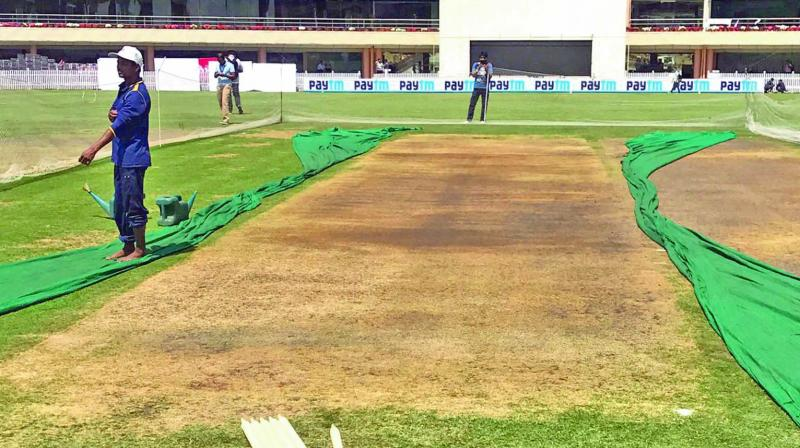
A dead pitch in cricket is a surface that offers very little assistance to either batters or bowlers. Unlike lively pitches that produce pace, bounce, or movement, a dead pitch tends to play slow and predictable. The ball often sits up after pitching, making stroke play easier and reducing the chances of seam or swing movement. Visually, a dead pitch usually appears flat, dry, and lacks the cracks or grass cover commonly associated with more responsive surfaces. Damp wickets can also behave like a dead pitch, as moisture absorbs pace and prevents the ball from carrying through consistently.
One of the defining characteristics of a dead pitch in cricket is the lack of bounce and carry. Fast bowlers often struggle to generate penetration, while spinners may find it difficult to extract significant turn. On particularly slow surfaces, the ball can lose momentum quickly after pitching, occasionally increasing the likelihood of deliveries associated with the double bounce no ball rules. Although rare at professional level, slower bowlers and junior cricketers are more likely to encounter this issue when bowling on an extremely slow or dead pitch.
How Do We Prevent Bowling Bounce Balls?
Use the Correct Grip
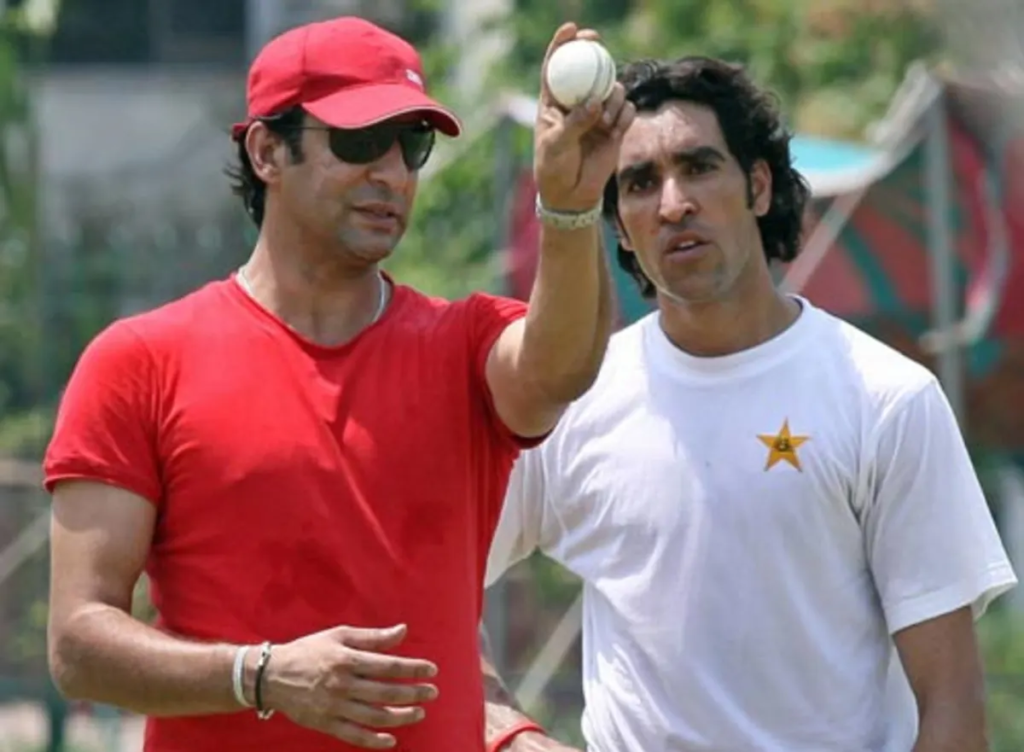
A relaxed and balanced grip allows the ball to leave the hand smoothly. Holding the ball too tightly can disrupt your release point and increase the chances of producing a 2 bounce ball in cricket. To have the perfect bowling grip, check out our bowling guides on yorker bowling, bouncer bowling, swing bowling, and spin bowling.
Develop a Repeatable Bowling Action
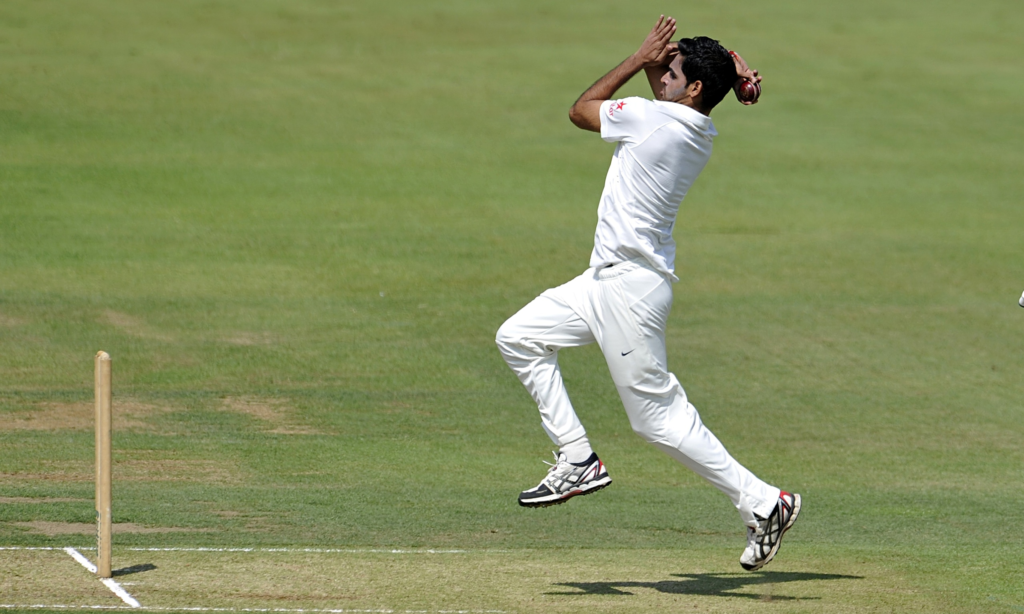
Consistency is key. A stable run-up, balanced body position, and repeatable release action help bowlers hit the same area repeatedly while reducing errors associated with the double bounce no ball rules. For more helpful tips and important guidelines on bowling action, visit our fast bowling resources page.
Pitch the Ball Up
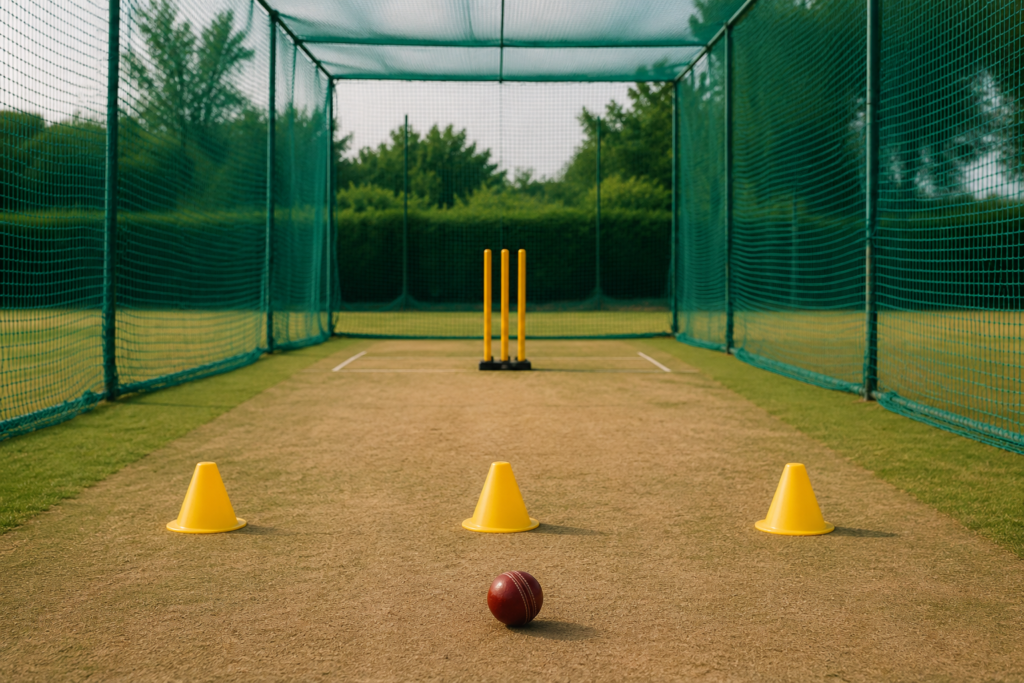
Many bowlers unintentionally drag the ball short of their intended length. Focusing on a fuller line and length helps ensure the ball carries comfortably to the batter instead of becoming a 2 tip ball in cricket. For further guidance on perfecting bowling accuracy, visit our exclusive fast bowling guide here.
Bowl With More Pace
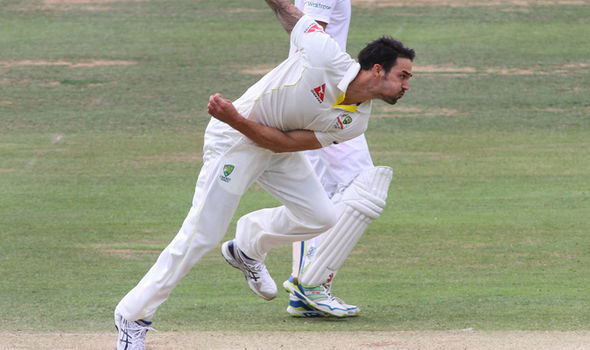
Generating additional pace allows the ball to travel through the surface more effectively. This becomes especially important on a dead pitch in cricket, where the surface absorbs energy and can increase the likelihood of a double bounce. Even a small increase in pace can help the ball reach the batter legally and consistently. If you’re actively on the hunt for some firepower and bolstering your bowling strength is something you dream of, then we recommend that you visit our fast bowling resources page to get complete access to bowling fast in cricket.
FAQs on Double Bounce Ball in Cricket Rule
What do the double bounce no ball rules mean in a nutshell?
If any delivery bounces more than once before reaching a batter’s popping crease, then a no ball is issued under the bounce ball rule in cricket.
How else are the double bounce no ball rules known?
The double bounce no ball rules are known informally as a 2 tip ball in cricket or a 2 bounce ball in cricket.
Is it a dead ball or a no ball when the ball bounces twice?
There is no scope of a dead ball under the double bounce no ball rules. If the ball is deemed to have bounces twice before reaching the popping crease, then it will be called a no ball.
Is it a no ball if the second pitch occurs beyond the popping crease?
No. The ball does not become a no ball if the second bounce occurs beyond the popping crease.
Does the ball need to bounce in cricket?
Technically, no, the ball does not need to bounce in cricket. However, to be effective as a bowler, it is advisable to pitch the ball as it gives them a good chance of extracting movement off the surface.
Related Guides On No Ball Rules In Cricket
No Ball Rules in Cricket Explained: Types, Waist Height Rules & Free-Hit Scenarios