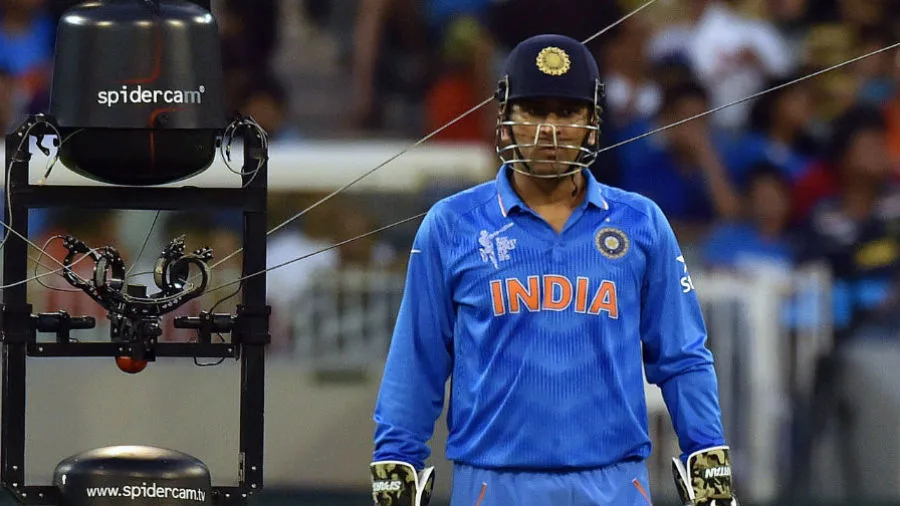
There is no end to bizarre sights in cricket. A typical cricket ball is enough to throw a host of peculiar surprises your way. So, what are we talking about here? We are all aware that a spidercam can be struck down by a cricket ball during any stage of the game. Incidents like these have become commonplace, especially in T20 cricket, where the game is often fast-paced.
While we might spare a thought for the poor spidercam or the operator running the device at the time, a burning question lingers. We ask ourselves the question – What happens when a cricket ball hits the spindercam? Is it a case of a no-ball rule, or does the ball become dead? In this article, we will try to eradicate this confusion and find out what the existing rules have to say when a cricket ball hits a spidercam.
Here Is What Happens When A Cricket Ball Hits The Spidercam
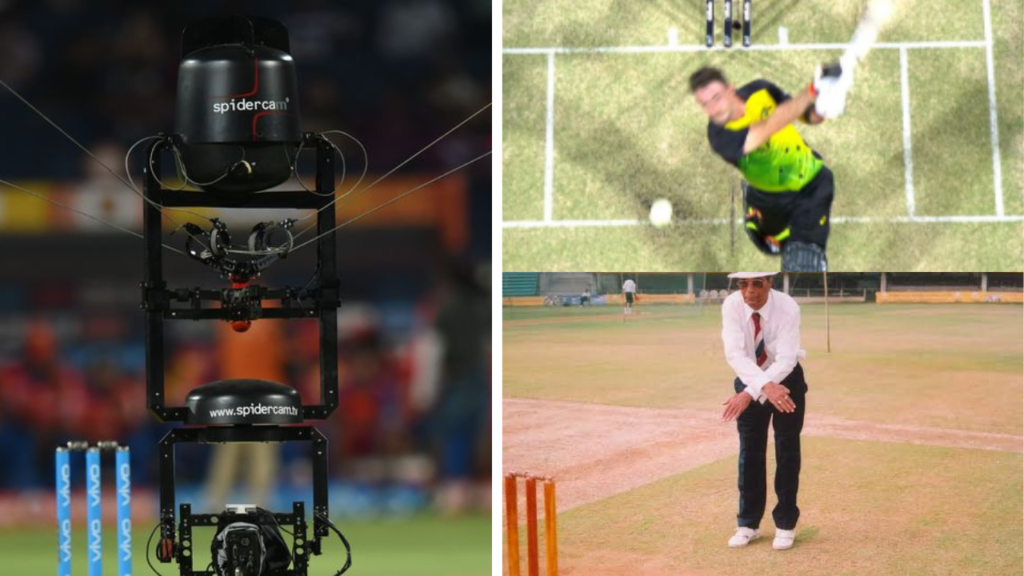
According to Clause 20 of the Dead Ball law of the ICC (International Cricket Council) playing conditions, if a cricket ball hits the spidercam or any external equipment hanging airborne, then the umpires must intervene to signal a dead ball. This means that the ball automatically becomes dead as soon as it makes contact with the spidercam. In other words, whatever happens beyond that moment becomes null and void.
ICC Playing Condition – Ball striking Spidercam (Clause Clause 20.1.1.3)
If the ball in play strikes the spidercam, its supporting cables, or equipment, the delivery is immediately declared a dead ball.
Furthermore, the rule also states that the ball will not be counted as one for the over, and no runs are to be recorded (Even if the ball was destined to go over the ropes). Similarly, if the ball made contact with Spidercam or any other external object before descending into the fielder’s hands, then the catch will be disallowed. According to the rules, no batter is liable to be given out when a cricket ball hits the spidercam or any other recording device situated externally outside the ground.
Key Considerations To Make When The Cricket Ball Hits The Spidercam
- No runs are awarded to either of the two teams
- Unlike the no ball rule in cricket, no team is penalized for this mishap
- The delivery does not count as one for the over and needs to be rebowled
- No batter is to be dismissed as the ball becomes dead the moment a cricket ball hits the spidercam
Is There A Possibility Of A No-Ball When The Cricket Ball Hits The Spidercam?

When a cricket ball hits the spidercam, the possibility of a no ball might only arise if the bowler or the fielding side delivered a no ball before the incident took place. To put things in perspective, if a bowler had committed either a foot-fault no ball or any other form of no ball, then that extra one run would be credited to the batting side.
Similarly, if the umpire signals no ball due to possible wicket-keeper or fielding infringements before the cricket ball hits the spidercam, then the no ball call will prevail. The question of a wide call simply does not arise as the batter is deemed to have made contact with the ball.
Cricket Ball Hits The Spidercam: Final Thoughts
In a nutshell, the ball becomes dead as soon as the cricket ball hits the helmet and does not constitute a legal delivery. No runs are recorded off that delivery, apart from a no ball, if the fielding team manages to err. It’s important to note that this rule is not merely confined to Spidercam alone. Contact with any external object outside the stadium will constitute a dead ball scenario. The purpose of this rule is to nullify the influence or any possible interference that might result from external forces.
Curious to know what happens when a cricket ball is lost? Click the link below to explore the rules, scenarios, and what happens next on the field when a cricket ball is lost.
Links To Additional Cricket Ball Laws
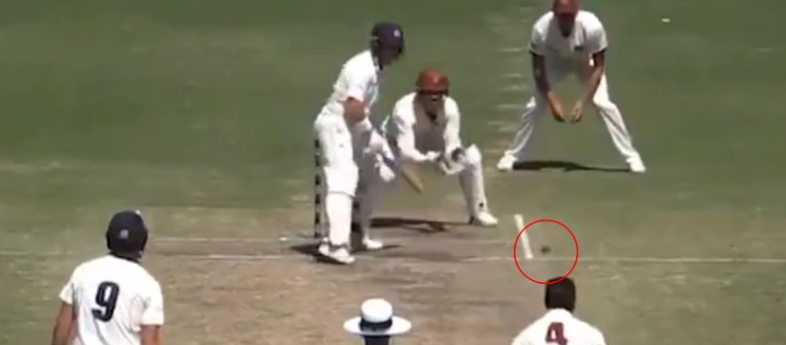
Ball landing outside the pitch:
Deal Ball & No-Ball?

Ball pitching outside off-stump:
Know exactly when a batter can be out LBW!