Whether you’re learning how to catch a cricket ball for the first time or looking to improve your catching in cricket, this guide covers the key cricket catching techniques every fielder should master. Learn the conventional catch, reverse cup technique, high catches, and practical cricket catching drills to improve your confidence and consistency.
From conventional catches to reverse cup catches, every successful fielder relies on proper positioning, soft hands, balance, and regular practice. In this guide, you’ll learn the most effective catching fielding techniques in cricket, common mistakes to avoid, and practical drills that will help you become a safer and more confident catcher. While spectators often remember the best catches in cricket history, coaches know that great catching begins with mastering the fundamentals. Many players who hold records for the most catches in international cricket developed their skills through repetition, discipline, and effective cricket catching tips. From simple high catches to difficult reverse cup catches, every fielder can improve their technique with the right approach.
In this guide, we’ll share practical cricket catching tips, explain the most effective catching techniques in cricket, and show you how to improve catching in cricket through simple drills and proper fielding fundamentals.
Table of Contents
Cricket Catching Technique: How to Catch a Cricket Ball
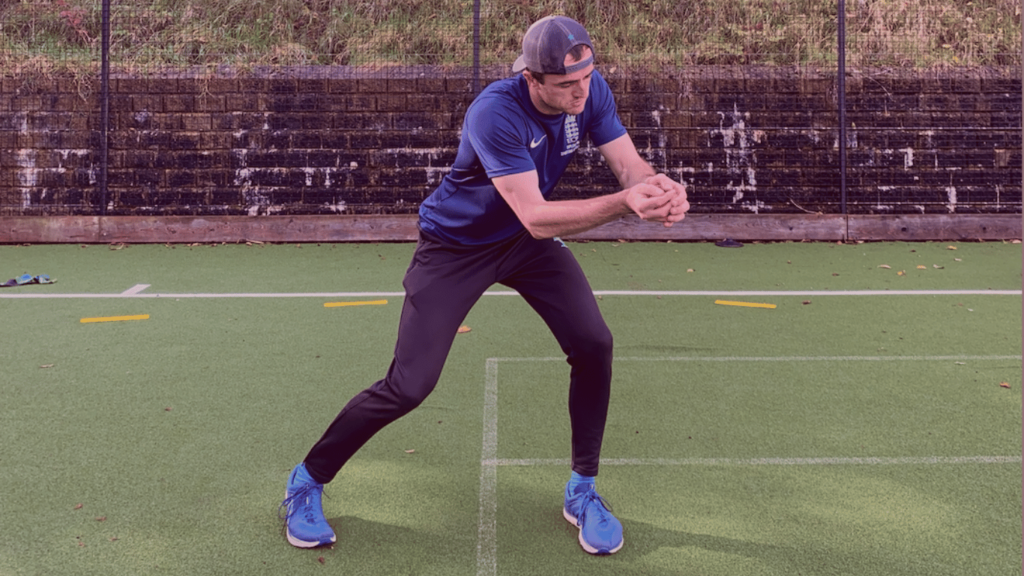
The conventional catch is the foundation of catching in cricket and one of the first cricket catching techniques every player should learn. If you’re learning how to catch a cricket ball, focus on proper positioning, soft hands, balance and watching the ball all the way into your hands.
Players with the most catches in international cricket rarely rely on athleticism alone. Instead, they consistently execute the fundamentals correctly.
Step 1: Get Into the Ready Position
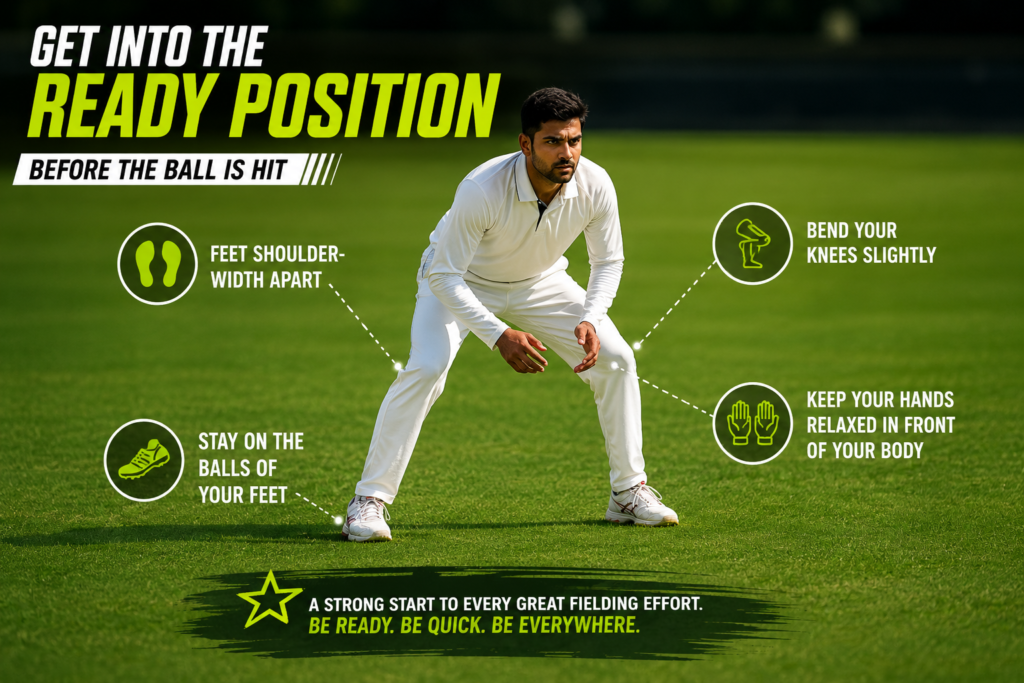
Before the ball is hit, adopt a balanced athletic stance. This is a very vital cricket catching tip that you need to be mindful of before pulling off a stunning catch in cricket.
Keep your feet shoulder-width apart.
- Bend your knees slightly.
- Stay on the balls of your feet.
- Keep your hands relaxed in front of your body.
This ready position is one of the most important fielding basics in cricket because it allows you to react quickly in any direction.
Step 2: Watch the Ball Early When Catching in Cricket
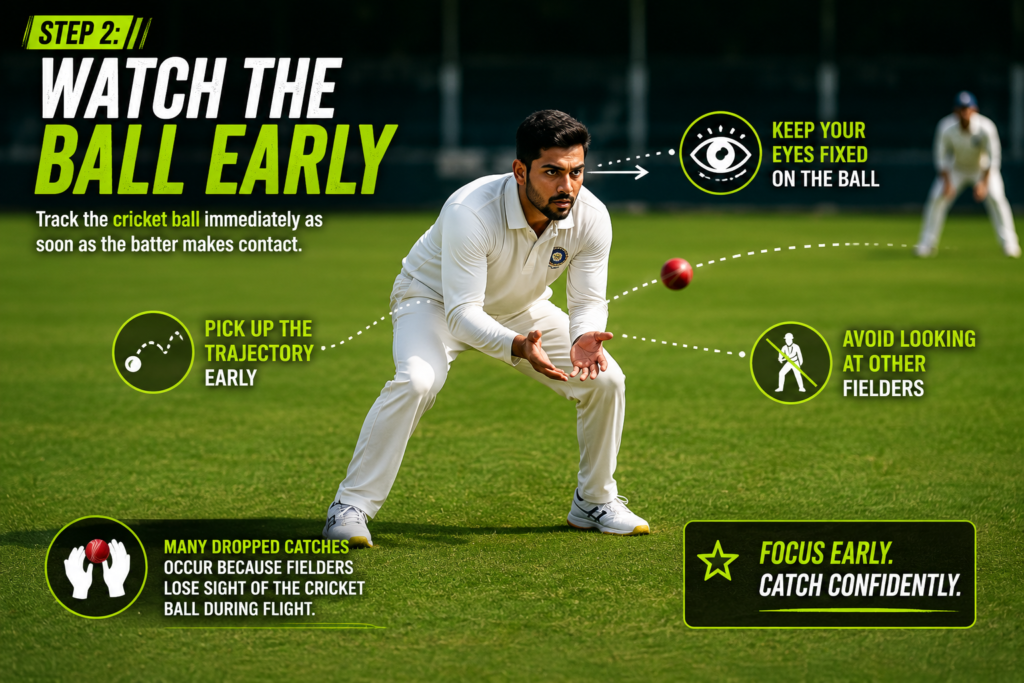
So if you’re wondering how to catch a ball in cricket, you first need to get yourself into an ideal, well-balanced position. As soon as the batter makes contact, track the cricket ball immediately.
- Pick up the trajectory early.
- Keep your eyes fixed on the ball.
- Avoid looking at other fielders.
Many dropped catches occur because fielders lose sight of the cricket ball during flight. Catching in cricket becomes more efficient once you understand the technique behind judging the ball’s trajectory.
Step 3: Move Your Feet Into Position
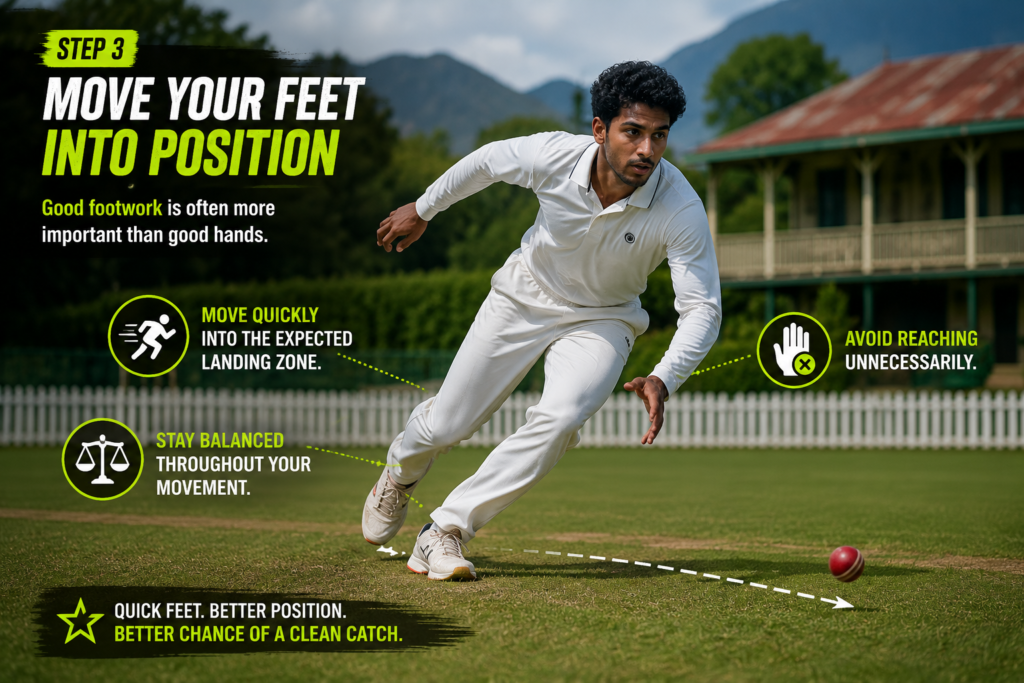
Good footwork is one of the most overlooked cricket catching tips. Moving underneath the ball early is often the difference between completing and dropping a cricket catch.
- Move quickly into the expected landing zone.
- Stay balanced throughout your movement.
- Avoid reaching unnecessarily.
Several of the best catches in cricket history began with exceptional positioning rather than spectacular dives.
Step 4: Create the Catching Window
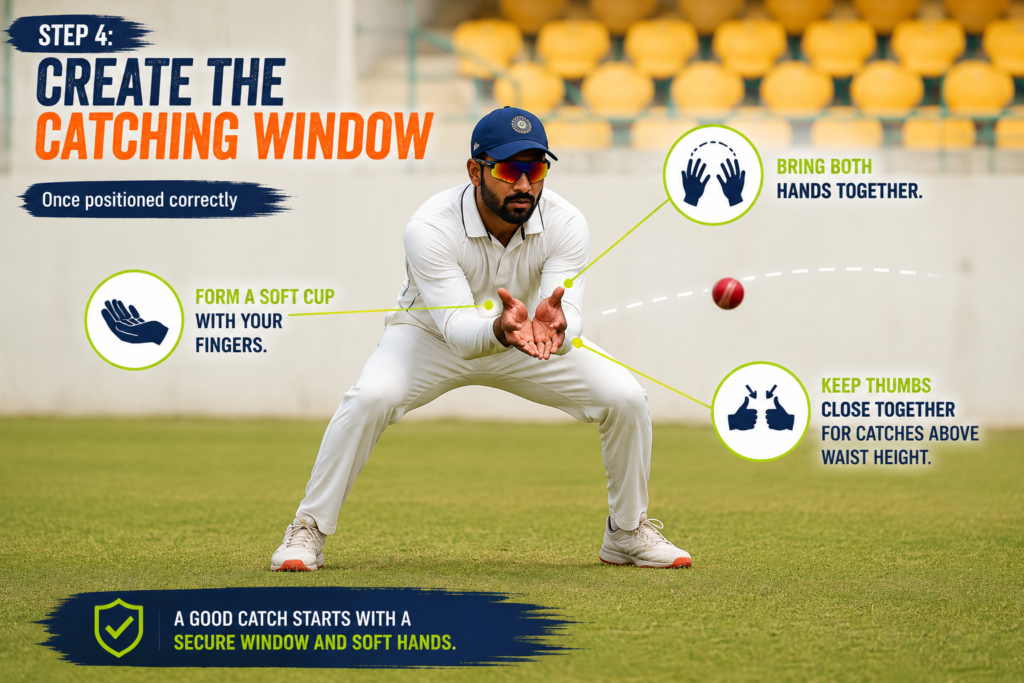
Once positioned correctly:
- Bring both hands together.
- Form a soft cup with your fingers.
- Keep thumbs close together for catches above waist height.
The hands should create a secure catching window directly in line with the ball.
Step 5: Give With the Ball
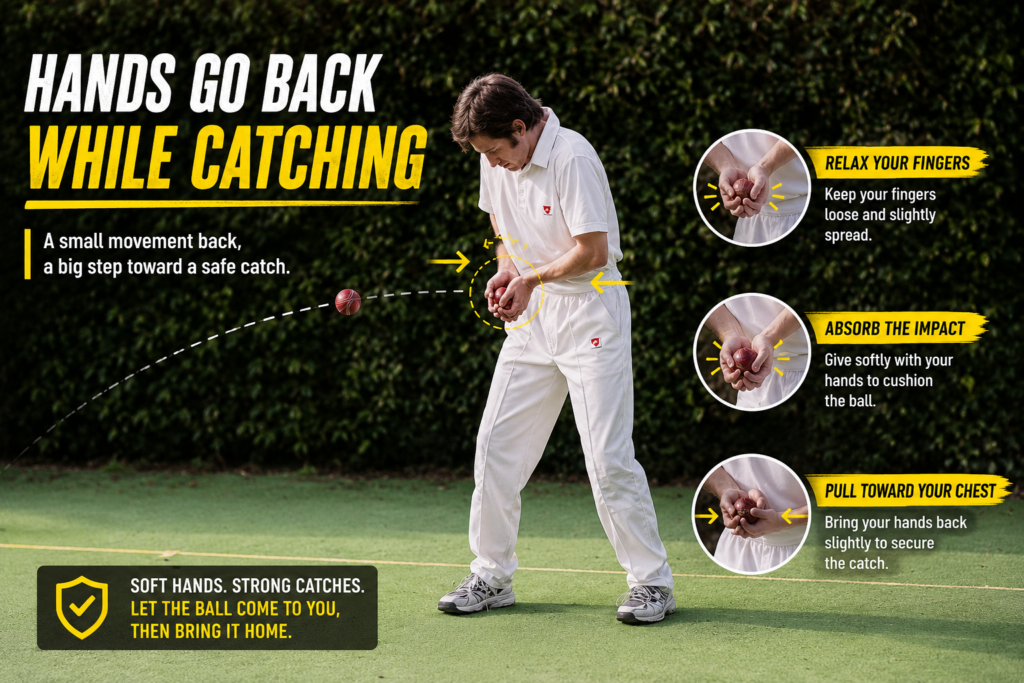
As the ball enters your hands:
- Relax your fingers.
- Absorb the impact.
- Pull your hands slightly toward your chest.
This cushioning action reduces rebound and increases control.
A well-executed cricket catch should feel smooth rather than rigid.
Reverse Cup Catching Technique in Cricket
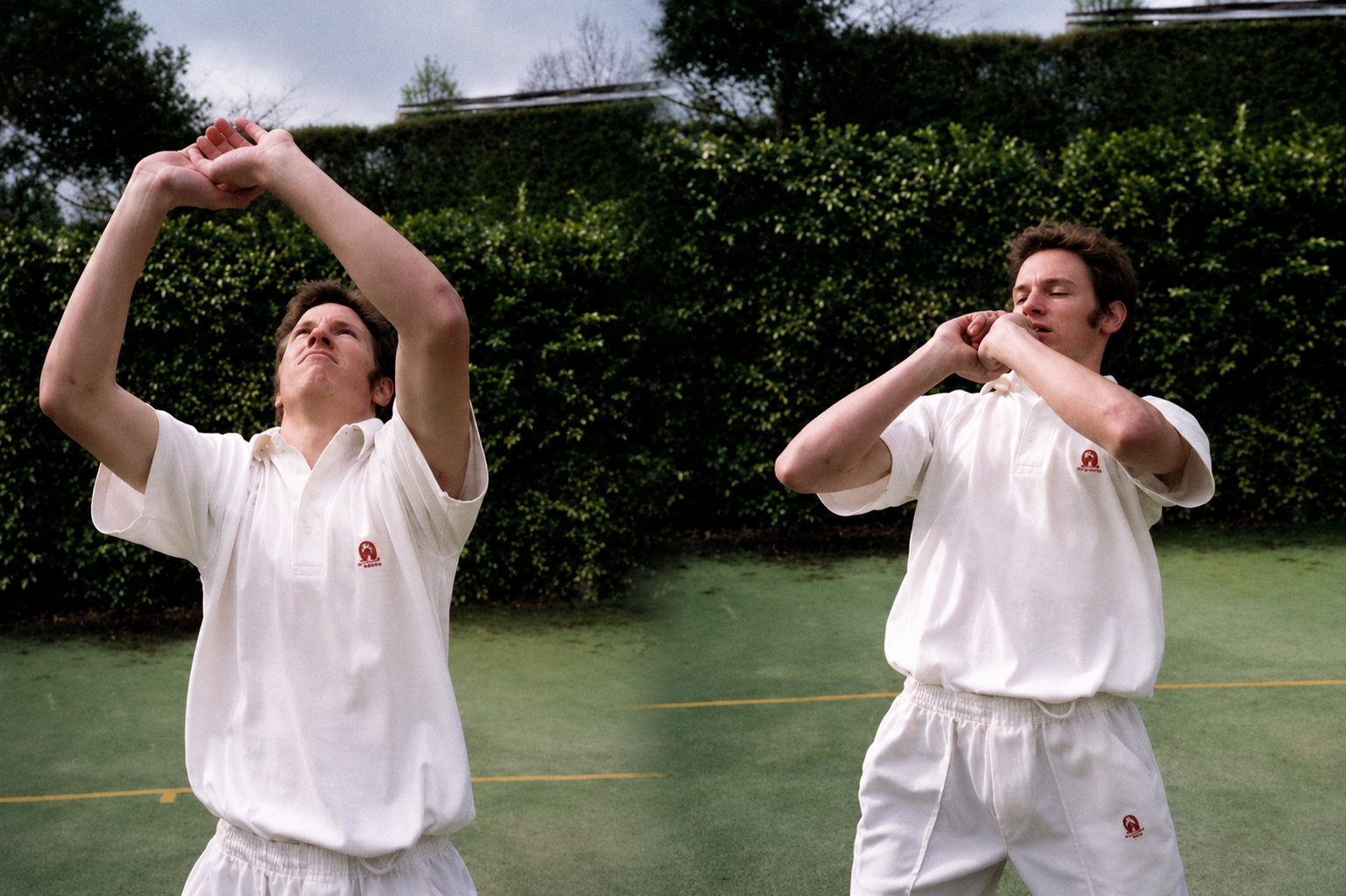
The reverse cup technique is one of the safest catching techniques in cricket and is commonly used for high catches and balls travelling below shoulder height. This type of catching technique in cricket is typically deployed while completing high catches.
The reverse cup technique is widely regarded as one of the safest catching techniques in cricket for balls travelling above the shoulders or dipping quickly towards the fielder. Learning when to switch from a conventional catch to a reverse cup catch is an essential part of catching in cricket, particularly when dealing with high catches under pressure. If you’re learning how to catch a cricket ball confidently, mastering both techniques will prepare you for almost every catching situation during a match.
Step 1: Get Behind the Ball
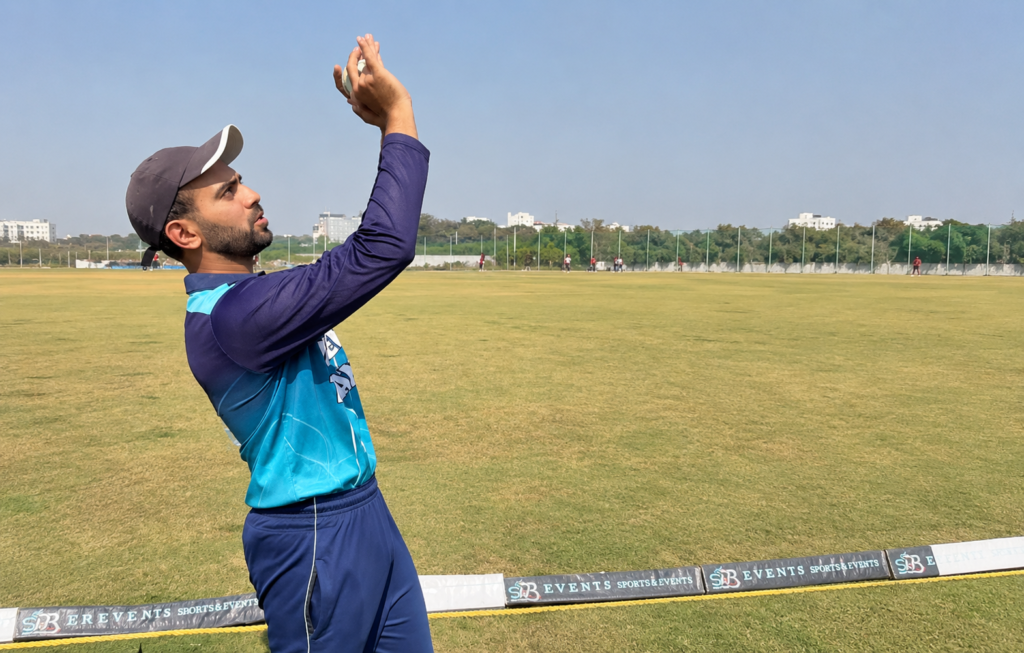
One of the biggest secrets to catching in cricket is getting behind the ball as early as possible. As soon as you judge the flight of the ball, move your feet quickly and position your body directly underneath its path instead of reaching across with your hands. This allows you to stay balanced and complete the catch with greater control. If you’re learning how to catch a cricket ball safely, good footwork is often more important than quick hands.
Step 2: Lower Your Hands
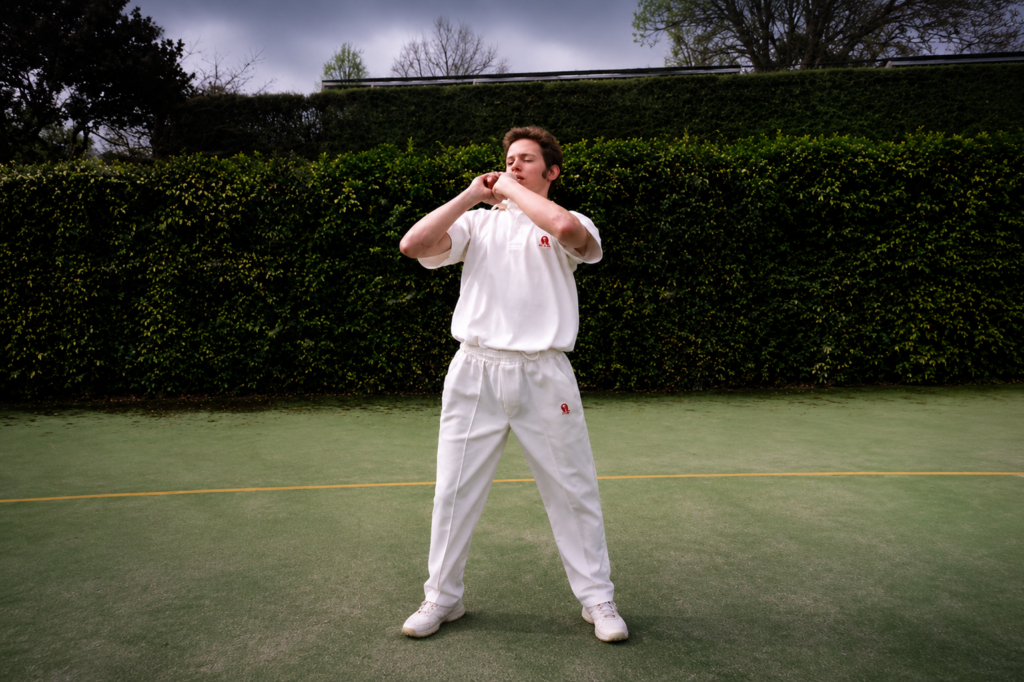
For reverse cup catches:
- Hands should be below eye level.
- Palms face upward.
- Little fingers remain close together.
This creates a larger and safer catching area. Lowering your hands creates a larger catching window and helps cushion the impact of the ball. Among the various catching techniques in cricket, the reverse cup technique is especially effective for high catches because it allows the ball to settle naturally into your hands instead of bouncing away on impact.
Step 3: Keep Your Eyes Level
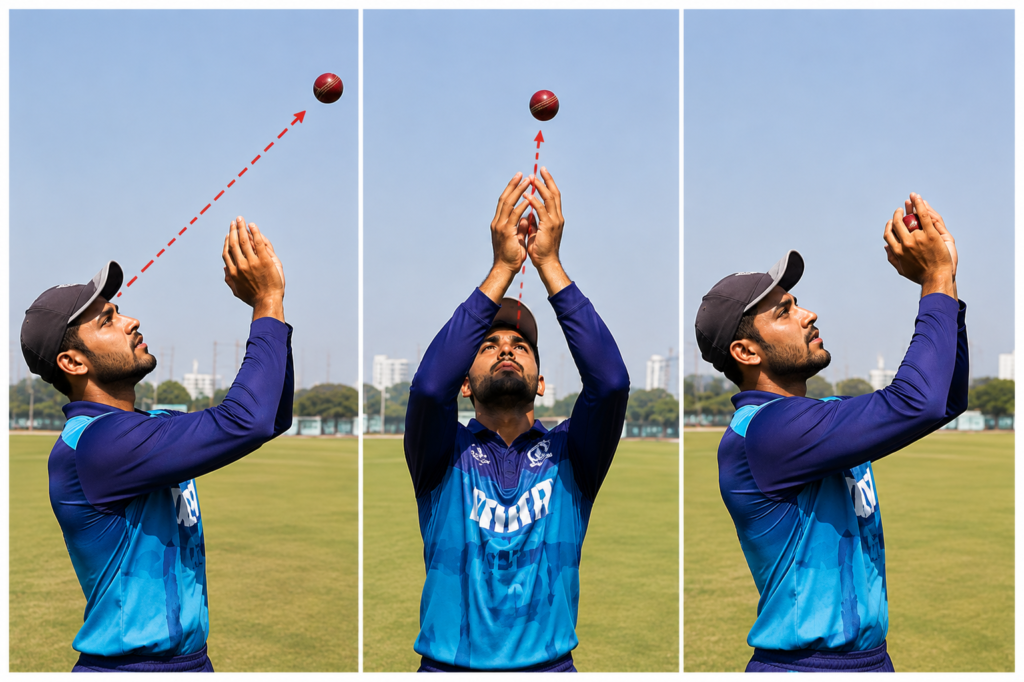
Maintain visual contact with the ball from the moment it leaves the bat until it reaches your hands. Many dropped catches occur because fielders look away too early or become distracted by nearby teammates. Whether you’re practicing catching in cricket or playing a competitive match, watching the ball all the way into your hands is one of the simplest ways to improve your consistency.
Step 4: Receive the Ball Softly
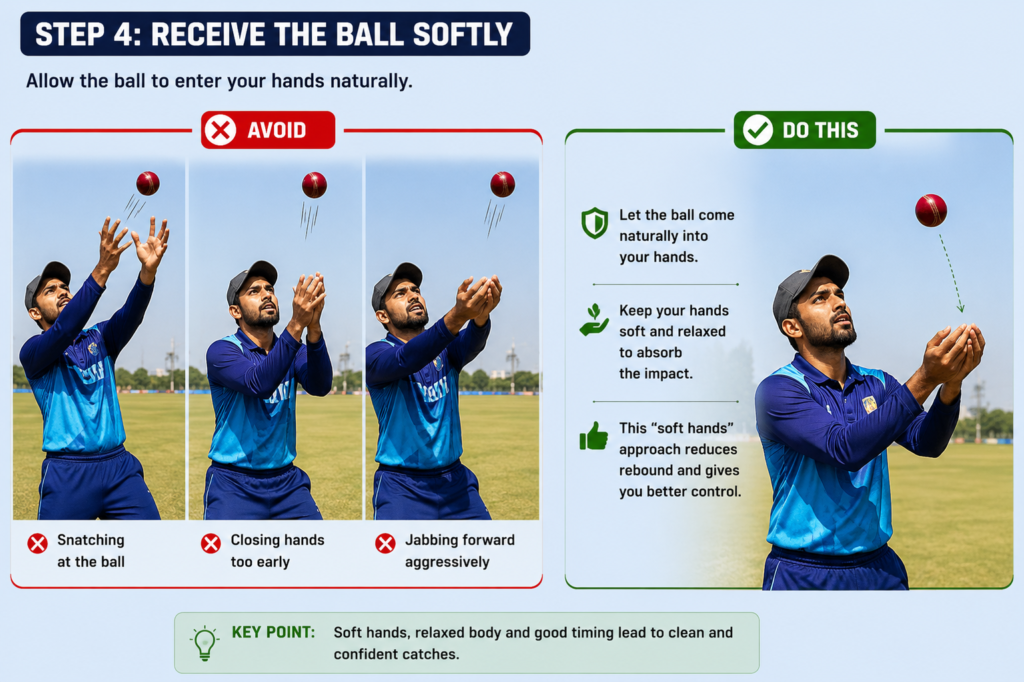
Allow the ball to enter your hands naturally.
Avoid (❌)
- Snatching at the ball.
- Closing your hands too early.
- Jabbing forward aggressively.
Instead of grabbing at the ball, allow it to come naturally into your hands before gently absorbing the impact. This “soft hands” approach is one of the most important catching techniques in cricket because it reduces rebound and gives you greater control over difficult catches.
Step 5: Secure and Protect
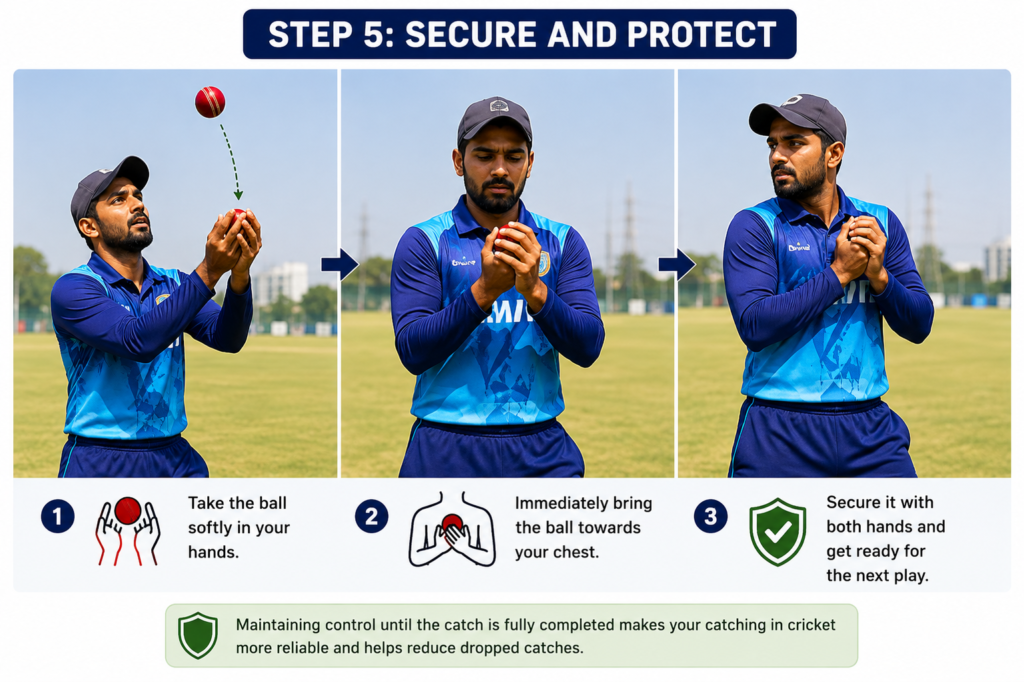
Once you’ve completed the catch, immediately bring the ball towards your chest and secure it with both hands before preparing for the next play. Learning how to catch a cricket ball doesn’t end when the ball enters your hands—maintaining control until the catch is fully completed is just as important. Developing this habit will make your catching in cricket more reliable and help reduce unnecessary dropped catches during matches.
Cricket Catching Drills in Cricket & Practice

Regular catching practice is one of the best ways to improve catching in cricket. These cricket catching drills help develop reaction speed, hand-eye coordination, balance and confidence in different match situations.
If you’re wondering how to improve catching in cricket, consistent practice remains the fastest way to build confidence. These catching drills are suitable for beginners and experienced players alike.
Tennis Ball Reaction Drill
The Tennis Ball Reaction Drill is a simple yet effective exercise designed to improve reflexes, reaction time, and hand-eye coordination. It helps players develop quicker catching skills by practicing with a tennis ball, making it an excellent drill for cricketers of all skill levels and easy to perform almost anywhere.
Pointers to keep in mind:
- Improves reflexes and hand-eye coordination.
- Stand 5–10 meters away from a partner.
- Use a tennis ball for practice.
- Catch rapid throws using conventional and reverse cup techniques.
- Can be practiced at home or during training sessions.
High Catch in Cricket Drill
The high catch in cricket drill helps players judge flight, improve balance, and complete difficult high catches confidently under pressure. By repeatedly practicing high catches, fielders develop better awareness, balance, and coordination, making them more effective in match situations.
Pointers to keep in mind:
- Have a partner hit or throw high catches.
- Track the cricket ball from the moment it leaves the hand or bat.
- Move quickly underneath the ball’s path. Stay balanced and keep your eyes on the ball.
- Complete the catch using proper technique.
Slip Catch Drill
The slip catch drill is designed to improve reaction speed and sharpen close-catching skills, making it an essential exercise for fielders who want to excel in catching opportunities around the bat. Many players with the most catches in international cricket earned their reputations through outstanding slip catching, highlighting the importance of mastering this skill.
How to perform:
- Stand close to a coach or partner.
- Receive deflections from a bat or a catching board.
- Focus on soft hands.
Moving Catch Drill
This drill is designed to improve footwork, balance, and movement while fielding. Players begin at a cone marker and react to commands by moving left or right before catching the cricket ball on the move. Practicing this regularly helps fielders develop better positioning, coordination, and control, reinforcing essential fielding basics in cricket.
Pointers to keep in mind:
- Start from a cone marker.
- Move left or right on command.
- Catch the cricket ball while moving.
- Focus on maintaining balance throughout the movement.
- Repeat from different angles to improve agility and reaction time.
One-Hand Recovery Drill
This drill is designed to improve recovery skills, confidence, and athleticism by challenging players to handle difficult catching situations. Although two-handed catching remains the preferred technique in most scenarios, practicing one-handed catches helps fielders react quickly, maintain control, and secure the cricket ball effectively when a standard catch is not possible.
Pointers to keep in mind:
- Improves recovery skills in challenging fielding situations.
- Practice attempting difficult catches with one hand.
- Immediately secure the ball with the second hand after the catch.
- Builds confidence and athletic ability.
- Helps players react effectively when two-handed catches are not possible.
- Reinforces ball control and quick recovery techniques.
How to Improve Your Cricket Catching Technique
Mastering a cricket catch takes patience, repetition, and the right technique. Whether you’re learning how to catch a cricket ball or refining advanced skills, consistent practice will help you become a safer and more dependable fielder. Combine these techniques with regular catching drills, and you’ll soon notice greater confidence in match situations.
So whether you’re a beginner or an experienced player, we have a plethora of helpful guides and cricket coaching tutorials aimed at helping you sharpen your fielding skills.
Further Guides On Fielding & Wicket Keeping Tips
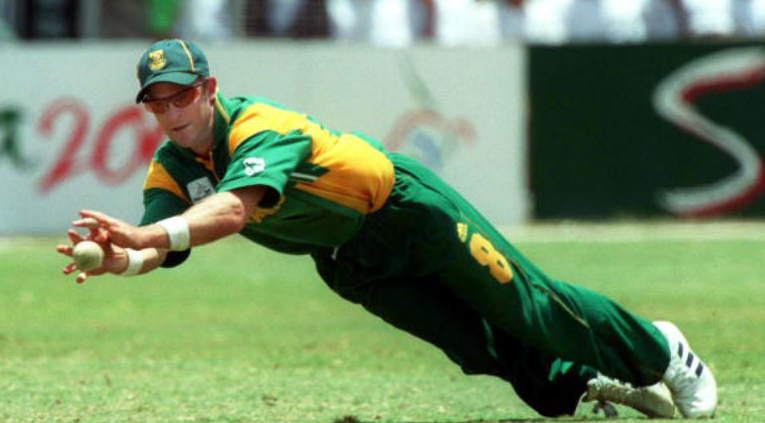
Fielding Basics in Cricket: Ground Fielding & Throwing Technique Explained