

Swing bowling is one of the most effective weapons available to a fast bowler. Learning how to bowl swing effectively requires control over your grip, wrist position, seam alignment and release. Watching the ball swing is perhaps the most petrifying on-field visual a batter can imagine while facing up to swing bowling. No batter in the world likes to see the cricket ball viciously move sideways. In an ideal world, every batter aspires to hit through the line. The threat level is at its minimum when the cricket ball comes onto the bat nicely.
But excessive movement generated through carefully guided swing bowling tips can complicate shot execution and plant seeds of doubt in the batter’s mind, eventually resulting in their demise. Such a lethal trait of swing bowling prevents batters from scoring freely, giving the fast bowlers an outside chance to prevail in an era that is increasingly being dominated by the bat.
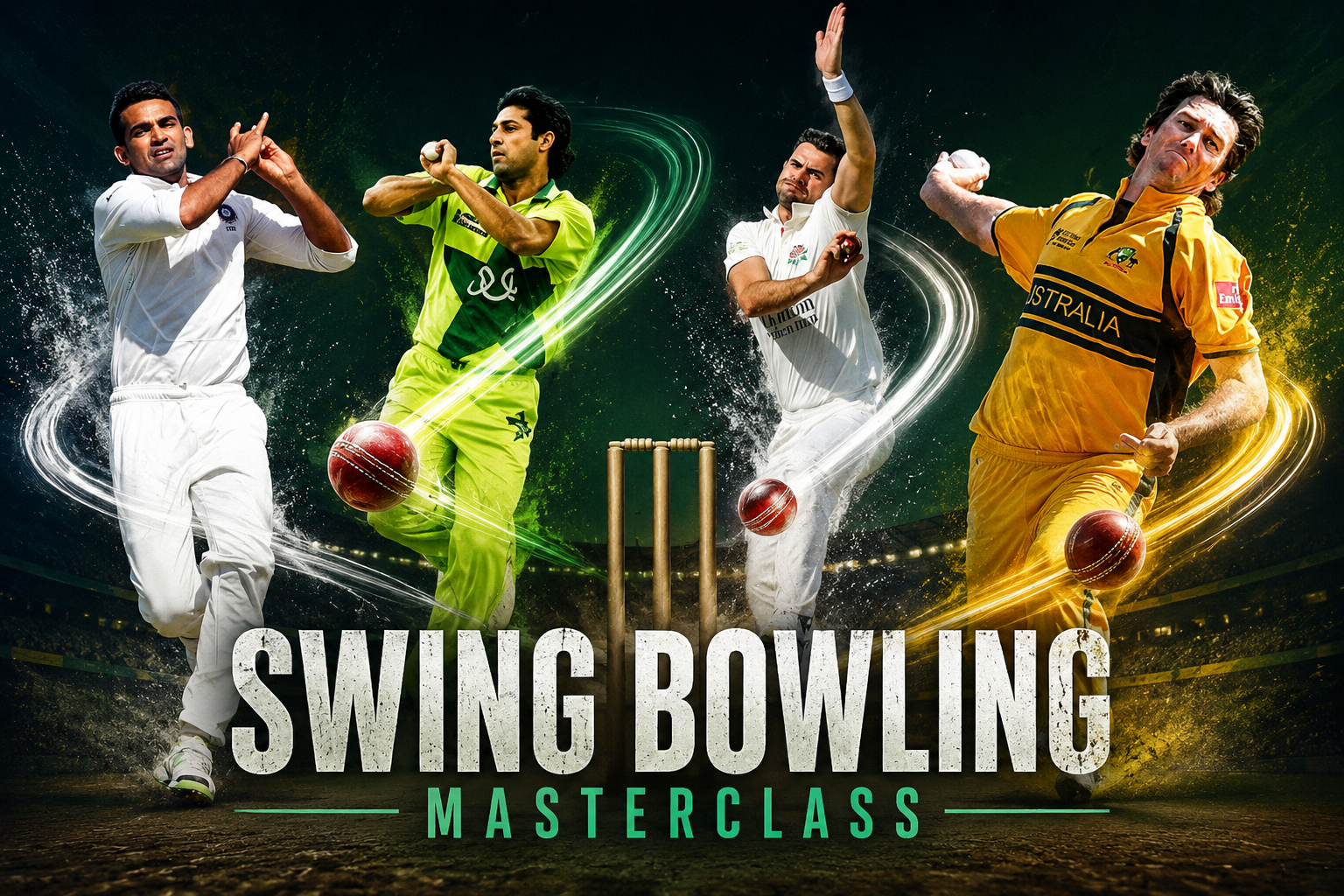
Jimmy Anderson, Glenn McGrath, Wasim Akram, and Dale Steyn were some of the iconic legends of swing bowling that the game of cricket has so far seen. They could swing the ball both ways, terrorizing the batters on any given day. Although swing bowling can seem quite routine at first, it’s still quite necessary to be mindful of basic fast bowling techniques. Without the correct fast bowling tips, your swing bowling basics will lack the much-needed foundation.
In this swing bowling guide, we break down the fundamentals of inswing and outswing bowling, including the correct swing bowling grip, wrist position, seam alignment, ball release and follow-through. These swing bowling tips are designed to help beginners understand how to bowl swing in cricket with greater control and consistency.
Table of Contents
What Is Swing Bowling?
Before learning how to bowl swing in cricket, it is important to understand what swing bowling actually means and why the ball moves through the air. The art of swing bowling first came into existence sometime at the turn of the 20th century, when WG Grace began noticing that a perfectly shiny ball drifted prodigiously through the air. While the art of swing bowling remained mostly hidden from the public view, the phase that soon followed after the completion of World War II changed it all. That was the time when sweeping advancements in technology coincided with the rise of fast bowling. This development meant that the entire mystery behind how to bowl swing in cricket and why the ball swings was debunked once and for all.
In simple terms, swing bowling refers to the movement of the cricket ball through the air. A typical fast bowler can swing the ball both ways by either shaping it back in or leaving the batter late. The delivery that tends to leave the batter is known as the outswinger, while the one that swings back in is called an inswinger. As per the tutorial above, the conventional swing of a cricket ball is defined by a rough side and a shiny side. As the ball travels through the air, it generates turbulence, which later imparts the swing. The rough side tends to cause more friction, which creates a vacuum, allowing the ball to swing in that direction. The ball will swing in the direction pointed by the rough side. In contrast, the shiny side plays very little role in creating conventional swing. The air passes over the shiny side rather effortlessly, causing minimal friction.
The swing bowling movement is at its peak when the cricket ball is brand new. As a fast bowler, the first 5-10 overs are considered a profitable phase for swing bowling. For beginners, the two most important types to learn are inswing and outswing. An inswinger moves towards the batter, while an outswinger moves away from the batter. Learning both variations starts with the same fundamentals: a consistent grip, controlled wrist position, correct seam alignment, and a repeatable bowling action. As the ball gets older, it loses its shine and its tendency to swing freely through the air. Reverse swing bowling gets introduced at a much later stage when the ball is maintained long enough. Unlike conventional swing bowling, which leans more towards the rough side, the cricket ball tends to behave very differently when it comes to reverse swing bowling. While the abrasive side of the ball continues to generate friction through the air, the shiny side of the cricket ball becomes heavy with time. This causes the ball to swing in the direction of the shiny side as opposed to conventional swing bowling technique.
How to Bowl an Inswinger: Swing Bowling Technique
Learning how to bowl an inswinger starts with controlling the direction of the seam and maintaining a consistent wrist position throughout the delivery. An effective inswing bowling technique causes the ball to curve back towards the batter, creating opportunities to attack the stumps and pads. As a consequence, this increases the possibility of a bowled or LBW dismissal. The primary purpose of an inswinger is to attack the stumps and pads, making it highly effective for trapping batters LBW or bowling them through the gate.
In the above inswing bowling tutorial powered by CricCoachXl, experts lay a strong emphasis on having the correct swing bowling grip, wrist position, and seam alignment to bowl swing effectively. As part of inswing bowling tips, it is important to get your grip, seam position, and body alignment in order.
Swing Bowling Grip
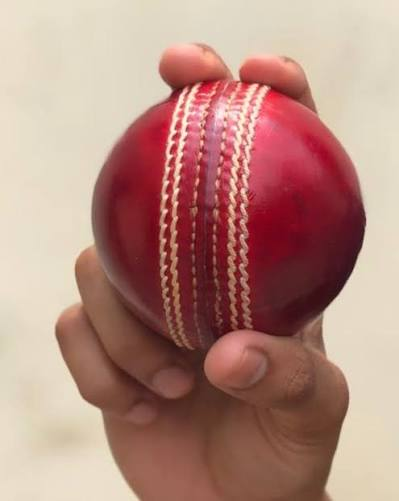
Learning how to bowl swing starts with mastering the correct swing bowling grip. The swing bowling grip for a typical inswinger is to hold the ball primarily with the first two fingers of your bowling hand. It is often the first starting point of your inswing bowling technique. The seam of the cricket ball is upright and rests between the index and middle fingers, while your thumb rests right underneath the ball, as shown in the picture above. The wrist stays cocked and firmly behind the ball, reminiscent of an ideal yorker grip or bouncer bowling grip.
Inswing Bowling Wrist Position
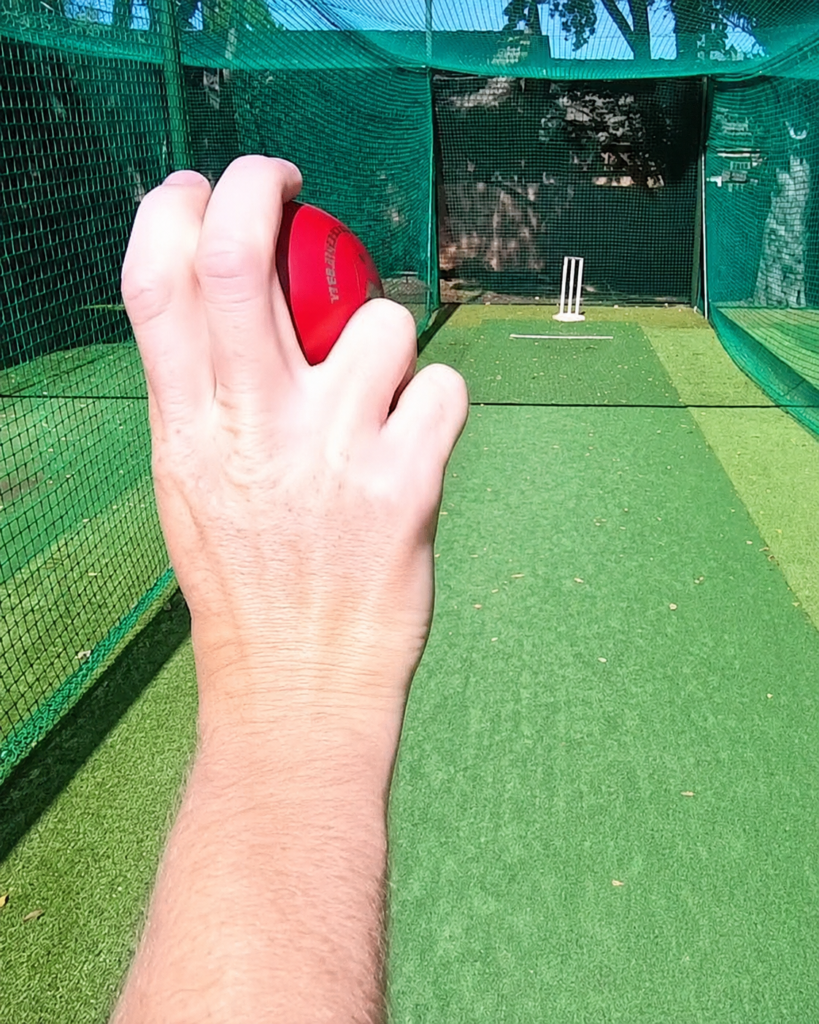
The wrist position for swing bowling plays a critical role in providing direction to the cricket ball as it travels through the air. Once you have successfully deciphered the secrets behind having an ideal swing bowling grip, it’s time to move on to the next phase of your swing bowling process. A typical wrist position for inswing bowling comprises a cocked upright wrist angled towards leg slip. In order to achieve this, you will need to point the seam of the cricket ball towards leg slip, the direction in which you want the ball to swing. Wherever the seam points, the direction of the swing follows accordingly.
Inswing Ball Release
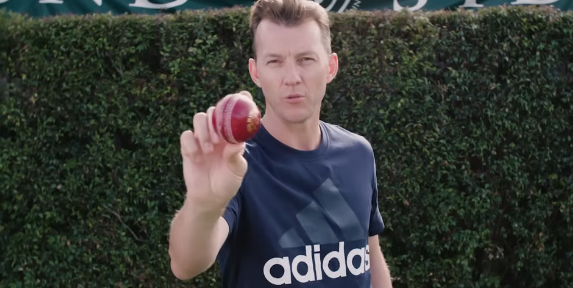
One of the most important inswing bowling tips is to avoid rolling the wrist towards the off side during release. The wrist and first two fingers of the bowling arm should remain behind the ball, with the seam maintained in the intended position. As the ball leaves the hand, the fingers should stay behind the seam and guide the delivery towards the leg-side fielding position.
Follow through (Front on action)
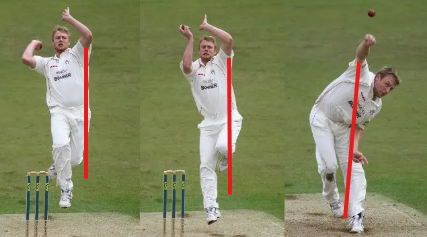
Once you have honed the fundamentals of inswing bowling basics correctly, it’s time to finish your bowling action correctly. For inswing bowling, it is imperative to maintain a front-on bowling action, also known as an open chest bowling action. You will need to have an open chest bowling action. In other words, the chest of a fast bowler will be directly facing the batter. Your front foot will land on the other side of your back foot, and your follow-through must finish on the inside of your front leg.
How to Bowl an Outswinger: Swing Bowling Technique
Learning how to bowl an outswinger requires the bowler to control the seam, wrist, and release so that the ball moves away from the batter after pitching. Learning how to bowl an outswinger takes time, persistence, and impeccable skills. The primary purpose of an outswinger is to tempt the batter into playing away from the body, often resulting in edges to the wicketkeeper or slip fielders. Outswing bowling is most effective with the new ball, especially during overcast conditions or early stages of an innings when the pitch and atmosphere offer extra movement through the air.
The above outswing bowling tutorial powered by CricCoachXl, provides a complete breakdown of the outswing bowling techniques, touching upon some key aspects such as swing bowling grip, wrist position, and seam alignment to bowl swing effectively.
Outswing Bowling Grip
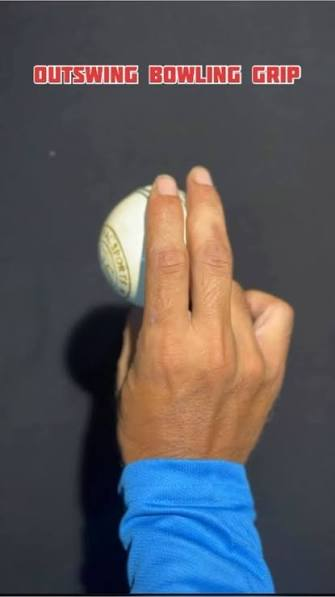
The swing bowling grip for an out-swinger is almost the same as that of an in-swinger. The only difference is the wrist position, which we will address in the next section. The seam of the ball stays upright and rests between the first two fingers. The gap between the first two fingers should be optimum (Not too wide nor too narrow). Your fingers and wrist should be firmly placed behind the ball at all times.
Outswing Bowling Wrist Position
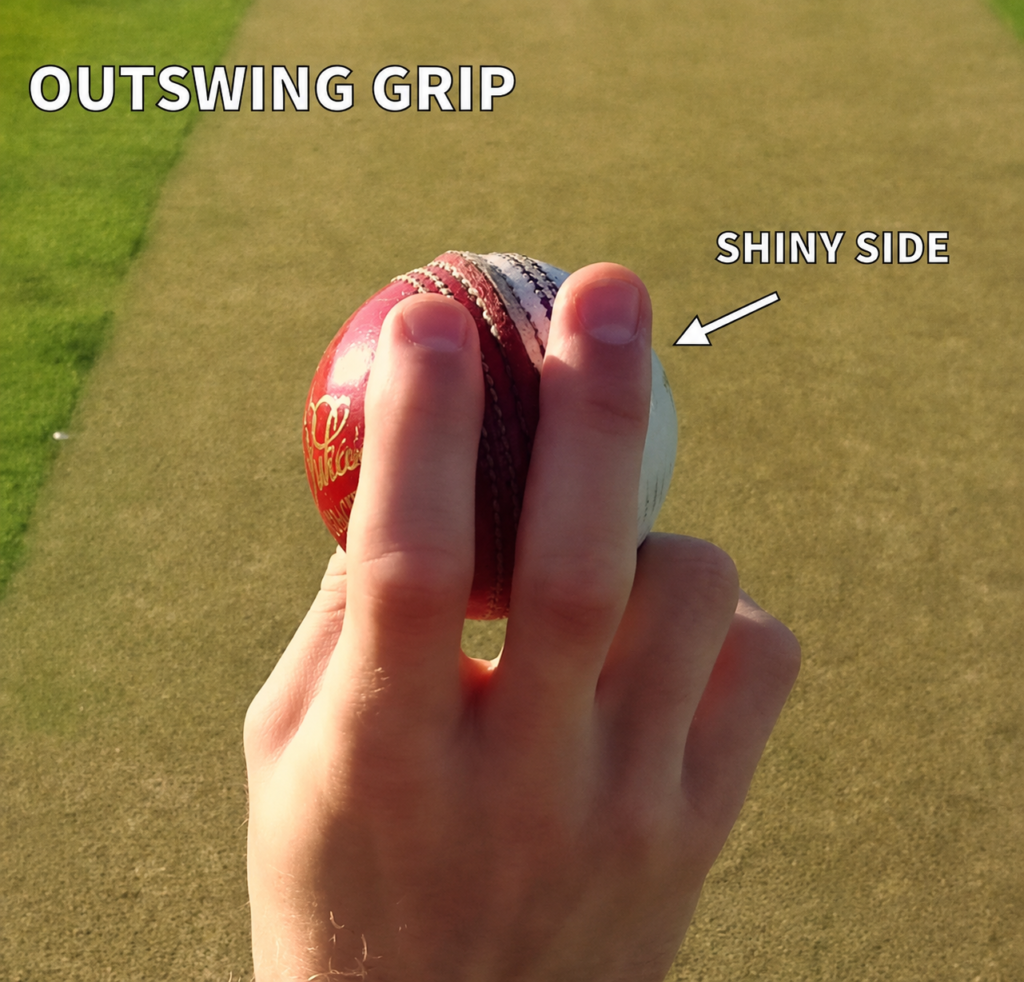
The wrist position for swing bowling, especially for an outswinger, must point in the direction of the slip cordon. As was the case with inswing bowling basics, the swing bowling wrist for an outswinger should be locked and upright right from the onset. Instead of pointing the seam to the leg slip, you tilt the seam in the direction of the slip cordon. Only the seam positioning needs to be altered, while all other basics of swing bowling wrist position stay essentially the same.
Outswing Ball Release
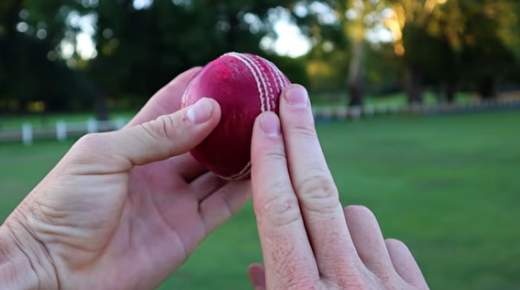
To polish the art of swing bowling (outswing) even further, the ball must come out of the hand correctly. Once you’ve angled the ball successfully towards slips, the fingers and the wrist should follow the direction of the seam. In other words, when the cricket ball leaves your hand, the fingers must run behind the seam of the ball.
Follow Through (Side on action)
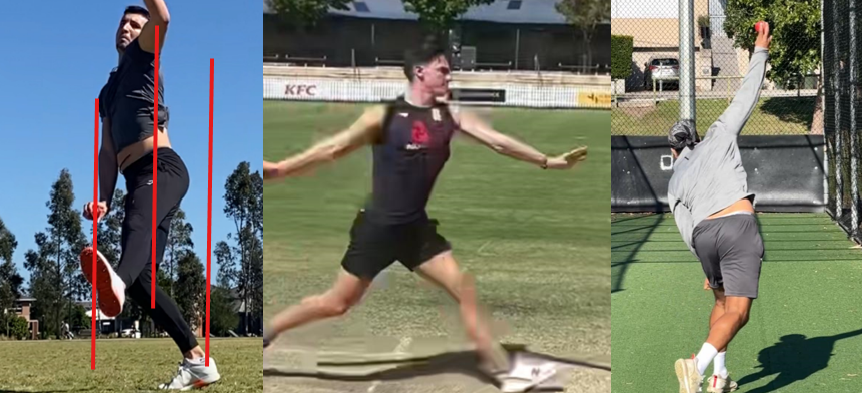
This is the last step of your swing bowling technique when it comes to outswing bowling. Your aim must be to finish right. A stable follow-through for a typical outswing bowling action allows the bowler to reap the maximum benefit, without compromising on control & direction. A bowler should ideally maintain a side-on bowling action upon release as shown above. This means that the bowler’s front shoulder is closed off and not facing the batter. The front leg lands on the inside of the back leg, and your bowling arm must finish all the way down to your left armpit as shown above.
Swing Bowling Tips for Better Control and Movement
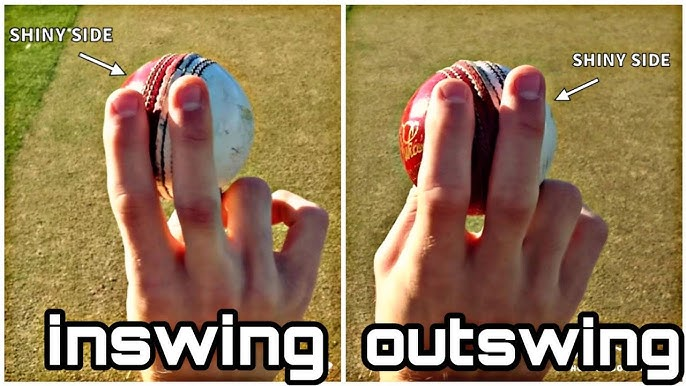
Once you understand the basic swing bowling technique, consistency becomes the next challenge. These swing bowling tips can help beginners produce more controlled movement:
1. Keep the seam consistent: Maintain the intended seam position throughout your run-up and release.
2. Control your wrist position: Avoid excessive wrist movement during release.
3. Focus on line and length: Swing is most effective when combined with a disciplined line and length.
4. Work on both variations: Practise inswing and outswing separately before attempting to alternate between them.
5. Don’t chase excessive pace: Prioritize rhythm, control and repeatability while learning how to bowl swing.
6. Maintain the ball: Consistently shine one side of the ball to extract swing consistently across an extended period of time.
Ideal Operating Pace For Swing Bowling
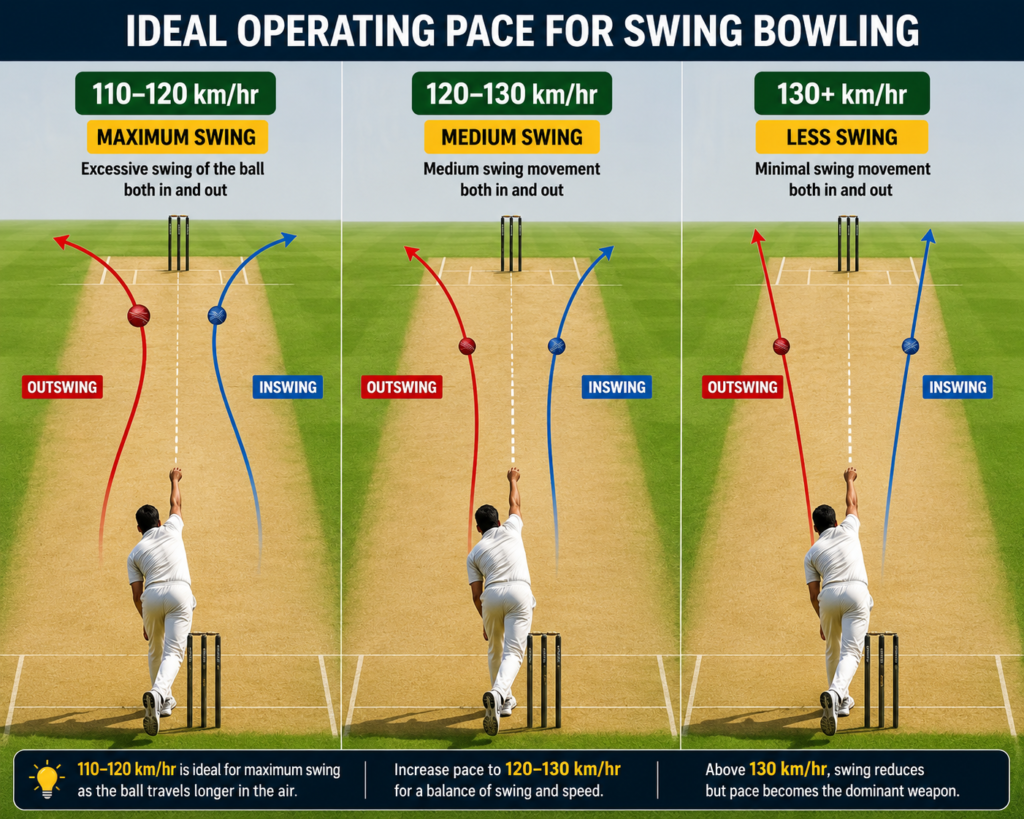
If you’re learning how to bowl swing, finding the right operating pace is just as important as mastering your grip and wrist position. If your primary goal is to swing the ball, then your ideal operating pace should be in the range of 110–115 km/hr. Bowling at a slightly slower pace allows the cricket ball to spend more time travelling towards the batter, which naturally increases the amount of conventional swing generated. This gives bowlers a better chance of producing late movement with both inswing and outswing bowling variations. Yes, this is a useful swing bowling tip which many reputed coaches fail to address. Many budding pacers learning how to bowl swing in cricket often make the mistake of prioritizing raw pace over seam position, rhythm, and control. In reality, mastering your swing bowling grip, wrist position, and release mechanics is far more important during the early stages. However, anything below the 115 km/hr mark can become predictable and easier for modern batters to dominate consistently.
That is why many coaches now advise developing fast-medium bowlers to gradually operate within the 120–130 km/hr bracket. This pace range allows bowlers to retain enough speed to push batters onto the back foot while still preserving their ability to execute effective swing bowling and even occasional reverse swing bowling under suitable conditions. It offers the perfect balance between movement, aggression, and control. Crossing the 130 km/hr barrier, however, demands serious physical conditioning, strong lower-body power, disciplined recovery routines, and a balanced diet. Bowlers hoping to achieve that level should focus heavily on fast bowling technique, structured strength work, and specialized fast bowling drills. The secret to building sustainable pace, fitness, and rhythm can be explored further in our complete fast bowling tips guidebook.
Should You Sacrifice Your Pace For Swing Bowling?
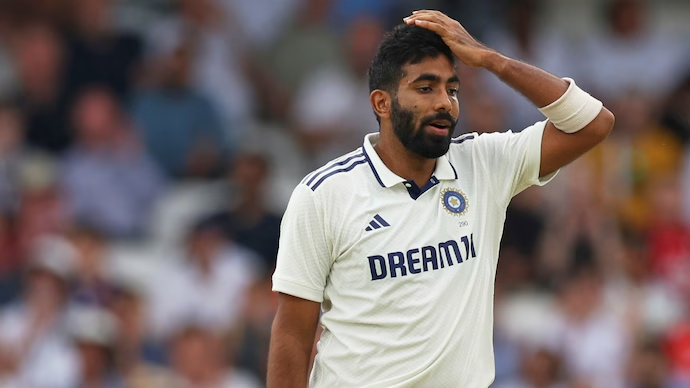
A common swing bowling question among beginners is whether they should sacrifice pace to generate more movement. Now that we have got a hang of inswing and outswing bowling, a burning question looms. As we are all aware by now, the art of swing bowling can be maximized to its fullest at a low pace. So does that mean that a fast bowler needs to cut down on pace at the expense of swing bowling? If you’re seeking fast bowling tips for beginners, then you need to figure out whether it is pace first or swing.
Well, it all comes down to two main factors. To make that judgment call on whether to prioritize swing over pace, a fast bowler needs to take two factors into account:
Physical attributes: This relates to the physical appearance of the bowler. Some bowlers are naturally tall, while others aren’t so fortunate. The fast bowlers who often lack a strong build can certainly focus more on honing their swing bowling skills. This effectively means sacrificing pace in an effort to focus more on shaping the ball in the air. Subsequently, such types of bowlers can also develop cutters and several other slower ball variations, which they can use in tandem with conventional swing bowling. Conversely, tall fast bowlers are blessed with height and can therefore focus more on bending their back and extracting more out of the surface.
Bowler type: A fast bowler needs to closely evaluate their bowling profile. This requires deeper introspection and experts’ opinions from licensed coaches, which in turn helps a bowler determine his/her bowling personality. If your goal is primarily to swing the ball, then you might opt to operate at a reduced pace. Similarly, if you have a gifted body and like generating more pace as a fast bowler, then you could possibly consider cutting down on swing in order to ramp up your pace.
More Fast Bowling Tips and Training Guides
Fast Bowling Action Drills for Beginners: Step-by-Step Coaching Guide

How to Bowl Fast in Cricket: Proven Tips, Drills & Exercises to Increase Pace
How to Bowl a Bouncer in Cricket: Fast Bowling Techniques for Beginners Decoded
How to Bowl a Perfect Yorker in Cricket: Grip, Accuracy Tips & Yorker Drills
Looking to Share Your Cricket Coaching Expertise?
We’d love to work with passionate cricket experts like you. Whether you’re a coach or part of an academy, collaborate with us to create high-quality content and help make cricket coaching free and accessible to everyone.
Collaborate With Us



One response to “Swing Bowling Tips: How to Bowl Inswing & Outswing in Cricket”
[…] inswinger is perhaps the best delivery used to deceive the batter and eventually trap them LBW. It’s […]