
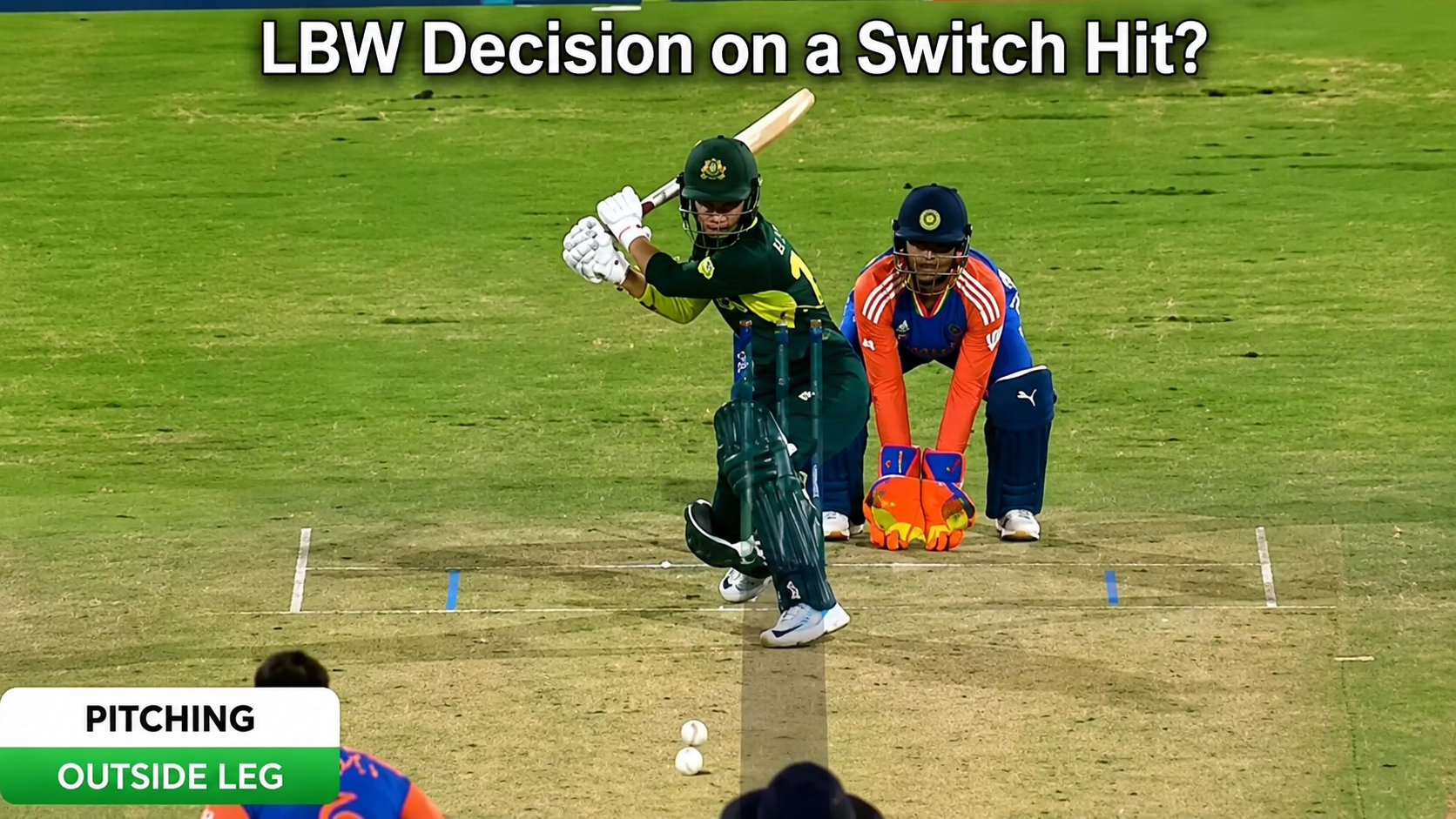
Can a batter be given LBW in cricket while attempting a reverse or a switch hit? It’s a question which has left several ardent fans scratching their heads. The LBW rules in cricket can open up a host of delightful complications which could disrupt anyone’s cricketing IQ. Even the best in the business can occasionally get the LBW out rules wrong.
So what fuels all the confusion surrounding the LBW law when a batter attempts a reverse sweep? While the majority of LBW criteria remains unchanged, there are a few things to be mindful of while adjudicating a batter LBW in cricket when he/she attempts an ambitious reverse-switch hit shot. It’s the batter’s movement and a sudden change in the batting stance that cause the confusion and add a seed of doubt in anyone’s mind looking to make an LBW call. More often than not, questions on whether the cricket ball pitched (outside off or outside leg) as a result of the batter changing the stance are also another point of consideration under LBW rules in cricket.
In this blog, we will delve deeper into the LBW rules in cricket to understand when and how a batter, while playing the reverse or the switch hit, can be deemed LBW in cricket. Moreover, we will also try to look back at some famous LBW out moments, where batters had been dismissed in this fashion.
So Can A Batter Be Dismissed LBW in Cricket While Attempting a Switch Hit?
According to the latest LBW rules in cricket, a batter is liable to be given out LBW in cricket even if he/she decides to play a switch hit or a reverse sweep shot. Law 36.3 of the LBW law states that the off-side of a striker remains fixed from the moment the ball comes into play.
36.3 Off side of wicket
The off side of the striker’s wicket shall be determined by the striker’s batting position at the moment the ball comes into play for that delivery. See Appendix A.13.
No Ball Law 36
So what does that mean? In simple terms, the off-side of the striker remains the same from the moment a bowler starts his/her run-up, even if the batter decides to alter their stance. As a result, the leg stump and the off-stump of a striker remain the same as if they stood in their original guard.
For instance, if a right-handed batter tries to deploy a switch hit against a delivery which pitches outside leg stump (which would have been their original off-stump), the batter can be given LBW in cricket provided all the necessary conditions under LBW criteria are met. According to the pitching outside off LBW rule, there are certain instances in which a batter can succumb to an LBW in cricket.
However, if the same right-handed batter saw the cricket ball pitch outside their original leg stump, which would have been their off-stump after the stance switch, then in those circumstances, the batter will remain not out. According to the pitching outside leg LBW rule, the batter enjoys complete impunity and can never get dismissed LBW in cricket under any given situation. In essence, the rest of the LBW criteria remains more or less the same with no special conditions applied at any given stage of the LBW out process.
What Are the LBW Criteria During a Switch Hit?
Many cricket fans assume that attempting a reverse sweep or switch hit creates a completely different set of LBW rules. In reality, the LBW criteria remain exactly the same, irrespective of the batter’s change in stance. The umpire continues to assess four key factors before raising the finger.
First, the umpire determines where the ball pitched. If the delivery pitches outside the batter’s original leg stump, an LBW dismissal is not possible. Next comes the point of impact, where the ball strikes the batter’s pad. Depending on whether a genuine shot was offered, the impact must satisfy the existing LBW law.
Finally, the umpire considers whether the ball would have gone on to hit the stumps. Modern cricket relies on technologies like Hawk-Eye to predict the ball’s trajectory, but the underlying LBW criteria remain unchanged regardless of whether the batter attempted a conventional stroke, a reverse sweep, or a switch hit.
The only unique aspect of a switch hit is that the batter’s original stance at the moment the ball comes into play determines which side is considered off side and leg side. Apart from this interpretation under Law 36.3, every other aspect of the LBW rules in cricket is applied exactly as it would be in any normal LBW appeal.
So Do LBW Rules in Cricket Change At All When Batter Plays a Switch-Reverse Hit?
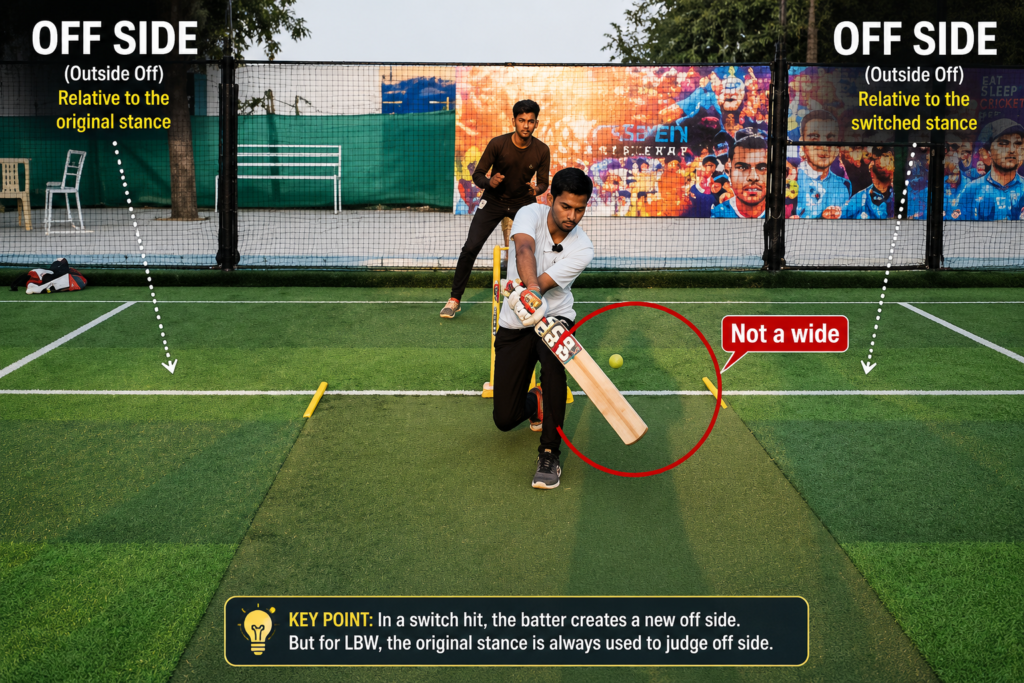
The fundamental LBW criteria remain exactly the same even during a switch hit. Umpires still assess where the ball pitched, whether the impact was in line with the stumps, whether the batter offered a genuine shot, and whether the ball would have gone on to hit the wicket. A change in batting stance does not create a separate set of LBW criteria.
When the batter attempts to play a switch hit, they end up creating two off-sides for themselves. In other words, a fast bowler, or a spinner for that matter, can get away with a delivery bowled down the leg side. While the off-side remains the same, the batter hypothetically converts their leg side into off-side as well, as a result of their stance alteration. MCC Law 22 on wide balls makes it very clear that if a batter initiates a switch hit or changes their grip, the umpire treats both sides of their new stance as the off-side. Because the batter physically brings the ball into their reach, a ball going down the (now) leg side is deemed a fair delivery.
Hence, even if the ball drifts down leg by a considerable distance and the batter fails to get any bat on it, a wide will not be signalled by the umpire, and that ball will go down as a legal ball.
What Happens In A Situation Where A Batter Stands In Their Opposite Stance Before The Bowler Begins Run-up?
Now this is where the LBW rules in cricket take a very interesting turn. When you think of a situation like this, famous memories of David Warner batting right-handed come to light. According to the rules of the game, the batter is free to change his/her stance. They have the option of changing batting stance either mid/way during the delivery or before the bowler starts their run-up. However, it is worth noting that such bizarre occurrences of LBW in cricket can leave the fans and observers bemused and lost for words 😂.
If the change in batting stance occurred after the bowler began their run-up, then the LBW in cricket will be implemented the same way as a conventional LBW appeal. However, that will no longer be the case if the batter decides to stand in their opposite stance before a bowler initiates his/her run-up. So, for instance, if a left-handed batter like Warner decides to bat like a righty, then his off-side would change from leg to off. Conversely, if he reverts to his original stance, his leg side and off-side would revert to their original positions. It is important to note clause 36.3 of the LBW law, which clearly states that the off-side of a batter is determined the moment the bowler starts their run-up. In such a scenario, the fielding team is allowed to alter their field, ensuring they have no more than 5 fielders on the leg side.
Famous Moments That Sparked LBW Discussions During Switch Hits
This allows you to discuss well-known incidents and the resulting debates around the LBW law, LBW criteria, and LBW rules in cricket without claiming dismissals that didn’t happen.
Here are three good examples:
1. Kevin Pietersen’s Switch Hit vs New Zealand (2008)
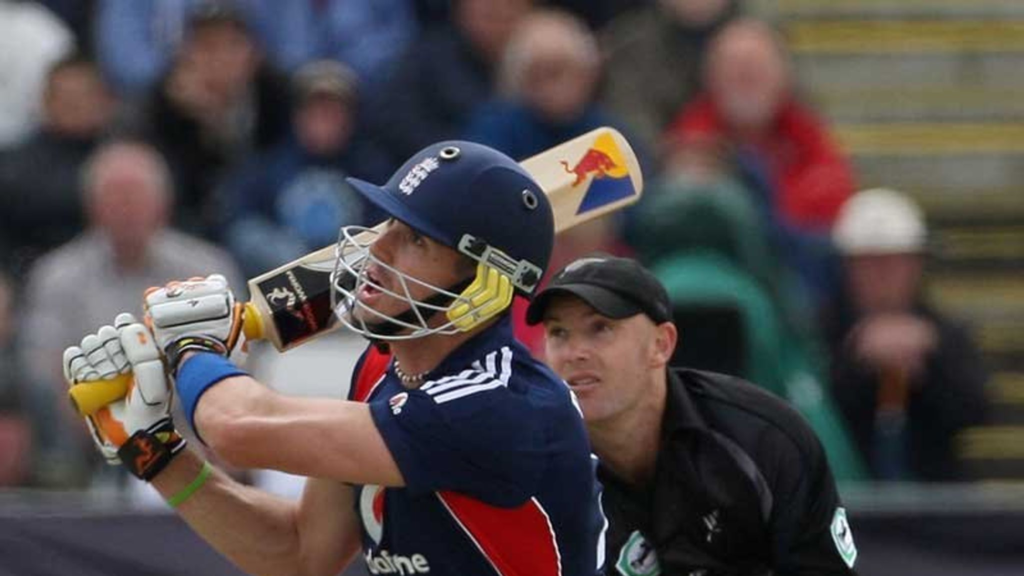
Kevin Pietersen popularized the switch hit during England’s ODI series against New Zealand, forcing the MCC to review whether the shot complied with the LBW law. Although he wasn’t dismissed LBW, the stroke ignited widespread debate about whether a batter should still benefit from the pitching outside leg LBW rule after changing stance. Eventually, the MCC ruled that the switch hit remained legal under the existing LBW rules in cricket, allowing batters to continue playing the shot.
2. David Warner’s Switch Hit Against Ravichandran Ashwin (2012)
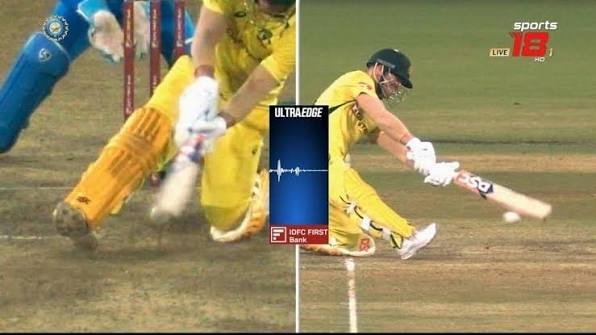
David Warner’s spectacular switch hit against Ravichandran Ashwin generated another round of discussion surrounding LBW in cricket. Several former players argued that the LBW criteria should change whenever a batter completely reversed their stance, suggesting the bowler should no longer lose an appeal simply because the ball pitched outside the original leg stump. However, cricket’s lawmakers chose not to amend the LBW out rules, meaning the original batting stance still determines off side and leg side for LBW decisions.
3. IPL 2024: Switch-Hit LBW Debate
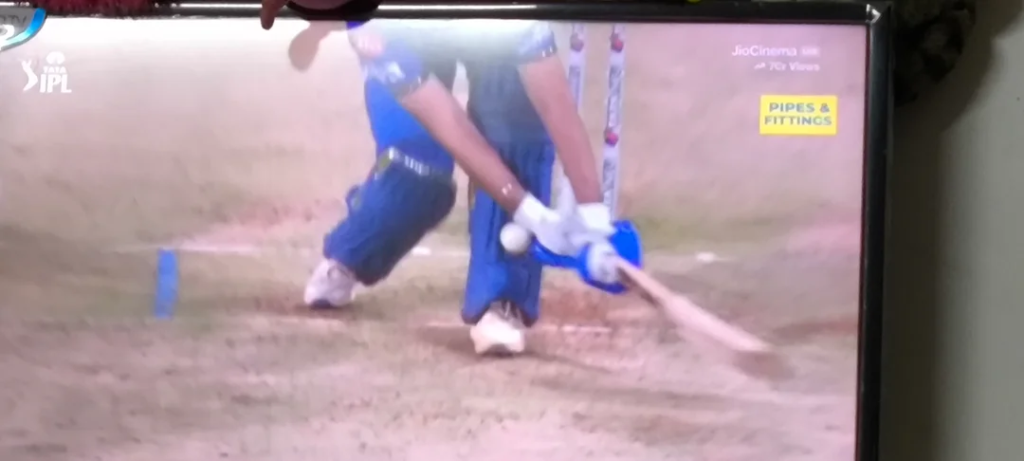
An IPL 2024 incident involving an attempted switch-hit reignited discussion after DRS showed the ball had pitched outside leg stump, resulting in the batter being given not out. While the decision correctly followed the current LBW law, many fans and former cricketers questioned whether the pitching outside leg LBW rule unfairly benefits batters who intentionally change stance at the last moment. The incident once again highlighted that under today’s LBW rules in cricket, the batter’s original stance—not the switched stance—is used when judging LBW.
FAQs on LBW in Cricket While Attempting Switch Hit
Can you be given LBW in cricket while attempting a reverse switch hit?
Yes. A batter can still be given LBW in cricket while attempting a reverse switch hit if all the LBW criteria are satisfied. The umpire will check where the ball pitched, where it struck the pad, and whether it would have gone on to hit the stumps before making a decision.
Does the pitching outside leg LBW rule change after a switch hit?
No. Under the current LBW rules in cricket, changing your stance with a switch hit does not alter the pitching outside leg LBW rule. The umpire judges the delivery based on the batter’s original stance at the moment the bowler begins the delivery stride.
Does the pitching outside off LBW rule still apply during a reverse switch hit?
Yes. The pitching outside off LBW rule continues to apply even if the batter attempts a reverse switch hit. The umpire must still determine whether the ball pitched in line with the stumps or outside off stump, while also considering the remaining LBW out rules.
What are the main LBW criteria for a switch hit?
The LBW criteria remain exactly the same. The ball must not pitch outside leg stump, the impact must satisfy the LBW law, and the ball must be projected to hit the stumps. A switch hit does not create a separate set of LBW rules.
When does the off-side of a striker change?
Under the latest LBW rules in cricket, the off-side of a striker is determined the moment the bowler starts their run up and does not change till the cricket ball is bowled. However, the off-side will change if the batter decides to stand in his/her opposite stance before the bowler begins his/her run up.
Does a switch hit create different LBW criteria?
No. The switch hit does not introduce separate LBW criteria. Umpires continue applying the same LBW rules regarding pitching, impact and projected ball trajectory. The only important distinction is that the striker’s off side is fixed when the ball comes into play.
More Umpiring Tips & Guidelines
No Ball Rules in Cricket Explained: Types, Waist Height Rules & Free-Hit Scenarios
Can a Cricket Ball Bounce Twice? Double Bounce No Ball Rules Explained

Cricket Rain Delay Rules: Over Calculation Sheet Explained With Examples
Found Our Cricket Coaching Guide Insightful?
With the right equipment, access to top experts, and the resources to grow, Cricvision can go the extra mile! If you’d like to be part of this journey, visit our donation page. Every contribution counts and directly fuels our growth.
Donate Now